
Pilot whales in Tenerife
The short-finned pilot whale is the animal this coast is built around: resident, studied for decades, and the reason a two-hour boat trip from Costa Adeje works at all.
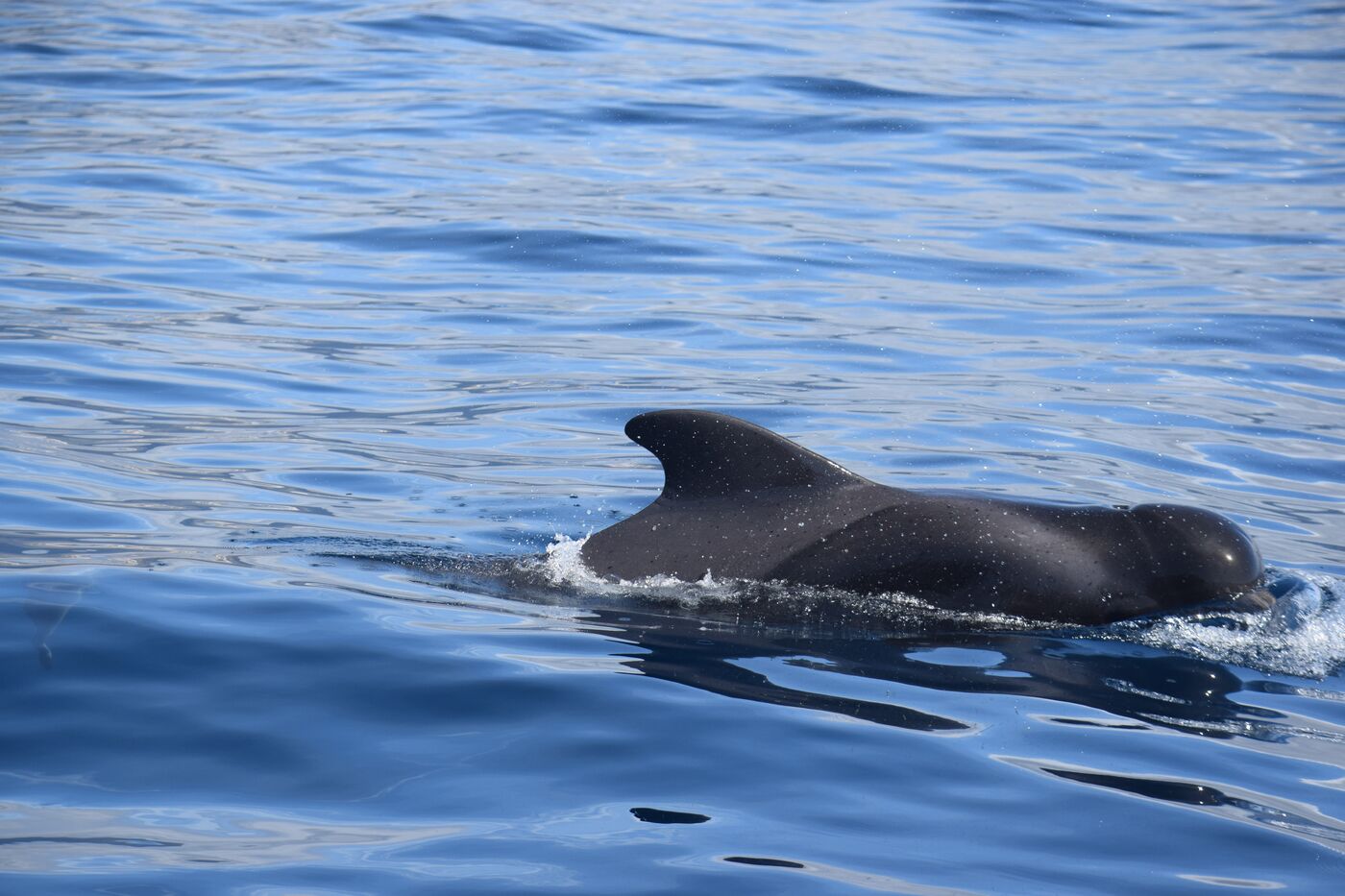
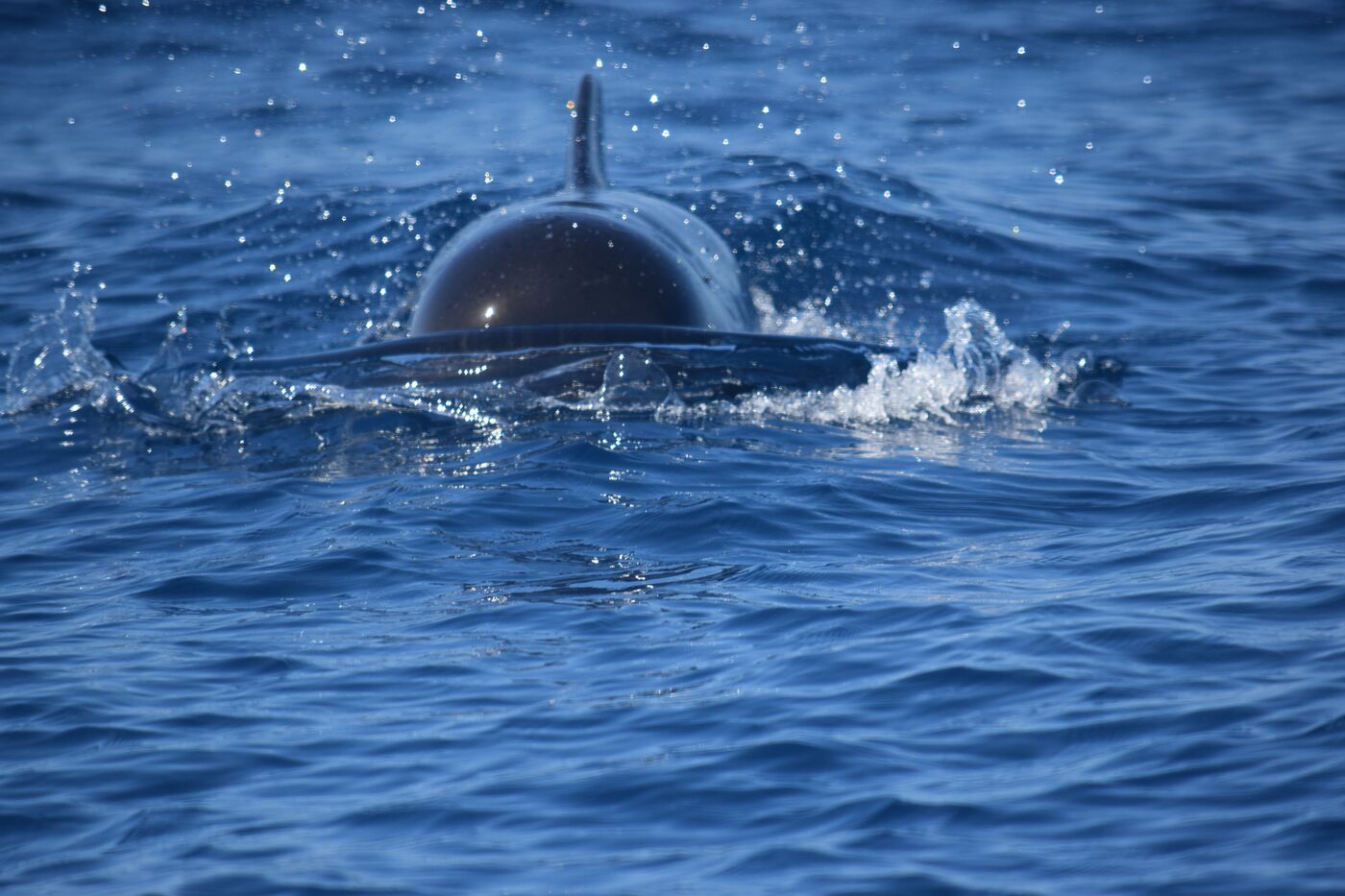
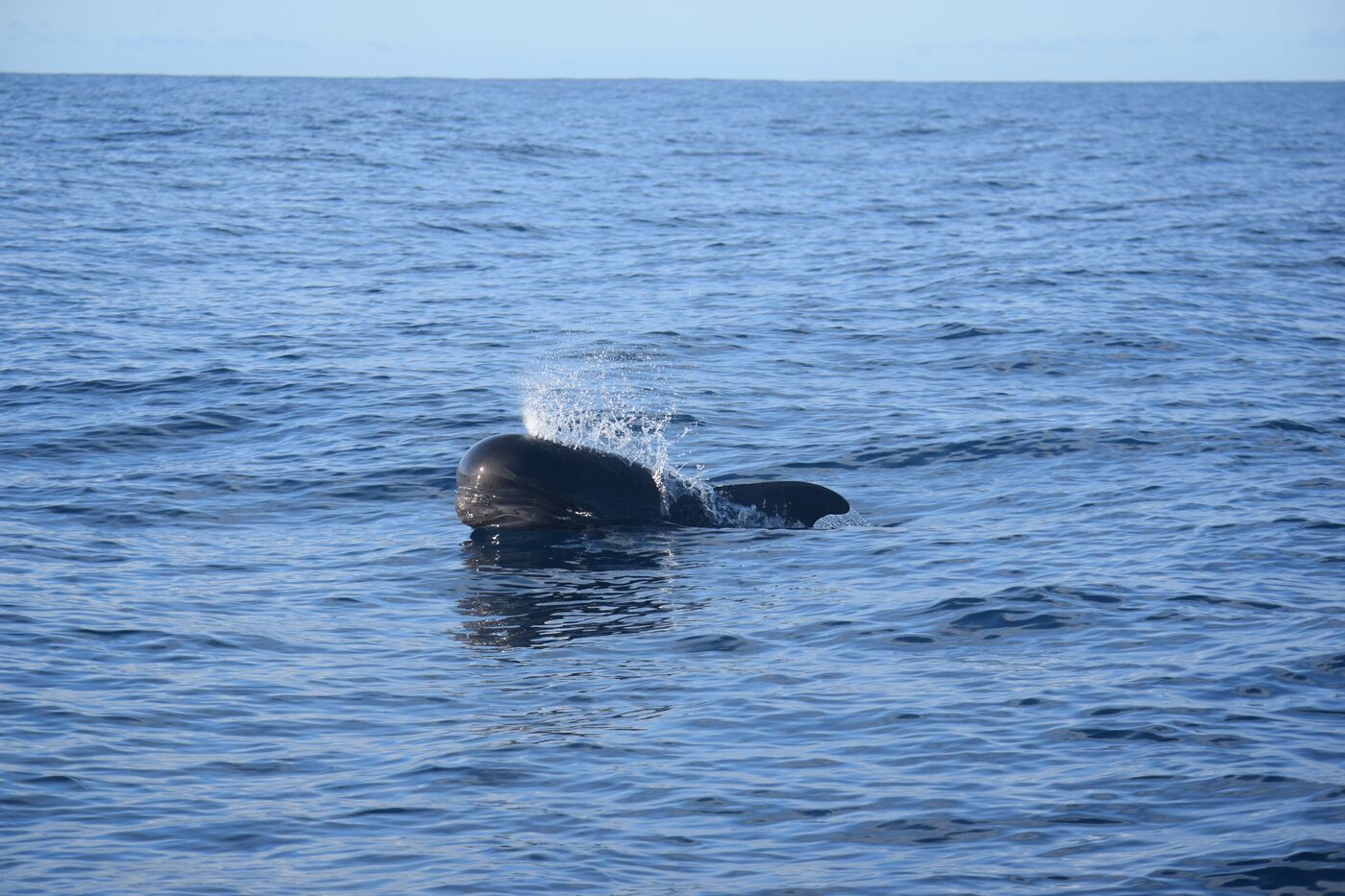
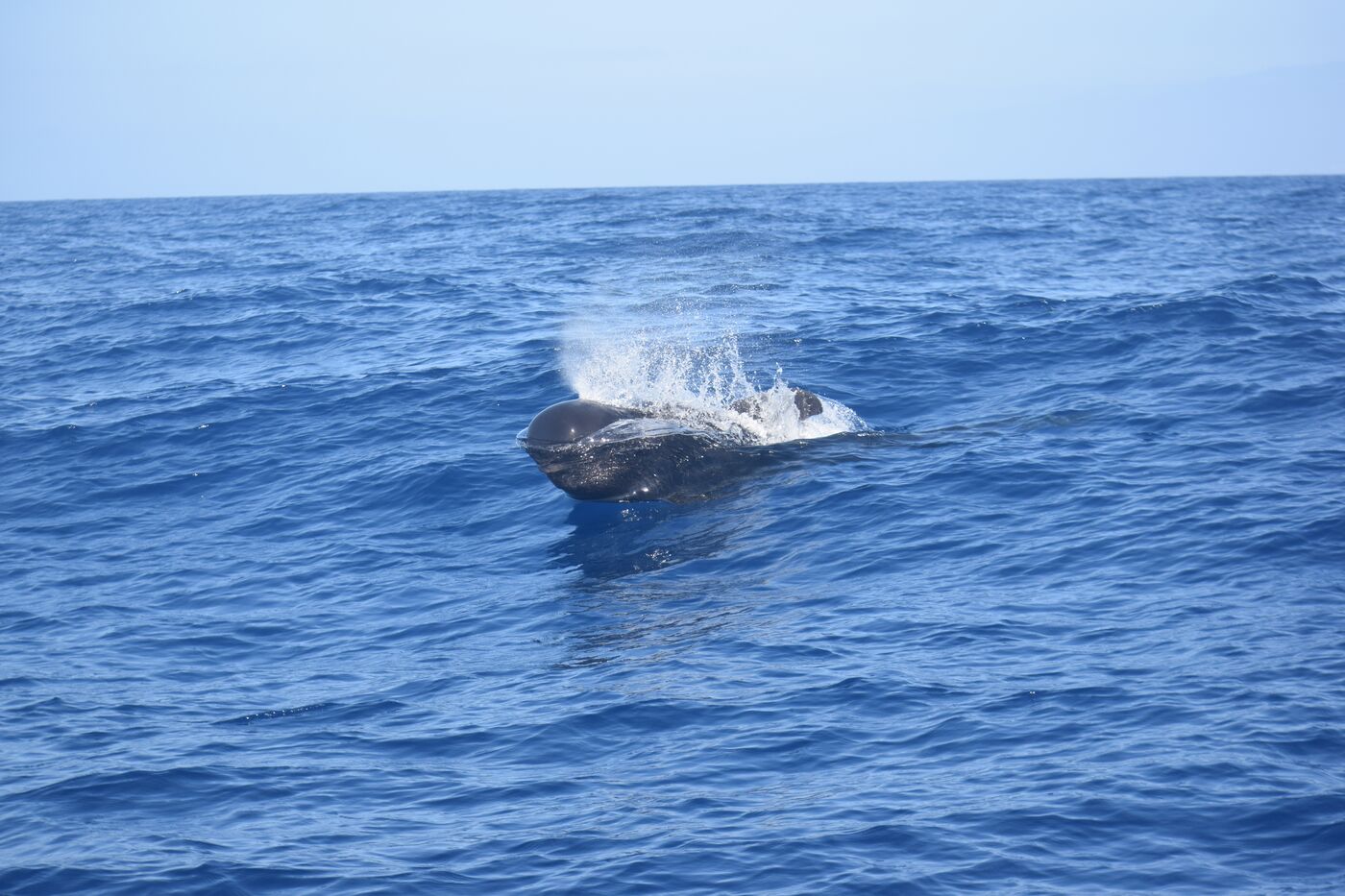
Blunt-headed, matt black, and much bigger than people expect the first time one surfaces alongside a small boat. Short-finned pilot whales are the largest members of the dolphin family you will see off Tenerife, and the only large cetacean here that you can plan around rather than hope for.
Why they live here
Pilot whales eat squid, and squid live deep. Most populations of this species have to travel to find water deep enough to hunt in. Off south-west Tenerife they do not: the sea bed falls past a thousand metres within a few kilometres of the coast, so a group can rest at the surface in calm, sheltered water and dive to feeding depth without going anywhere. Deep water plus shelter is a rare combination, and it is why this population stays put while others roam.
What you will see them doing
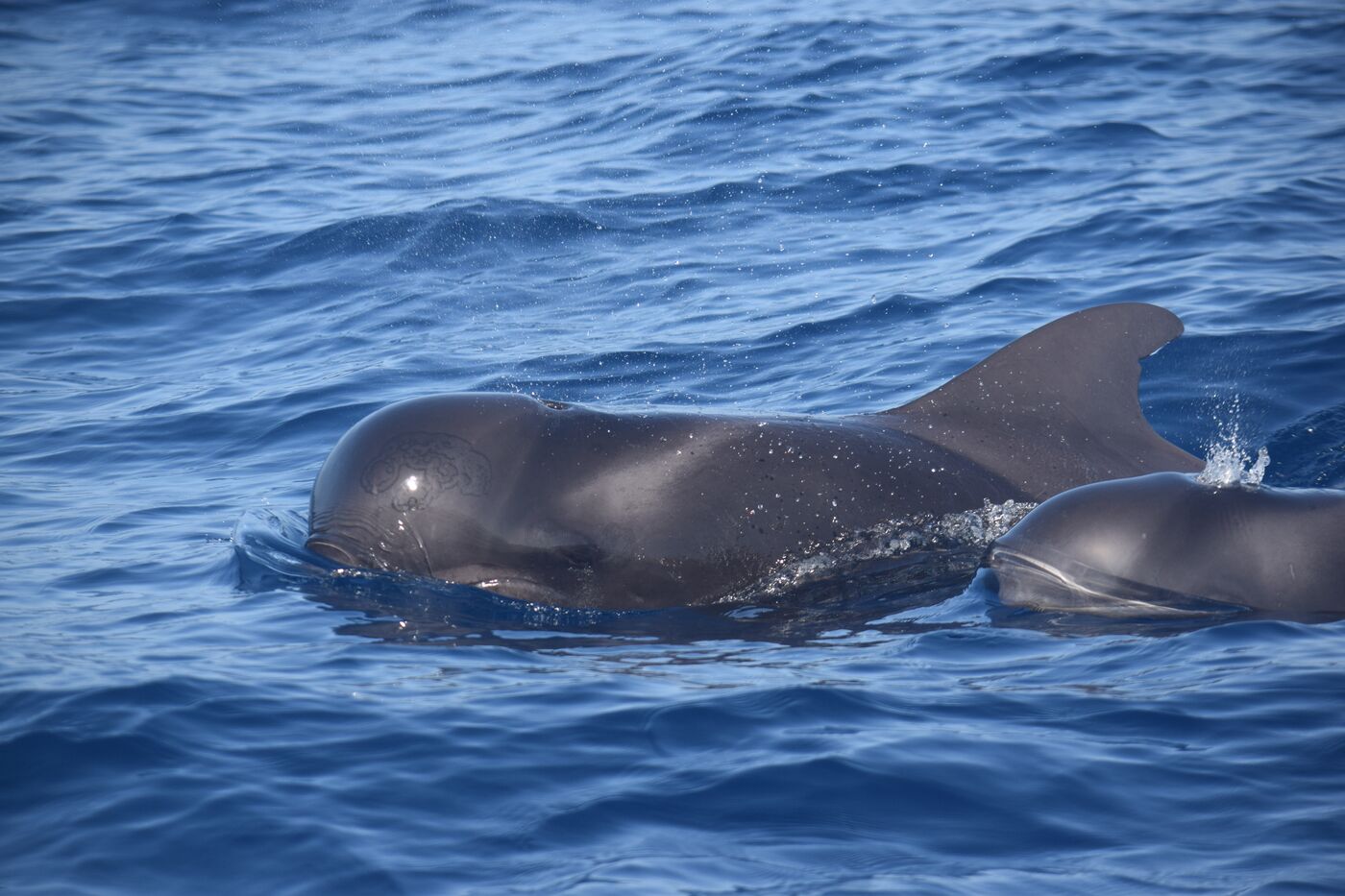
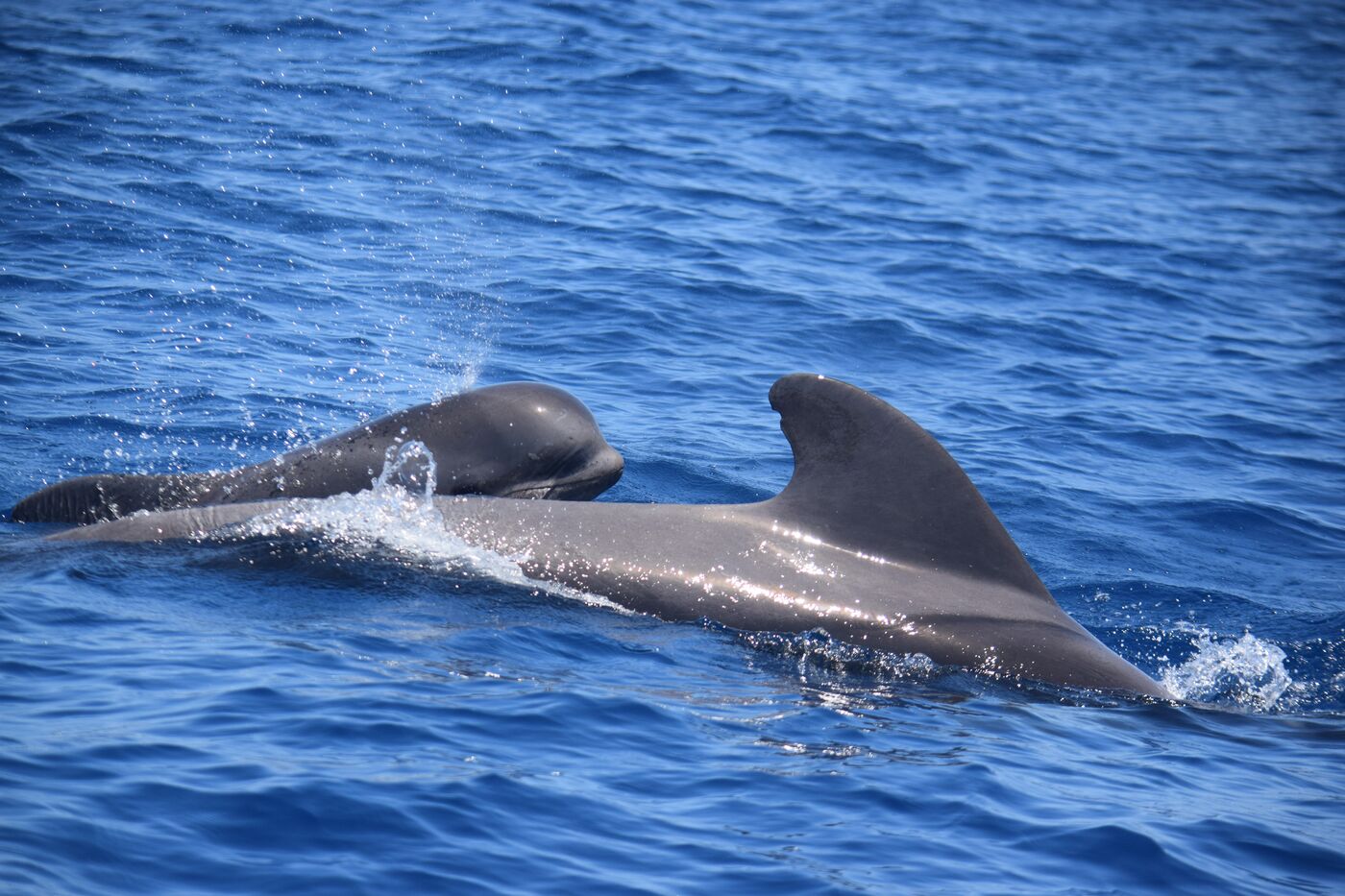
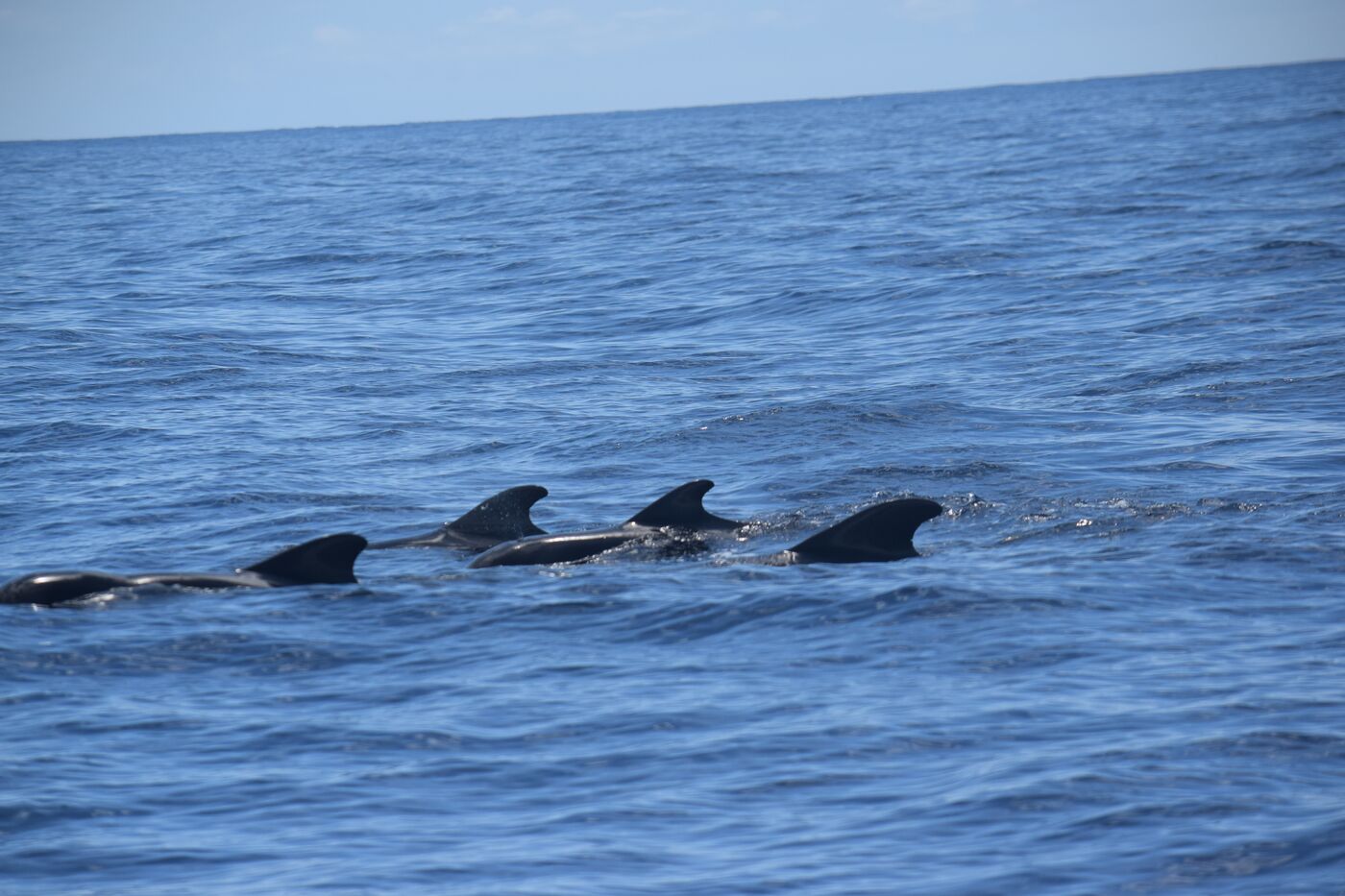
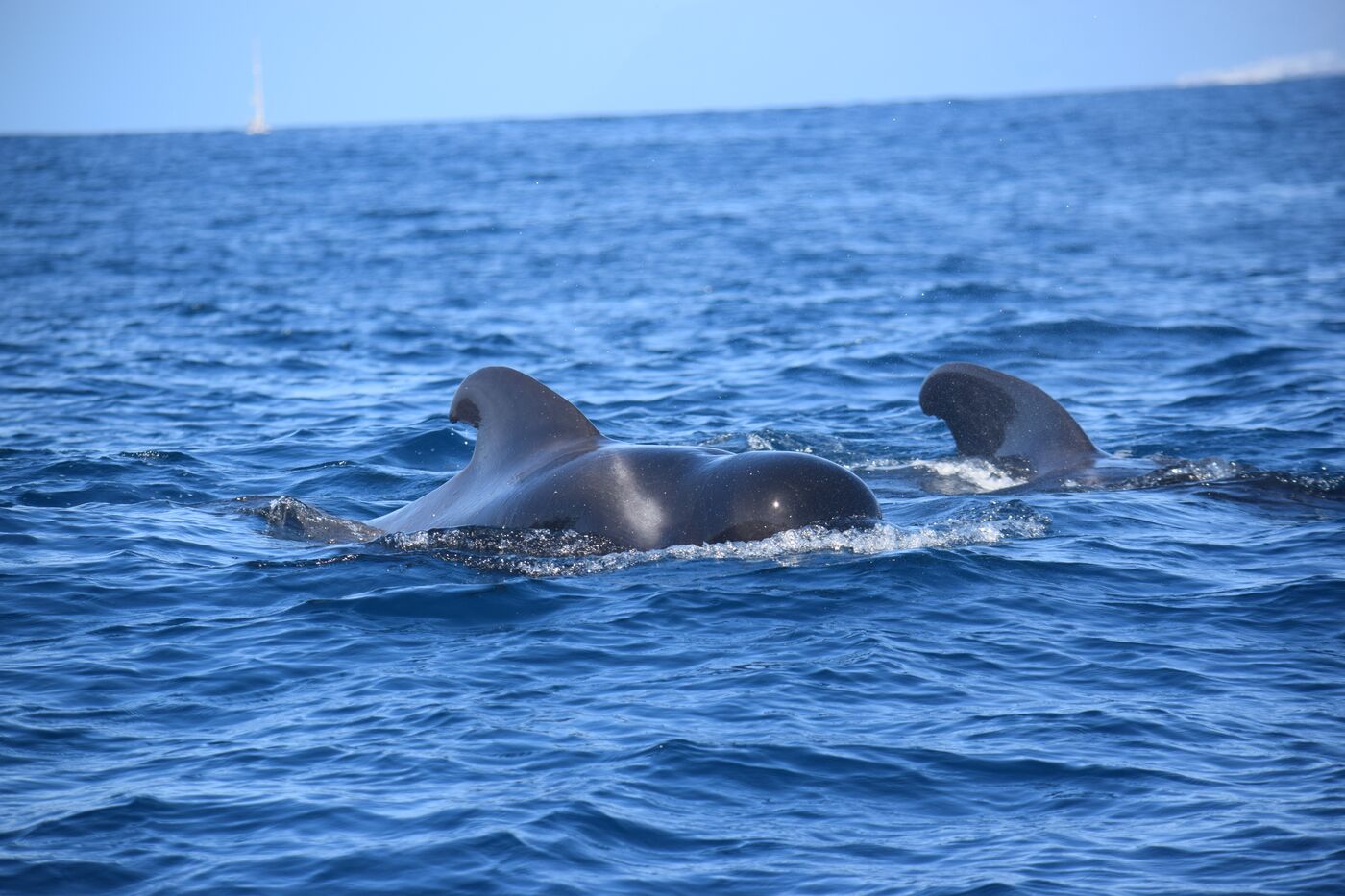
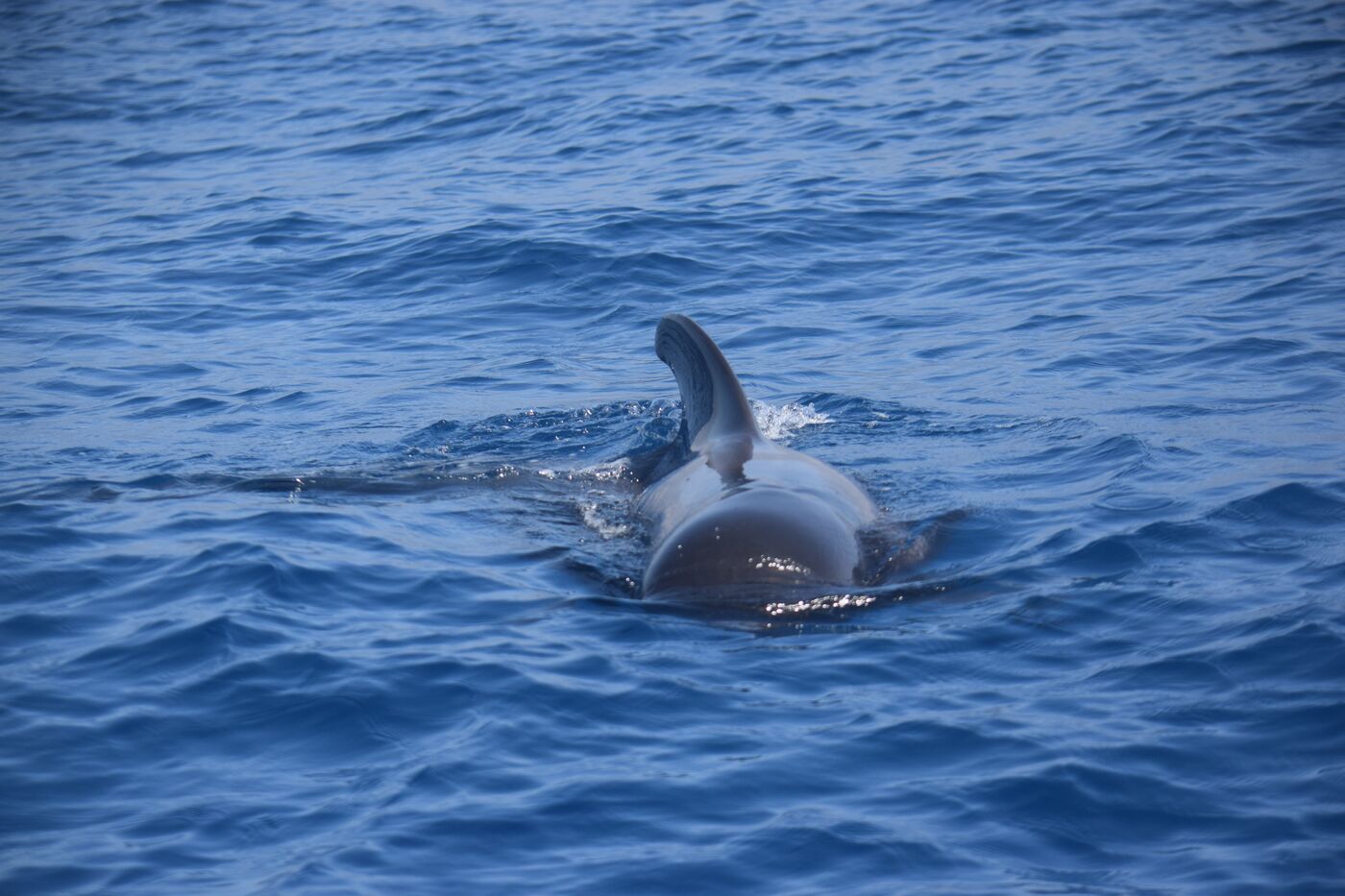
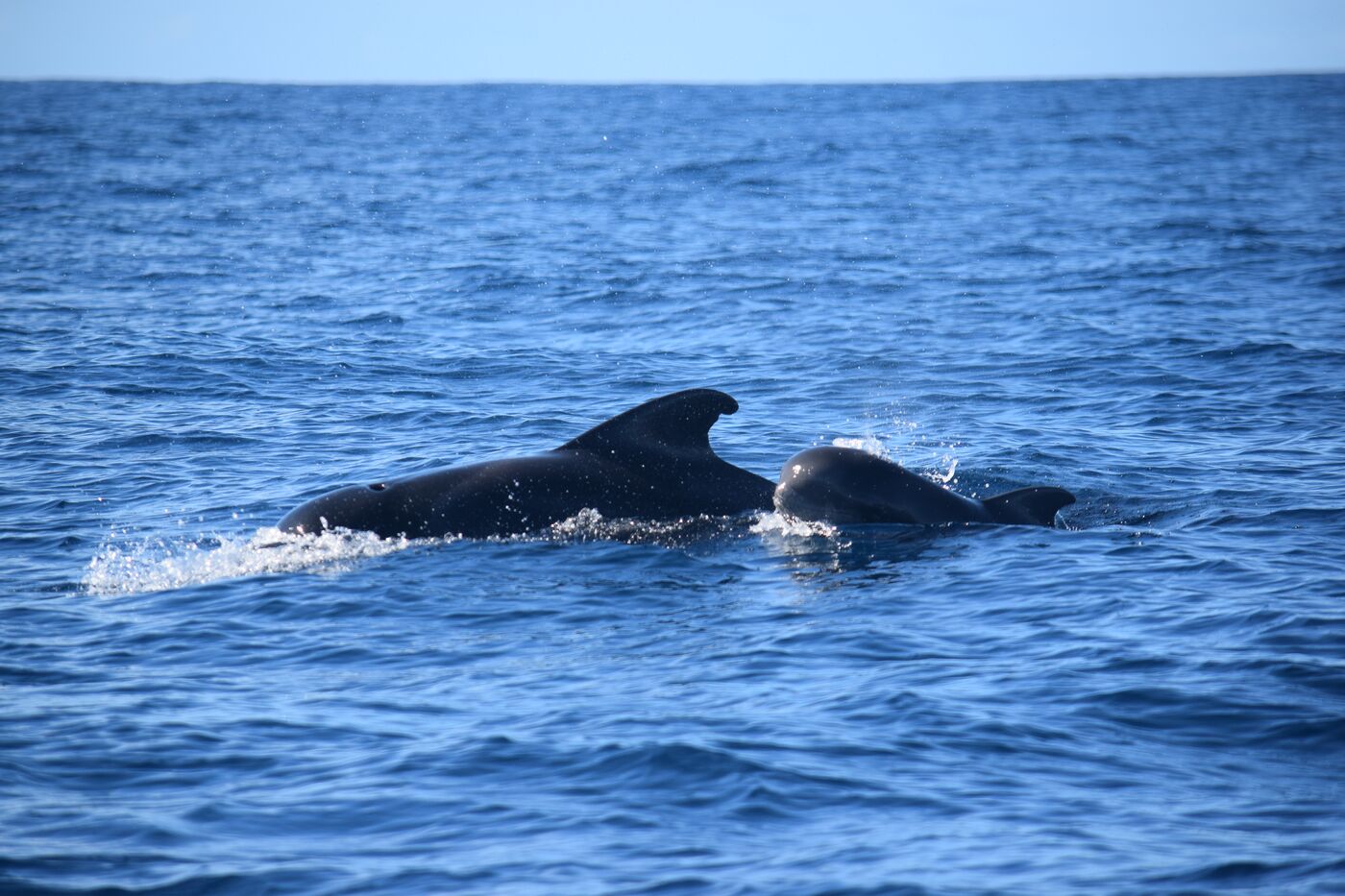
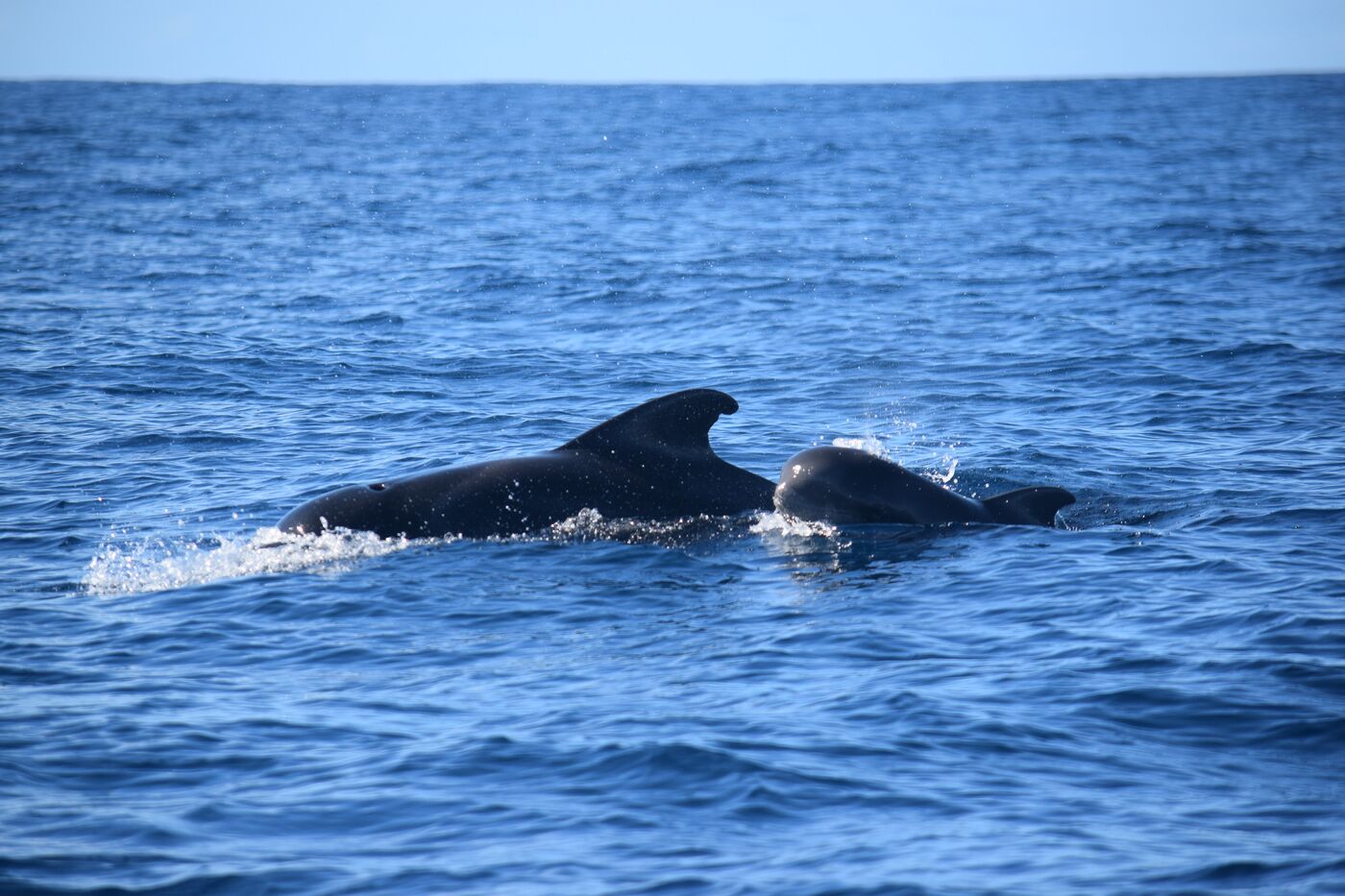
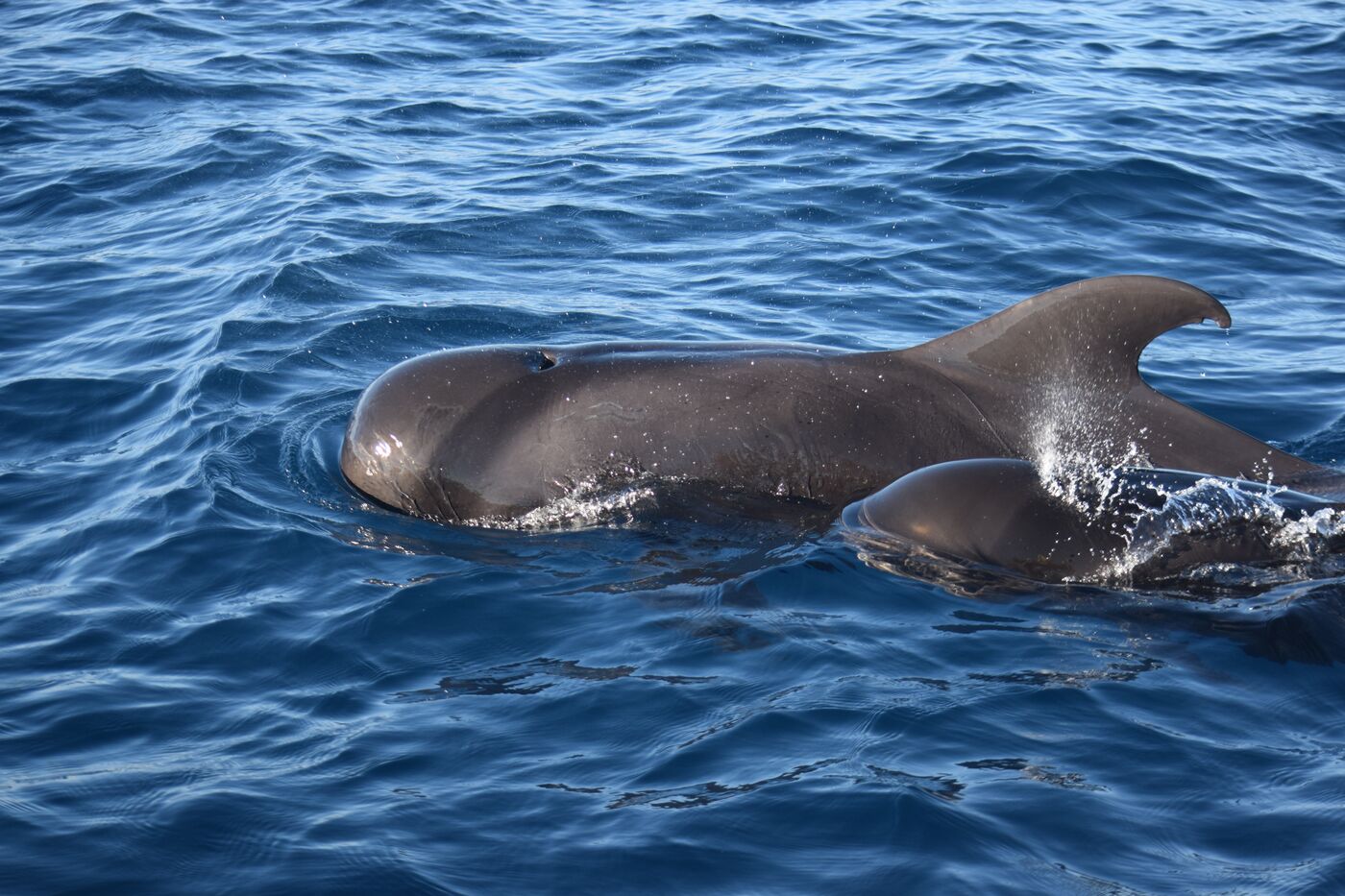
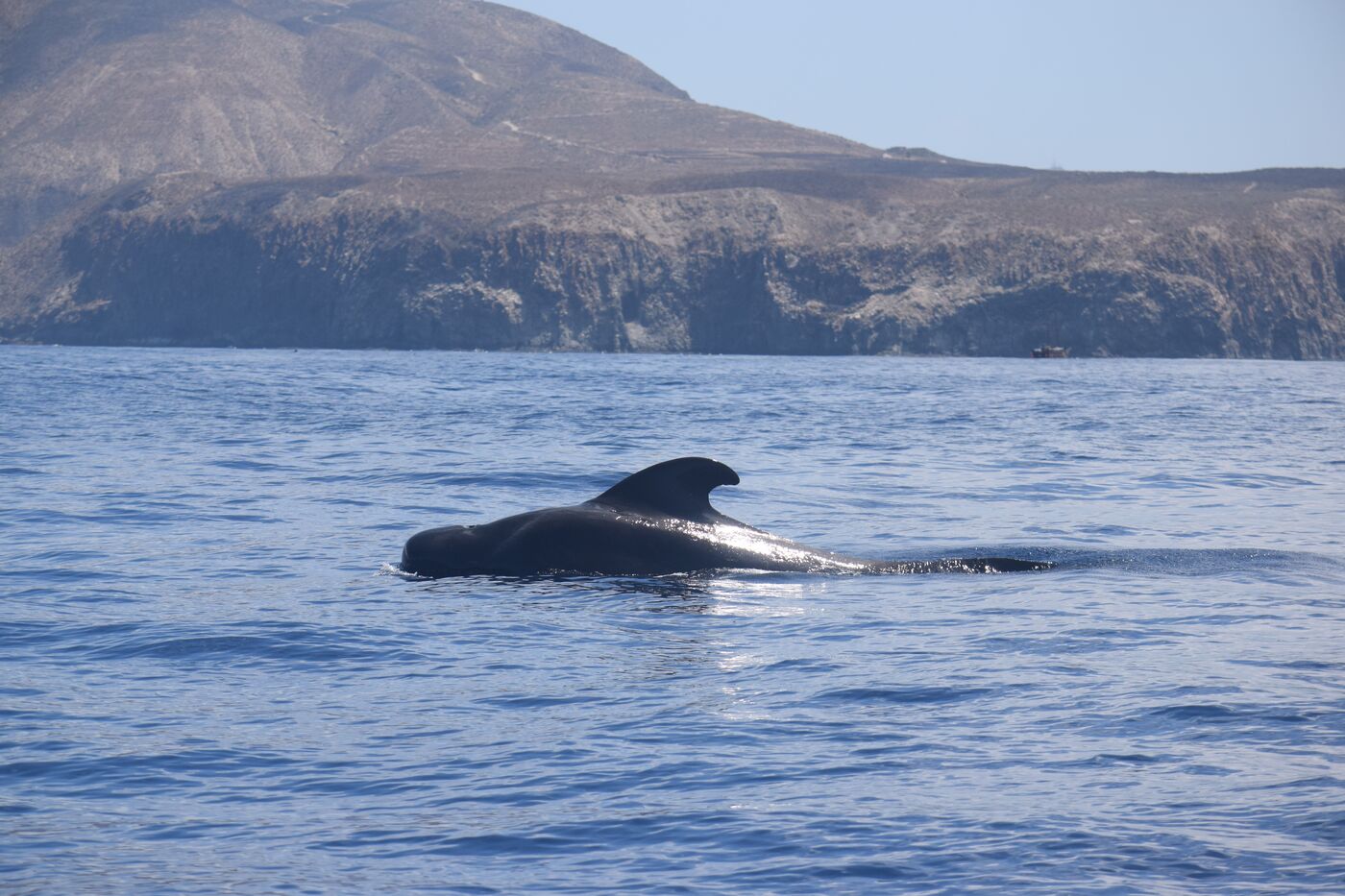
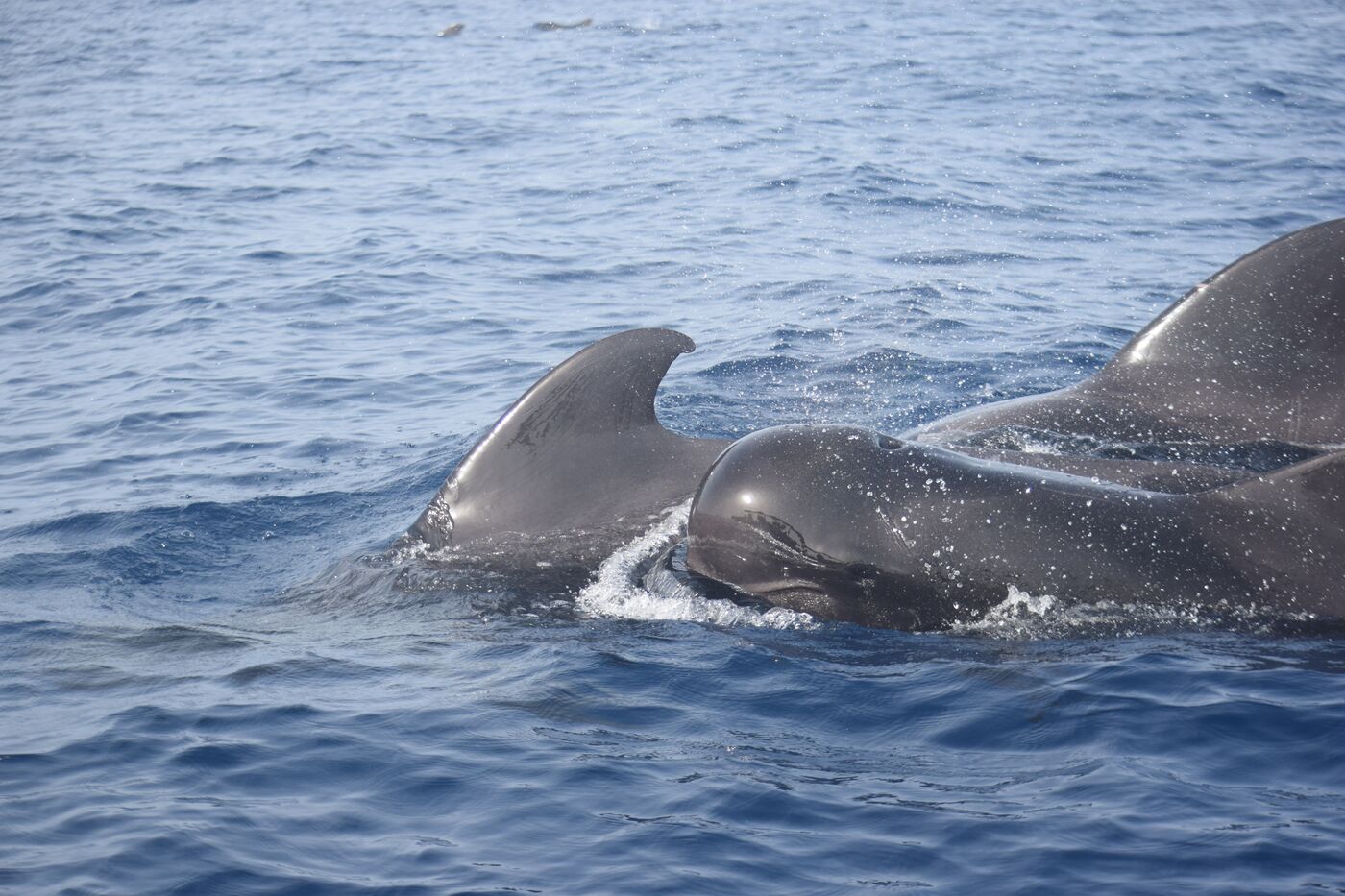
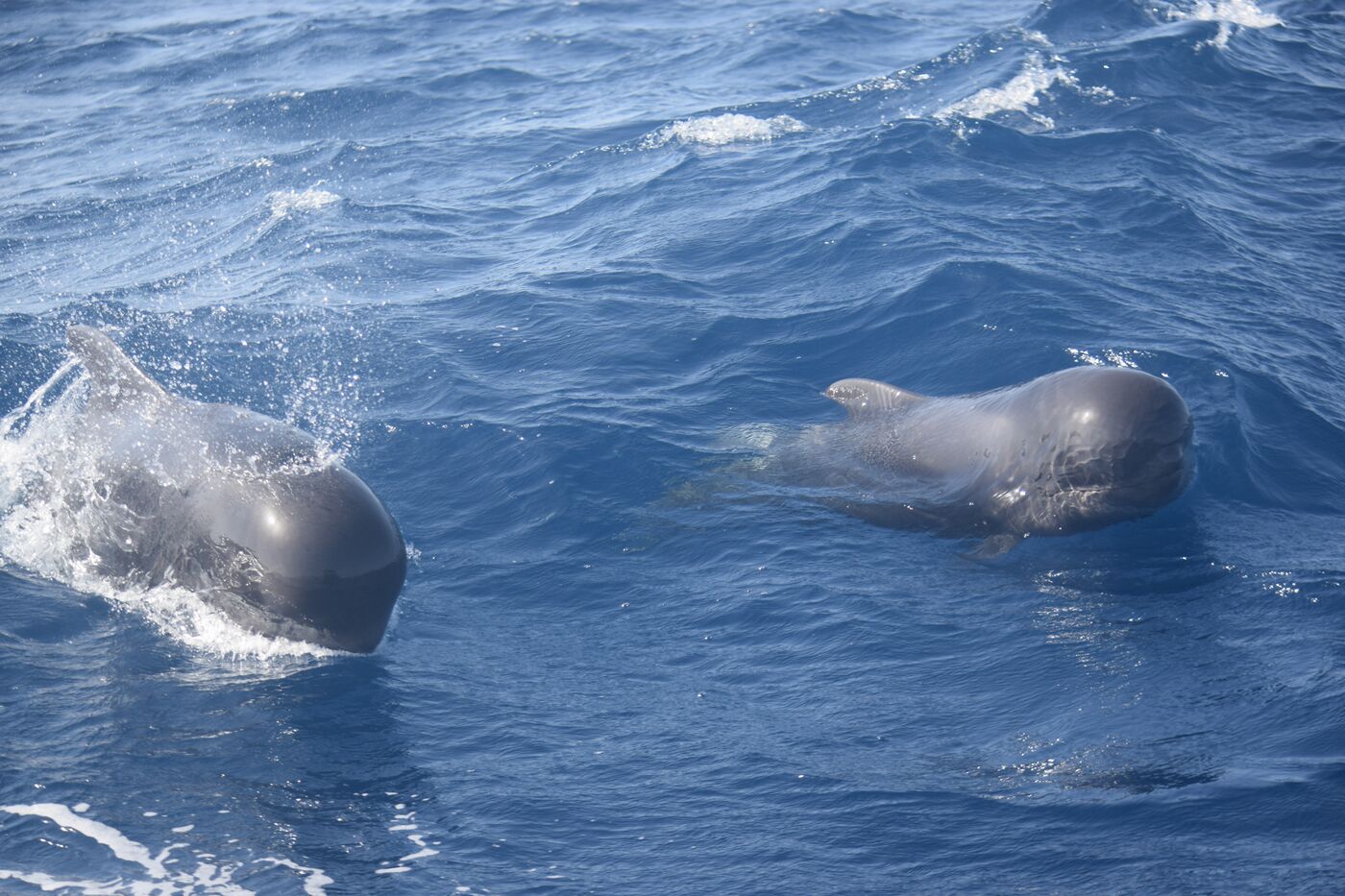
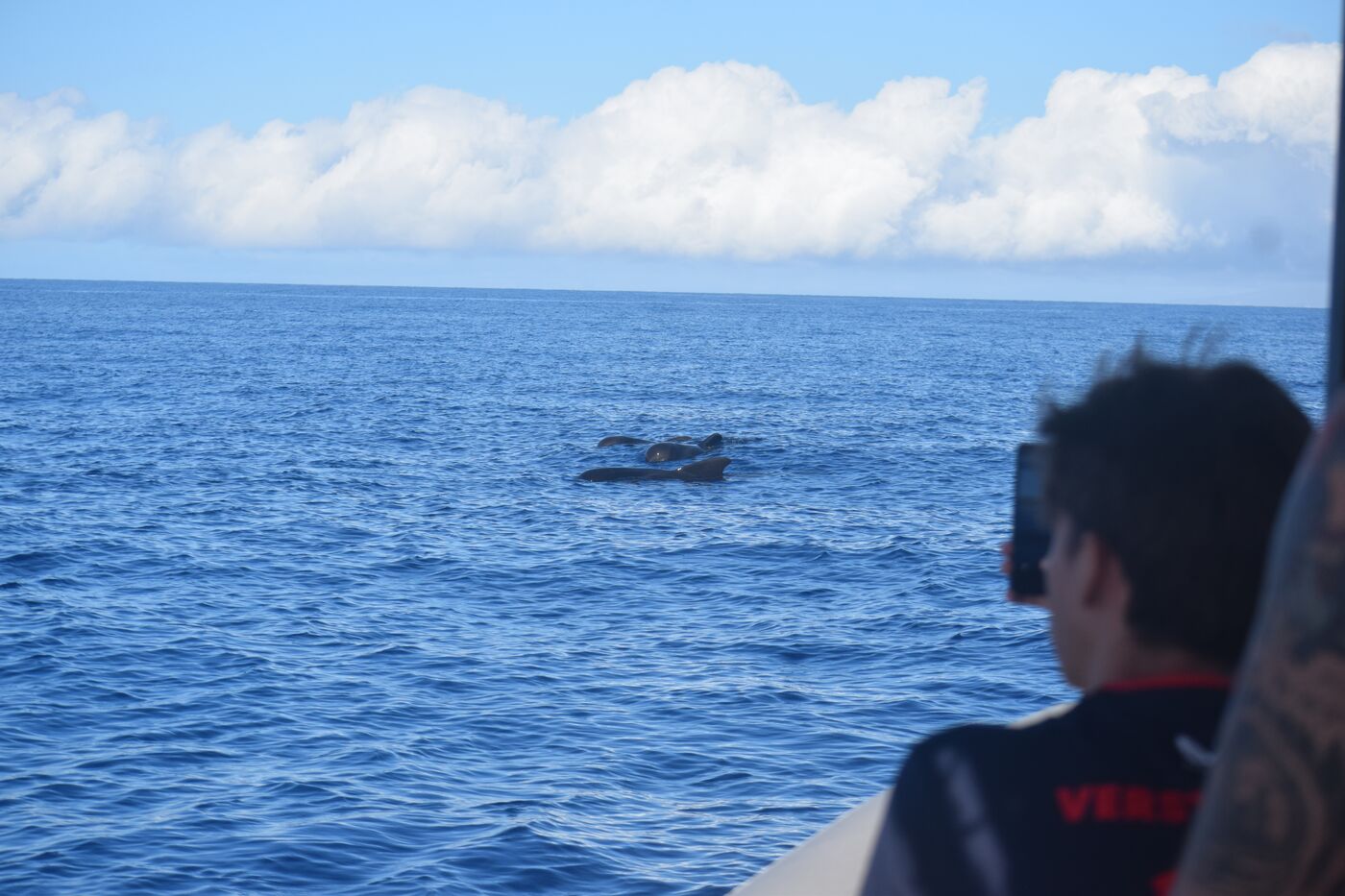
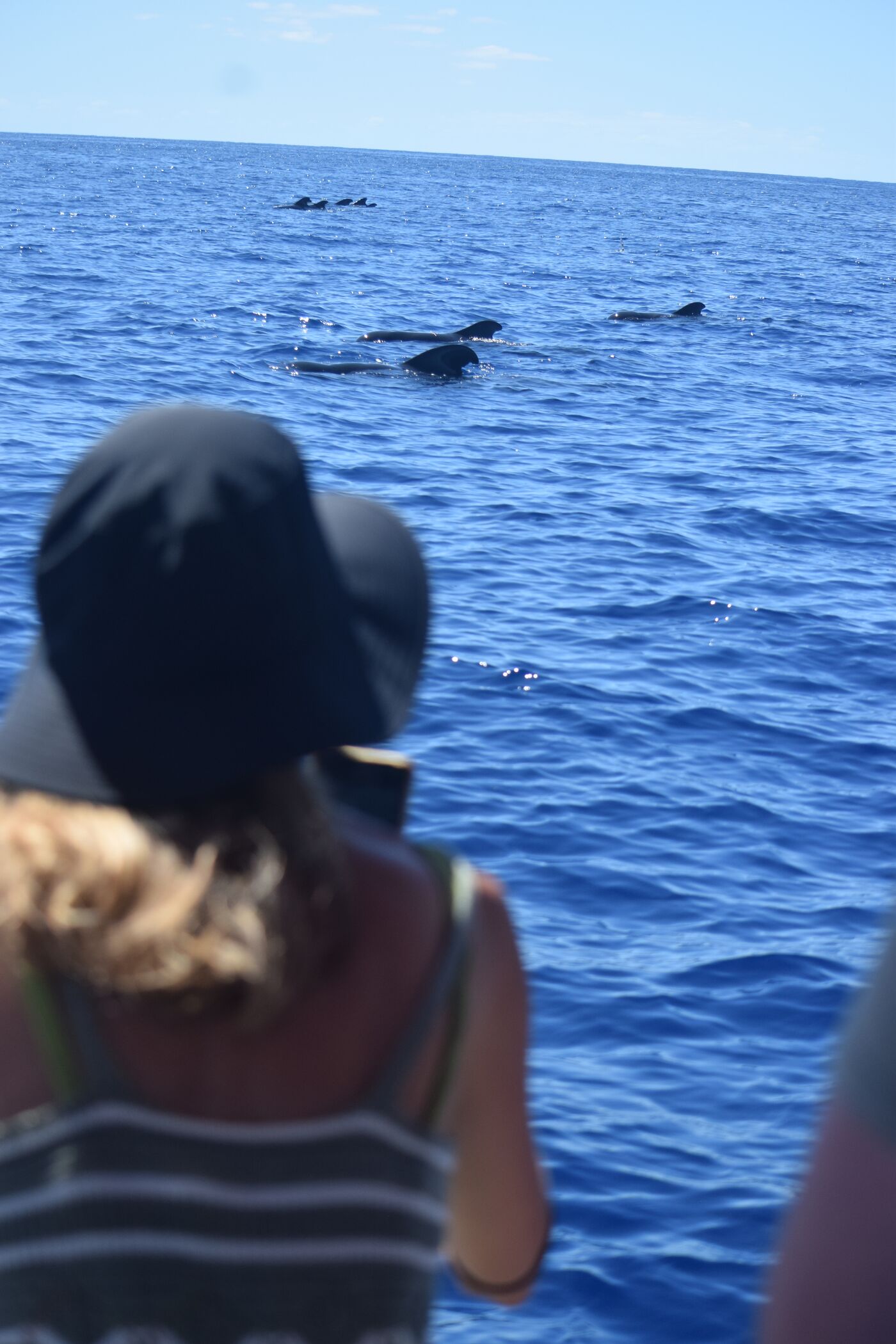
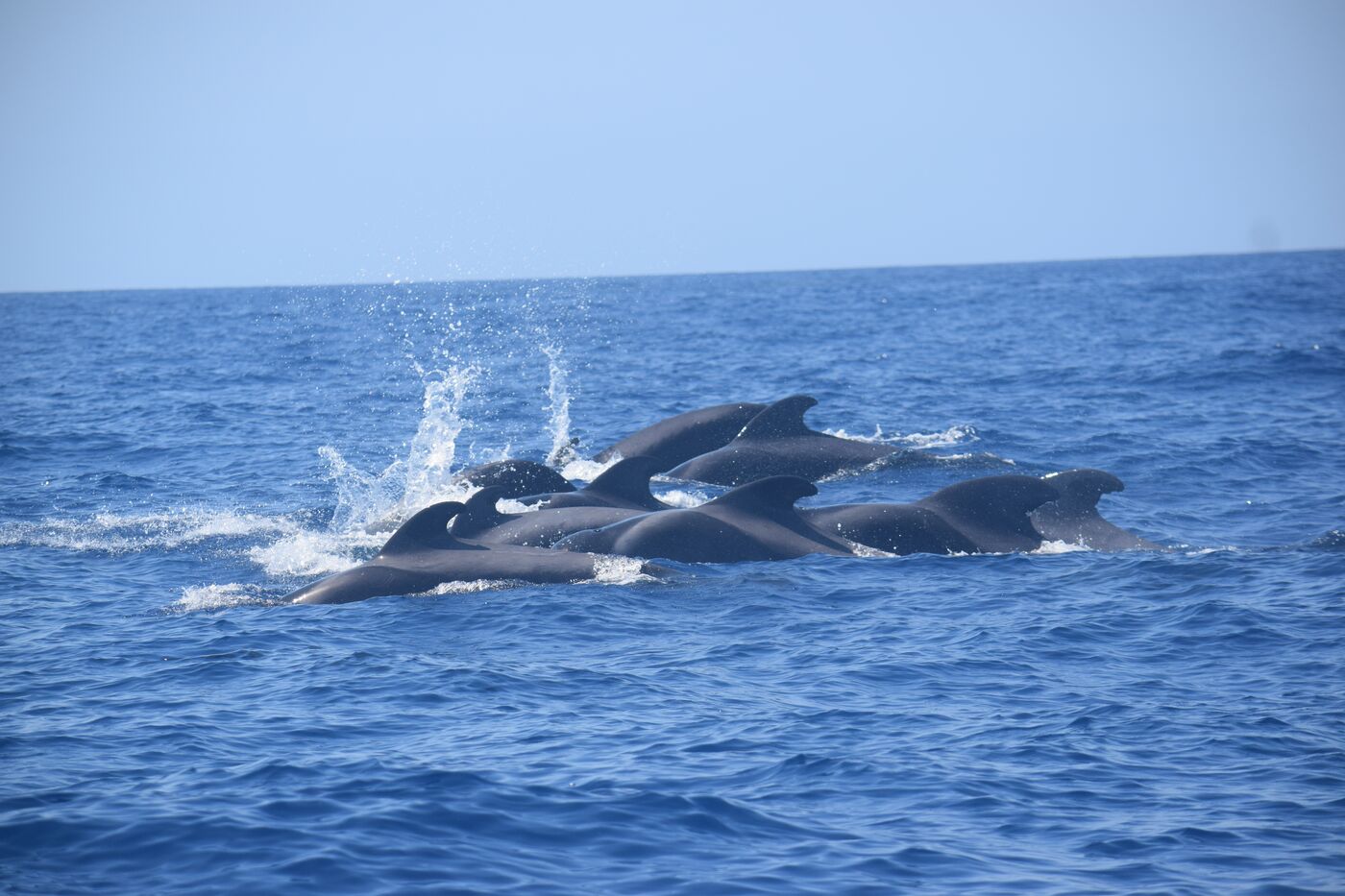
Most of the time: resting. Pilot whales spend a large part of the day logging at the surface in loose groups, recovering between dives. It looks undramatic and it is precisely what a healthy undisturbed group should be doing. You will see backs and dorsal fins rolling slowly, calves tucked alongside adults, and occasionally a head lifted clear of the water to look around.
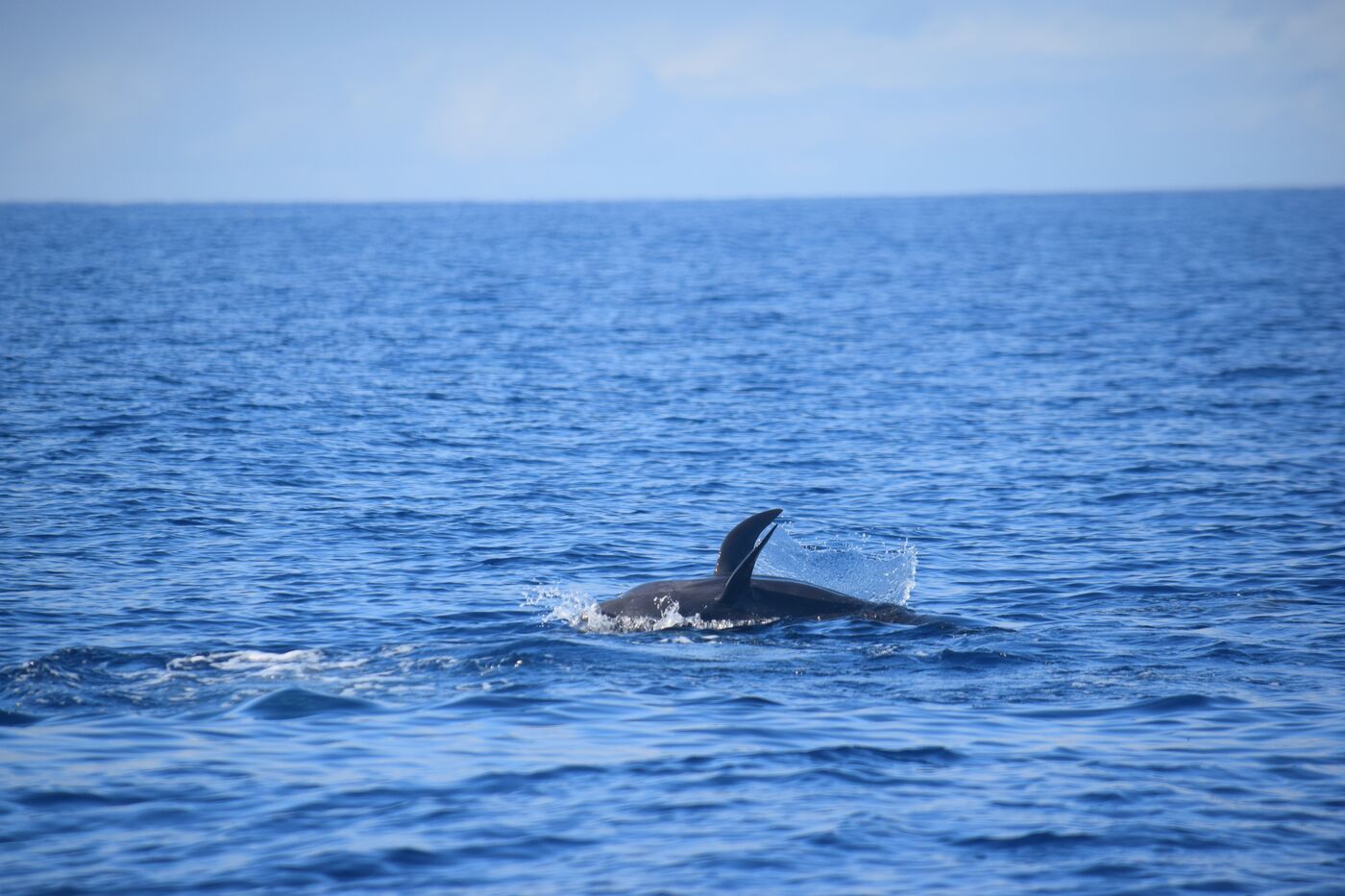
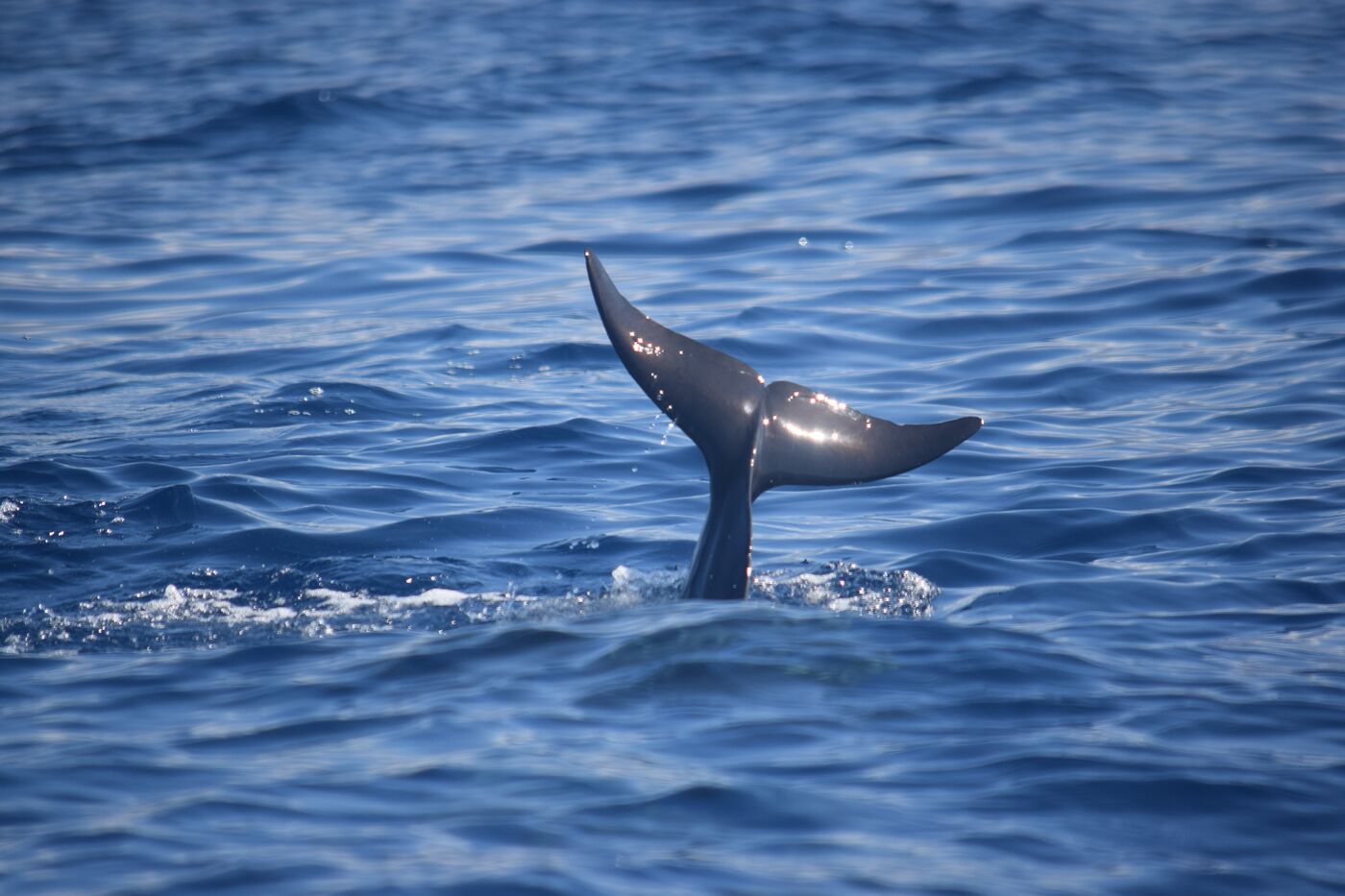
Less often, and worth waiting for: a whole group turning and diving together, or a tail lifted vertically before a deep descent.

Family groups that stay together for life
Pilot whale societies are matrilineal and unusually stable: offspring of both sexes often remain with their mother's group for their whole lives. Females live well past the end of their reproductive years, which is rare in mammals and is thought to matter for the survival of the group — an experienced older female carries knowledge of where and when to find food.
This is also why disturbance matters more than it looks. Splitting a resting group with a fast boat is not a momentary inconvenience to individual animals; it disrupts a social unit that has been together for decades.
How individuals are recognised
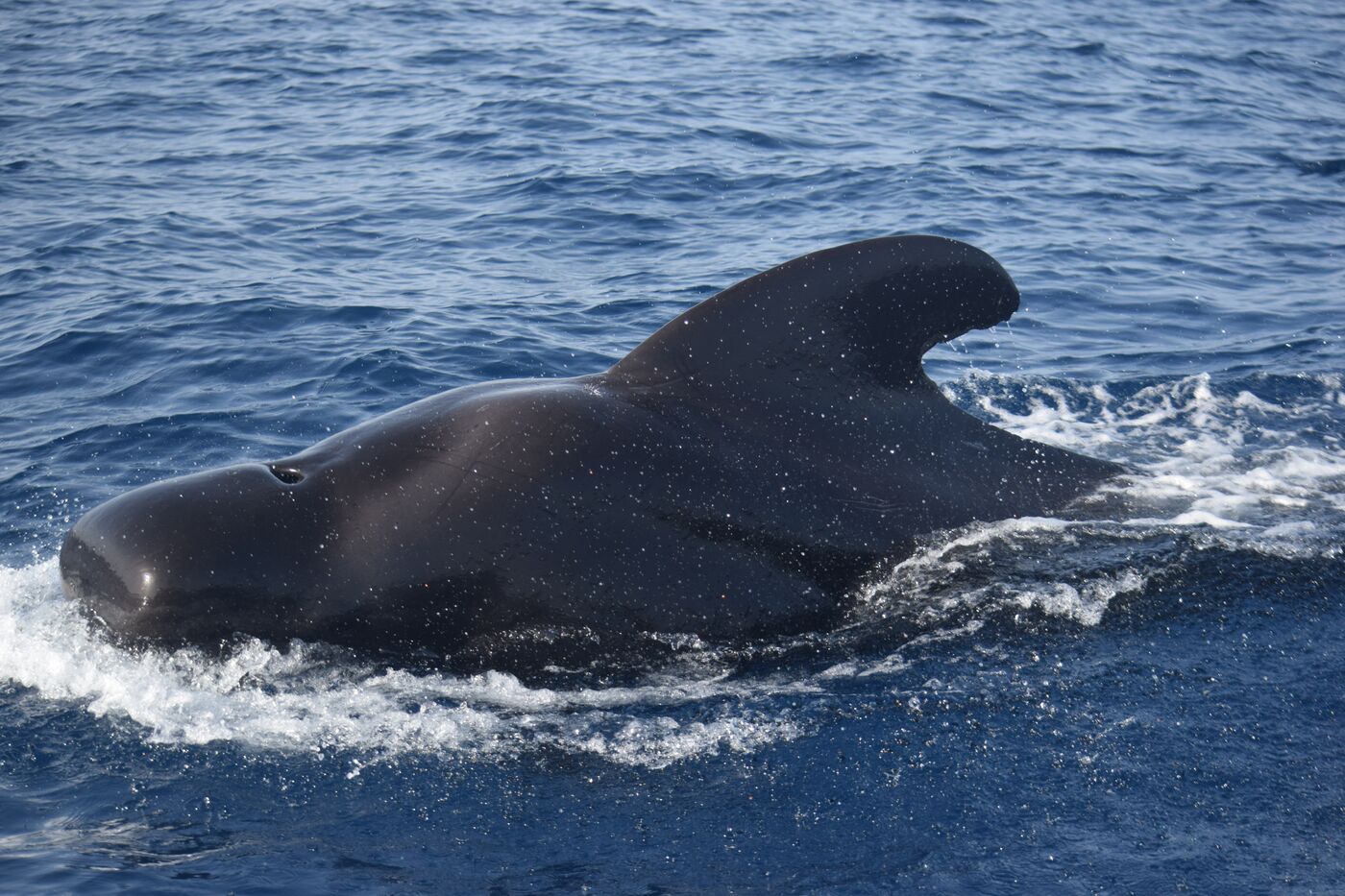
Every adult carries a unique pattern of nicks, scars and scratches along the trailing edge of the dorsal fin. Photographing that edge and matching it against a catalogue is how researchers have tracked this population over the years, and it is why a biologist on board can sometimes tell you not just the species but which animal you are looking at.
Seeing them
Any month, any departure. Sightings are recorded on the overwhelming majority of trips, which is what sits behind the 99.9% figure operators quote. Take the 9:30 boat if you can: a pilot whale's roll at the surface is low and easier to spot on flat water. On the later departures they are just as present — it takes a little more looking.
Questions about pilot whales
Are pilot whales dangerous?
No. They are large and powerful, but there is no record of a wild pilot whale harming anyone from a boat. The risk runs the other way: boats that approach too fast or too close disrupt resting groups and can injure animals with propellers.
Why are they called pilot whales?
From the old belief that the group follows a single pilot. Groups do have strong social structure and travel together, but there is no single leader steering the rest.
How deep do they dive?
Routinely several hundred metres, and to around a thousand when hunting squid. A deep dive is a sprint, not a glide — they accelerate down after prey and come back up.
Do they stay all year?
Yes. This is one of relatively few places in the world with a resident, studied, year-round population of this species.
More pilot whales, off this coast
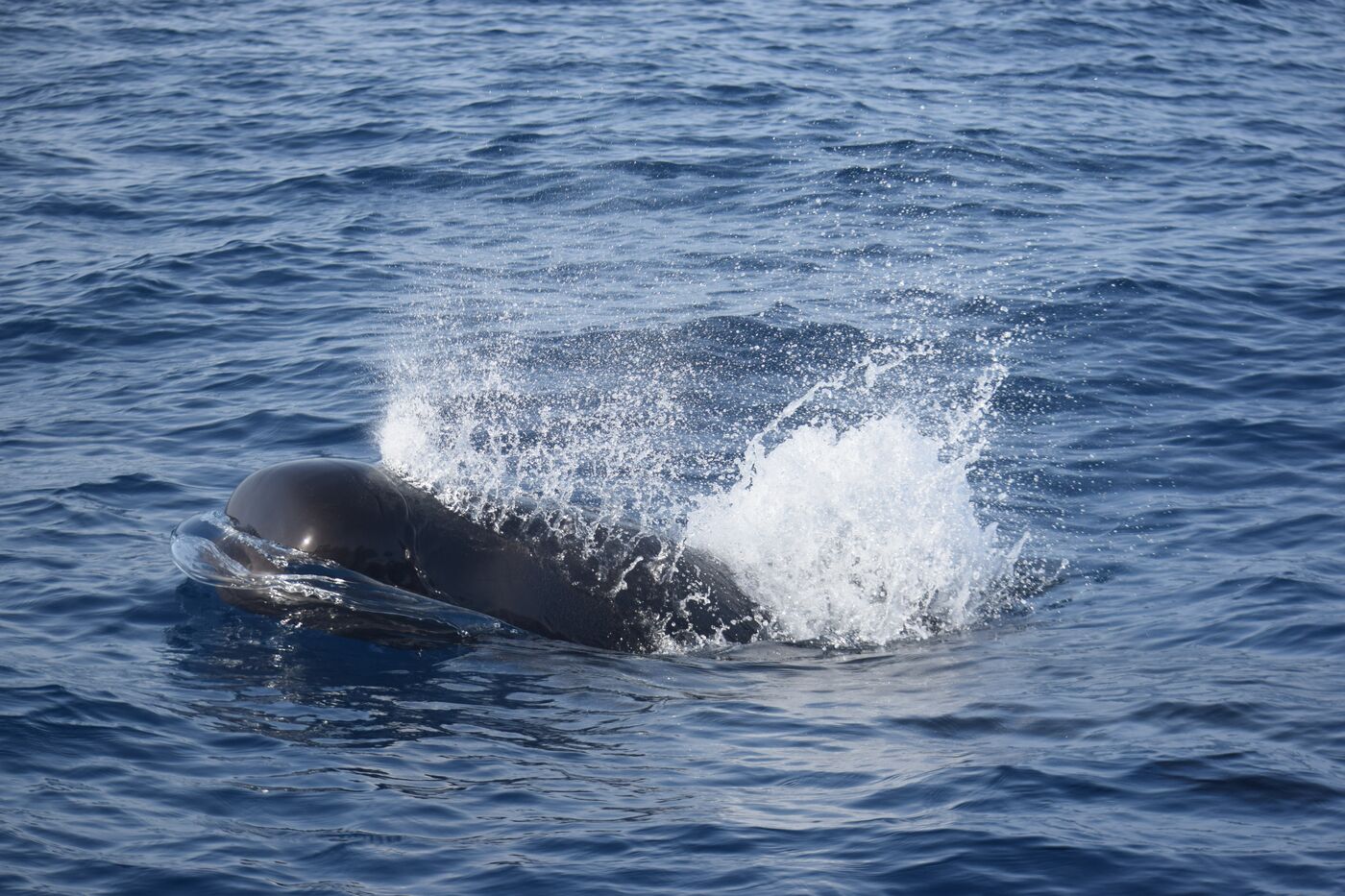
All of these were taken from the boat on the water this page describes. Tap any of them to see it full size.
2 h · max 10€60 per adult
Book