
Striped dolphins in Tenerife
A dolphin of the open sea that comes close enough to be counted, but rarely stays long. The dark stripe from eye to tail is what gives it away.
How to recognise it
The name comes from the dark band that runs from the eye back along the flank to the tail, with a second stripe branching towards the flipper. On a clean sighting it is unmistakable; at speed and at distance, less so — it is slim, mid-sized and dark above with a pale belly, which describes several other species too.
Size helps: noticeably smaller and slimmer than a bottlenose, similar in build to an Atlantic spotted dolphin but without any spotting at any age.

Why you see it less
Striped dolphins are a species of deep, open water. They are common across the Atlantic and the Mediterranean, but they generally stay further offshore than the channel worked by a two-hour trip. That is the whole reason they are an occasional sighting here rather than a regular one: not scarcity, distance.
When they do come within range they usually arrive in numbers and moving fast — a group crossing the field of view in a couple of minutes rather than settling alongside the boat.
What they do
Fast, energetic and often airborne. Striped dolphins are among the more acrobatic species in these waters, given to leaping and to a rolling motion at the surface. They are less inclined to approach boats than bottlenose dolphins, so what you usually get is a group doing its own thing at a distance rather than an encounter.
Common questions
Can I plan a trip around striped dolphins?
No. They are an occasional sighting here, and any trip should be booked for the resident pilot whales and dolphins. If striped dolphins turn up, they are a bonus.
How do I tell one from a spotted dolphin?
Spots. An adult Atlantic spotted dolphin is freckled; a striped dolphin never is, at any age. Look instead for the dark line running eye to tail.
Are they threatened?
The species is widespread and not considered globally threatened, though Mediterranean populations have suffered documented die-offs from disease.
More striped dolphins
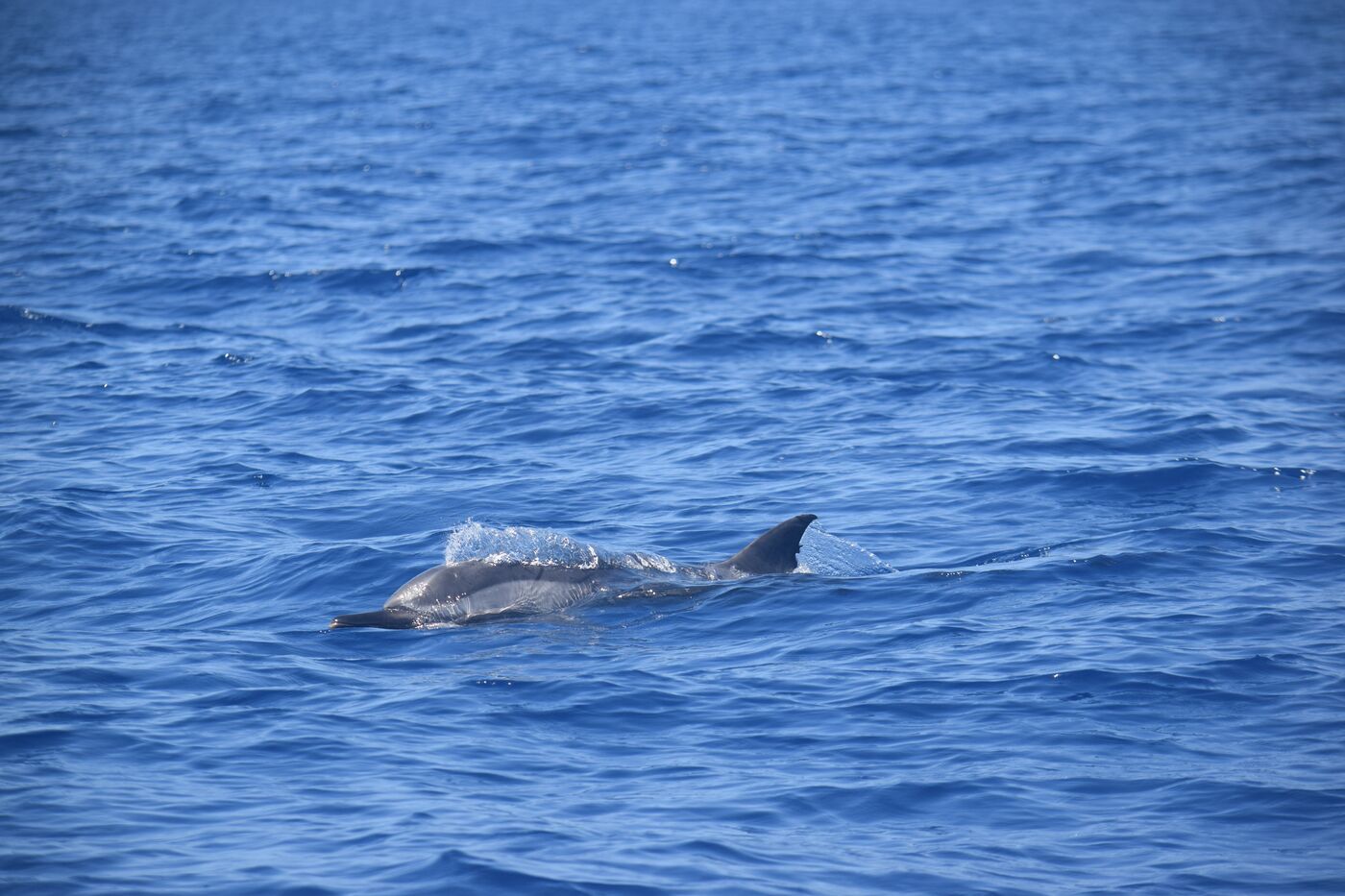
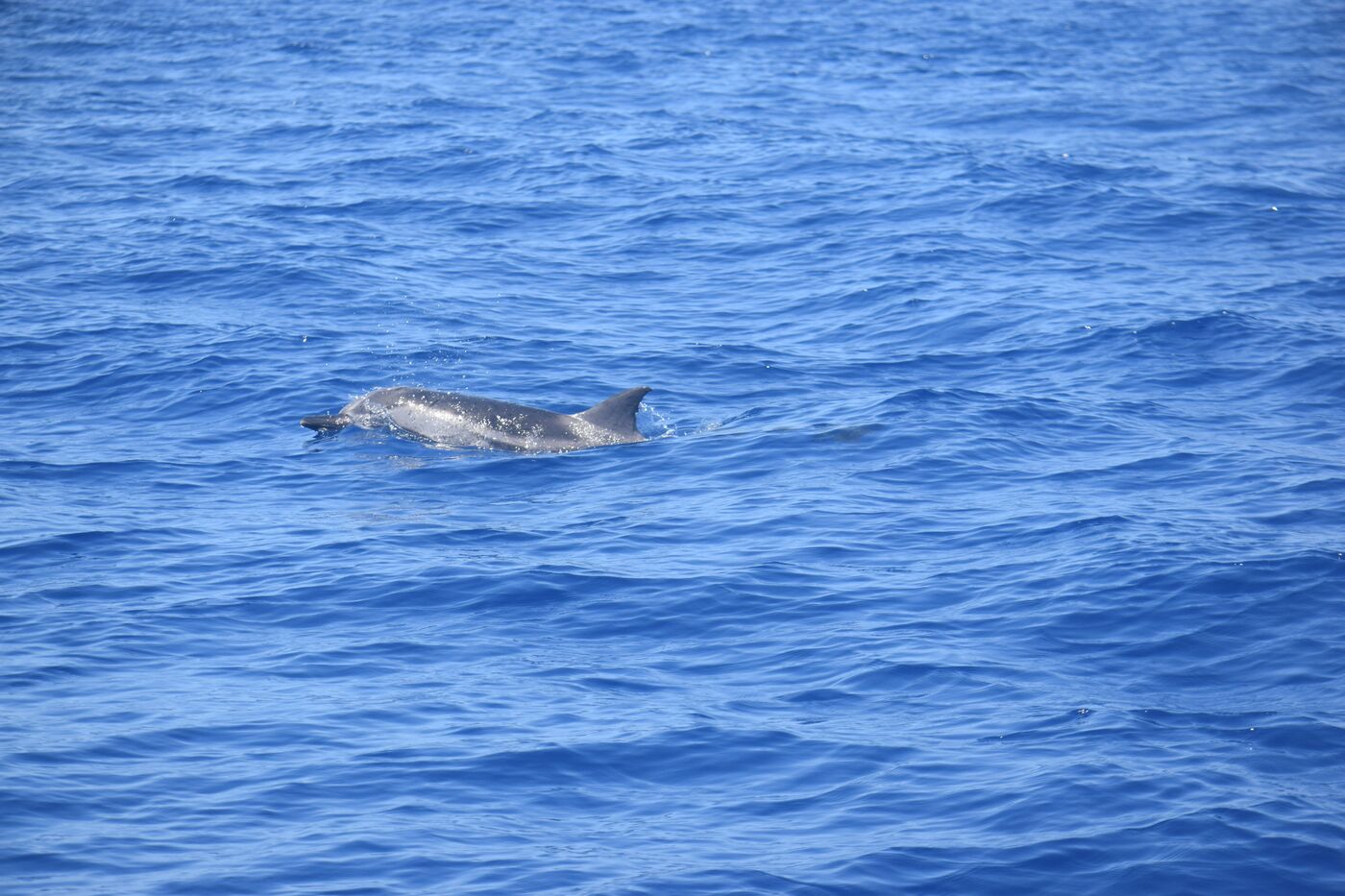
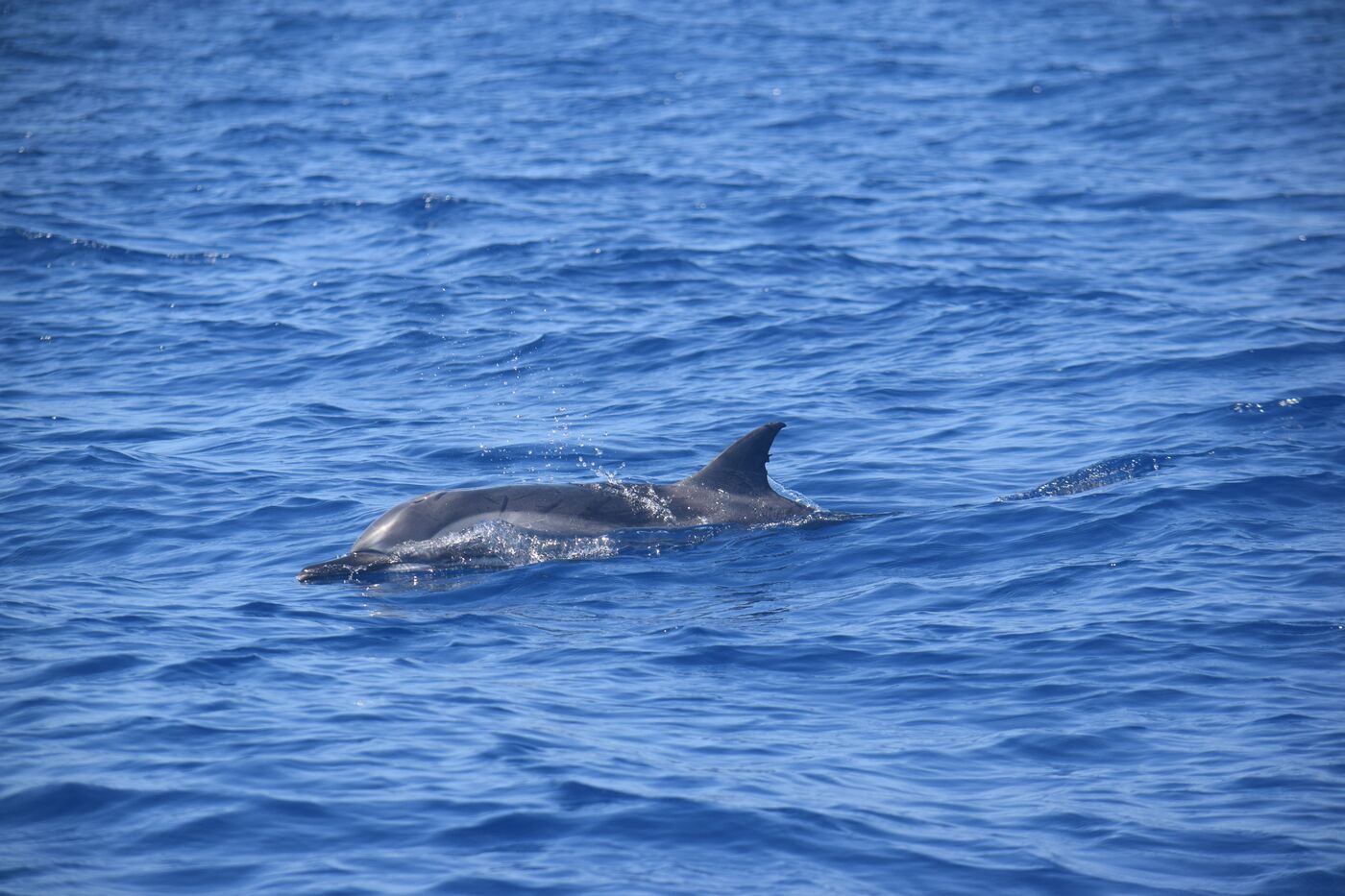
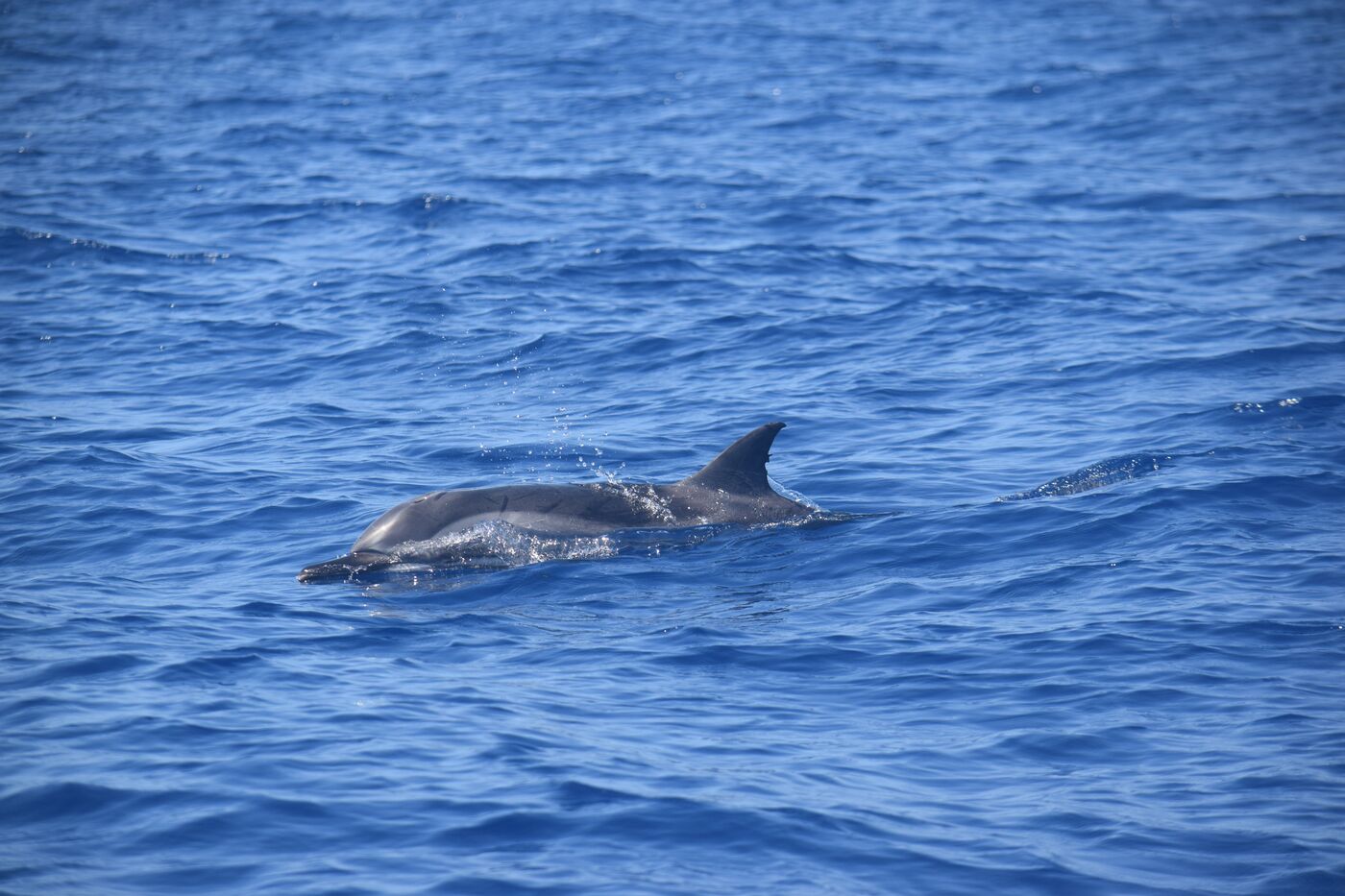
Photographed off south Tenerife. Tap any of them to see it full size.
2 h · max 10€60 per adult
Book