
Blue whales in Tenerife
The largest animal that has ever lived passes these islands. Not often, not predictably, and never something to book a tour on.
It does happen here
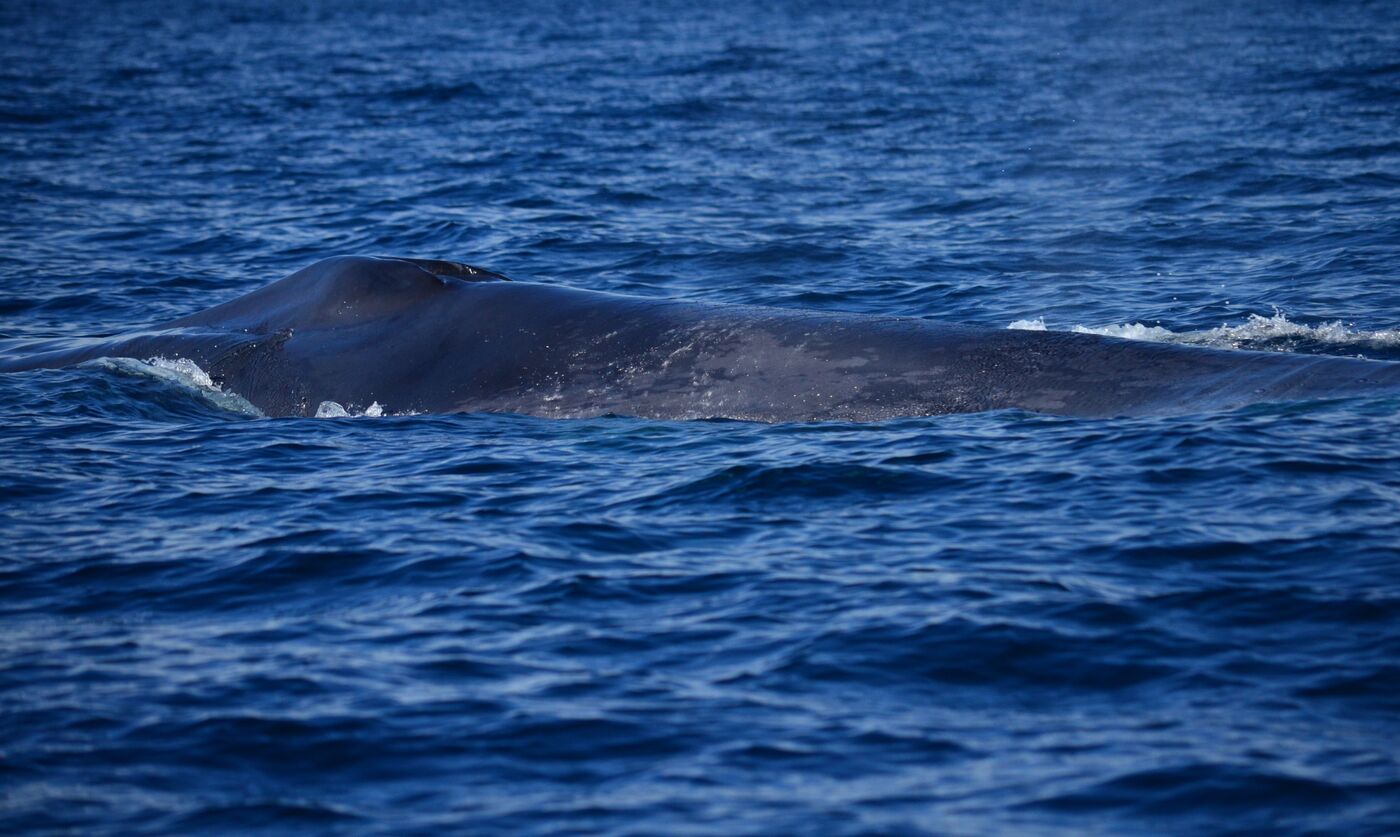
Blue whales are recorded off the Canary Islands, most often in spring, as animals move north through the Atlantic. Encounters are exceptional — the sort of thing that gets photographed, reported and talked about for the rest of the season.
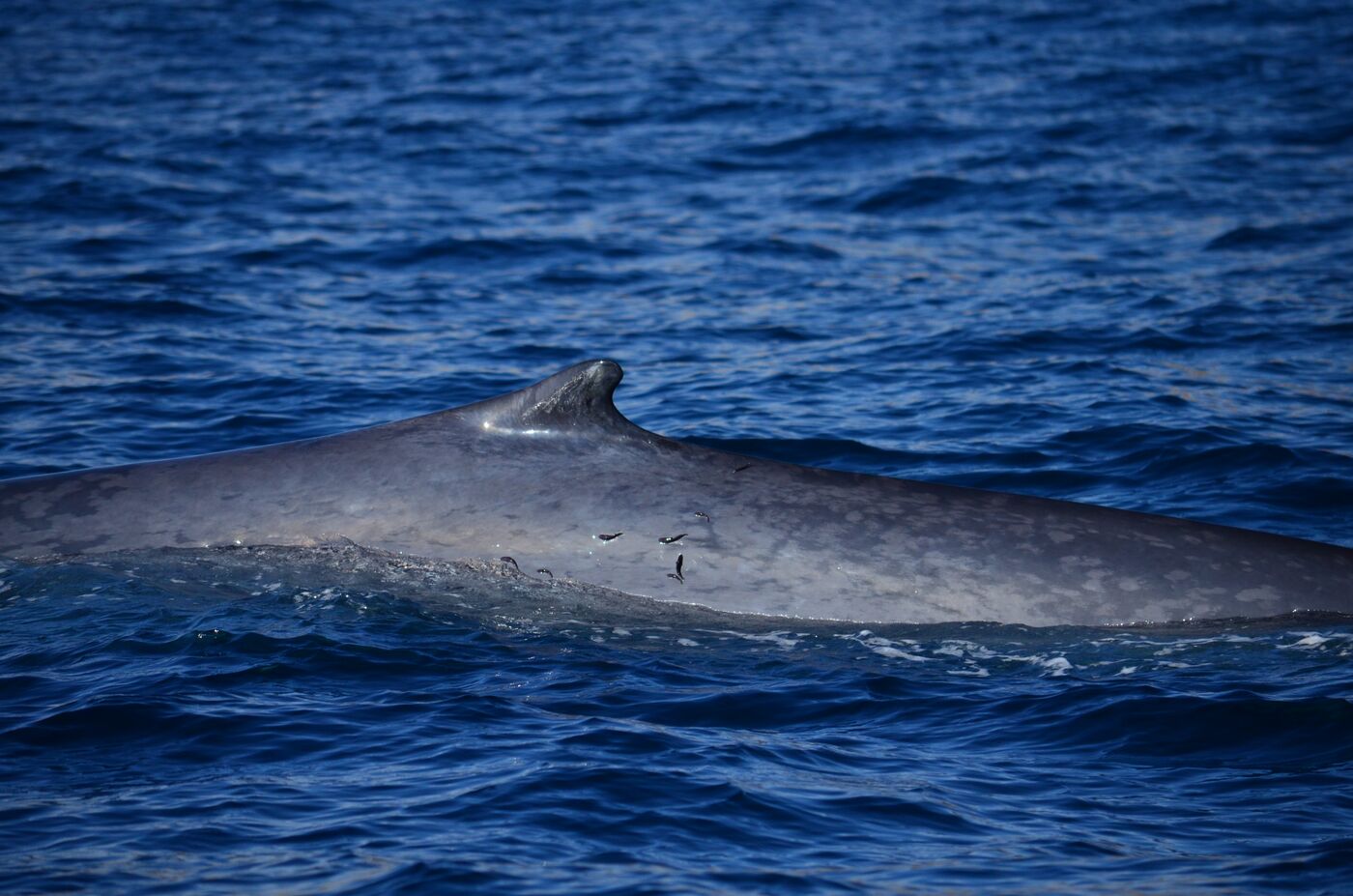
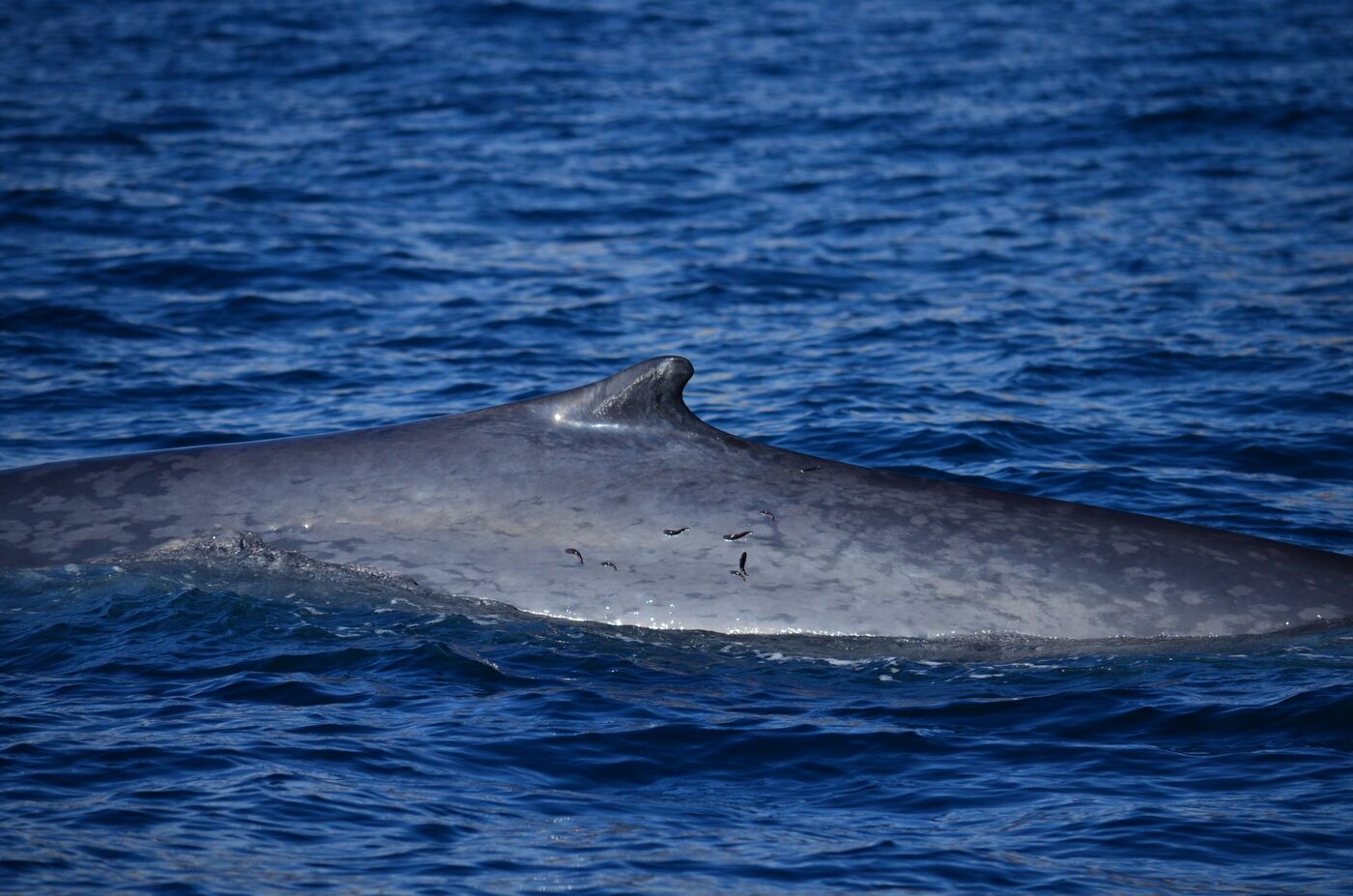
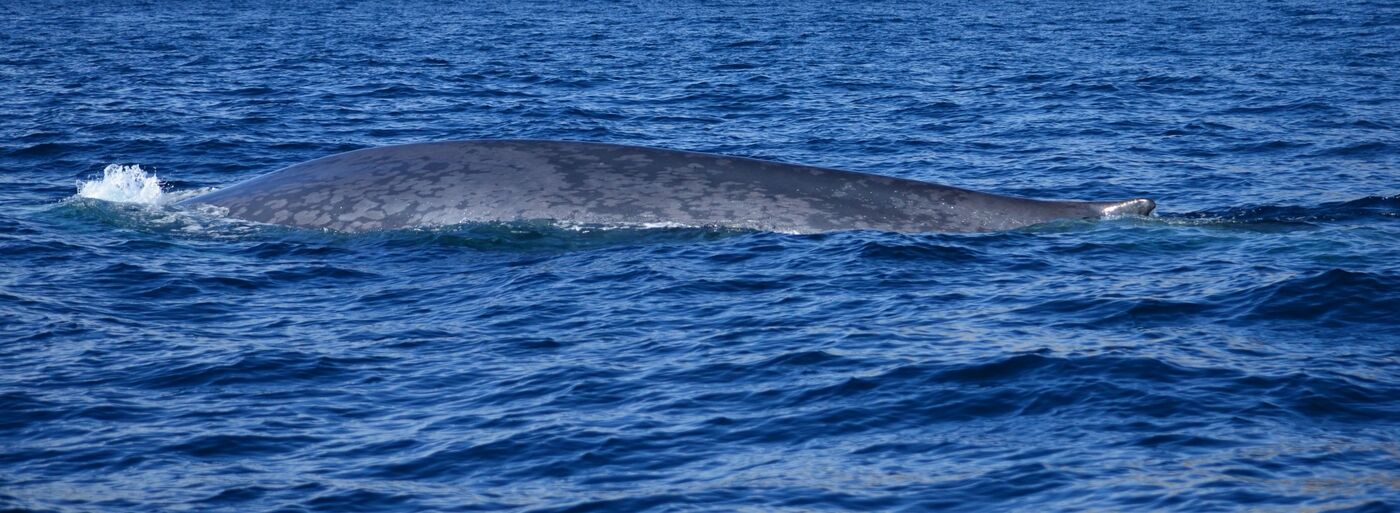
The photographs on this page were taken off Tenerife. That is the honest scale of it: real, documented, and vanishingly unlikely on any given trip.

The size problem

Numbers do not help much. Twenty-five metres and well over a hundred tonnes means nothing until something that long surfaces beside a nine-metre boat. What people report afterwards is not the length but the time — the back keeps coming, and coming, long after it should have finished.

A population still recovering
Industrial whaling reduced blue whales to a fraction of their original numbers in the twentieth century. The North Atlantic population is recovering slowly and remains small, which is the main reason sightings here are so rare — not that the animals avoid these waters, but that there are few of them anywhere.
What to expect instead
Plan your trip around the resident pilot whales and dolphins. If a blue whale turns up you will not need anyone to point it out.
Common questions
How often are blue whales seen in Tenerife?
A handful of records a year across the archipelago, clustered in spring. Treat it as an exceptional event, never as an expectation.
Is it bigger than a pilot whale?
Four to five times the length and vastly heavier. They are not comparable animals.
More blue whales
From the same encounter, off the north coast. Tap any of them to see it full size.
2 h · max 10€60 per adult
Book