
Bottlenose dolphins in Tenerife
The dolphin most people picture, and the one you are most likely to meet here. Groups live along the whole south-west coast and do not leave.
Recognising one
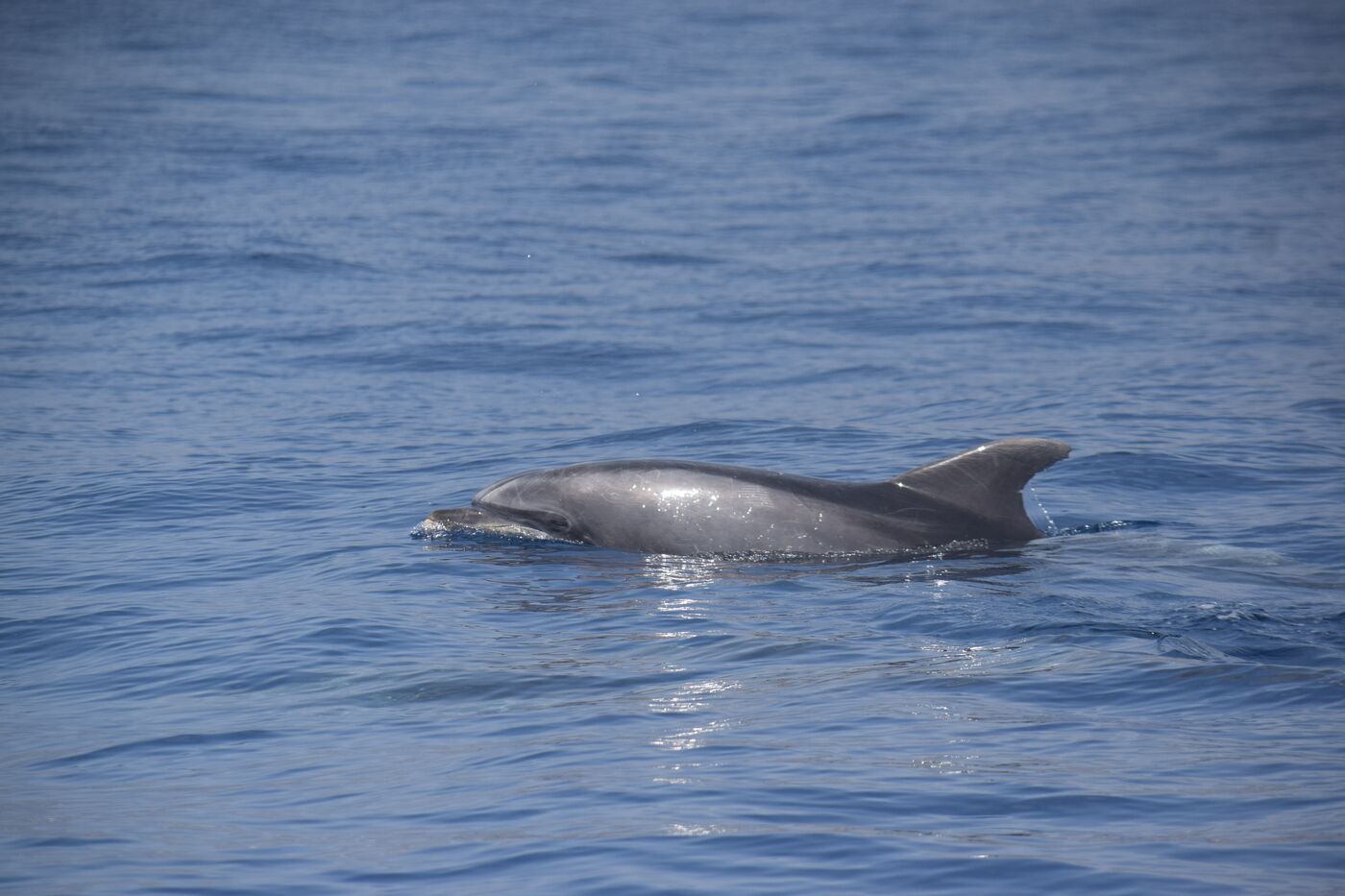
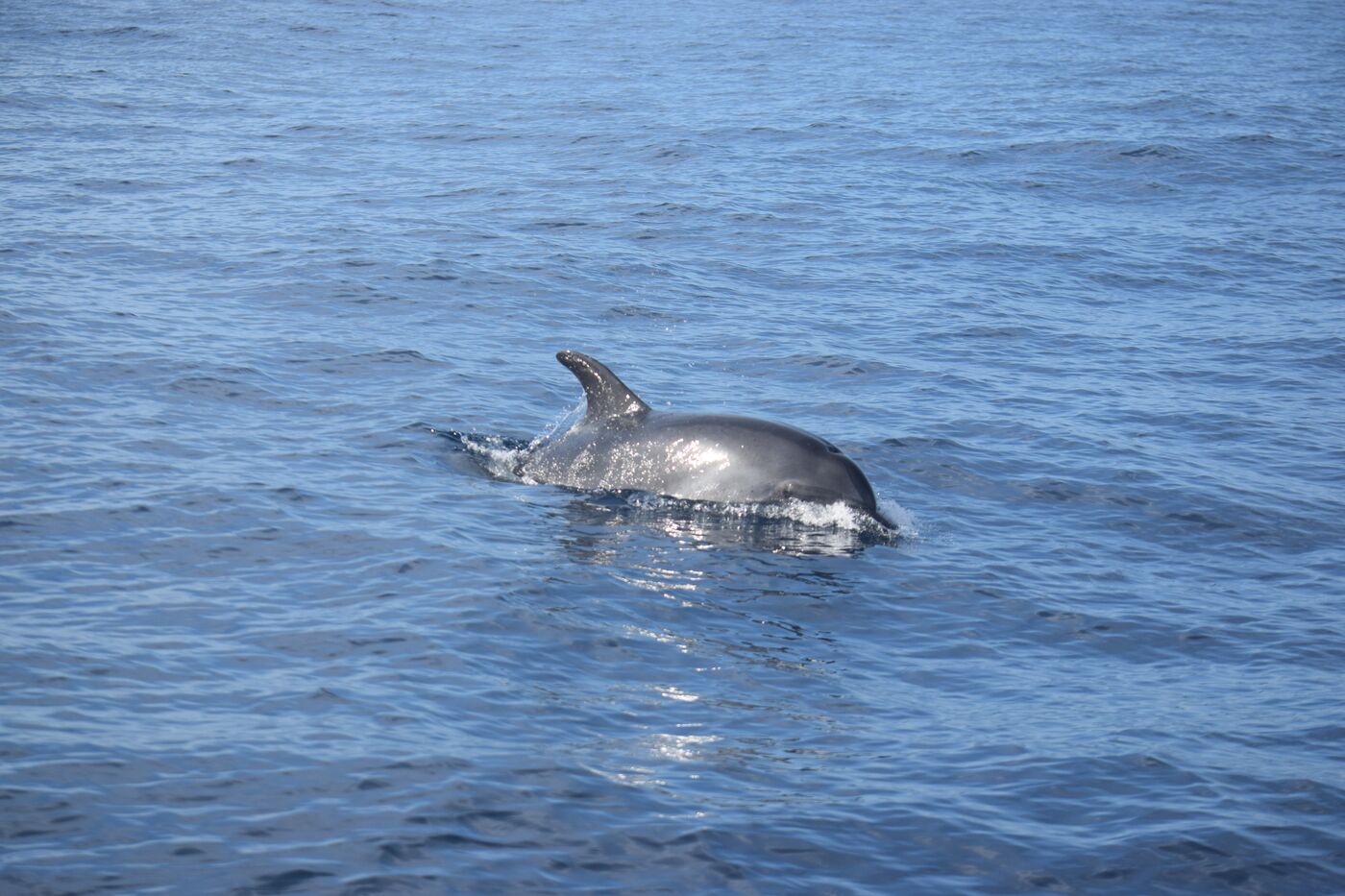
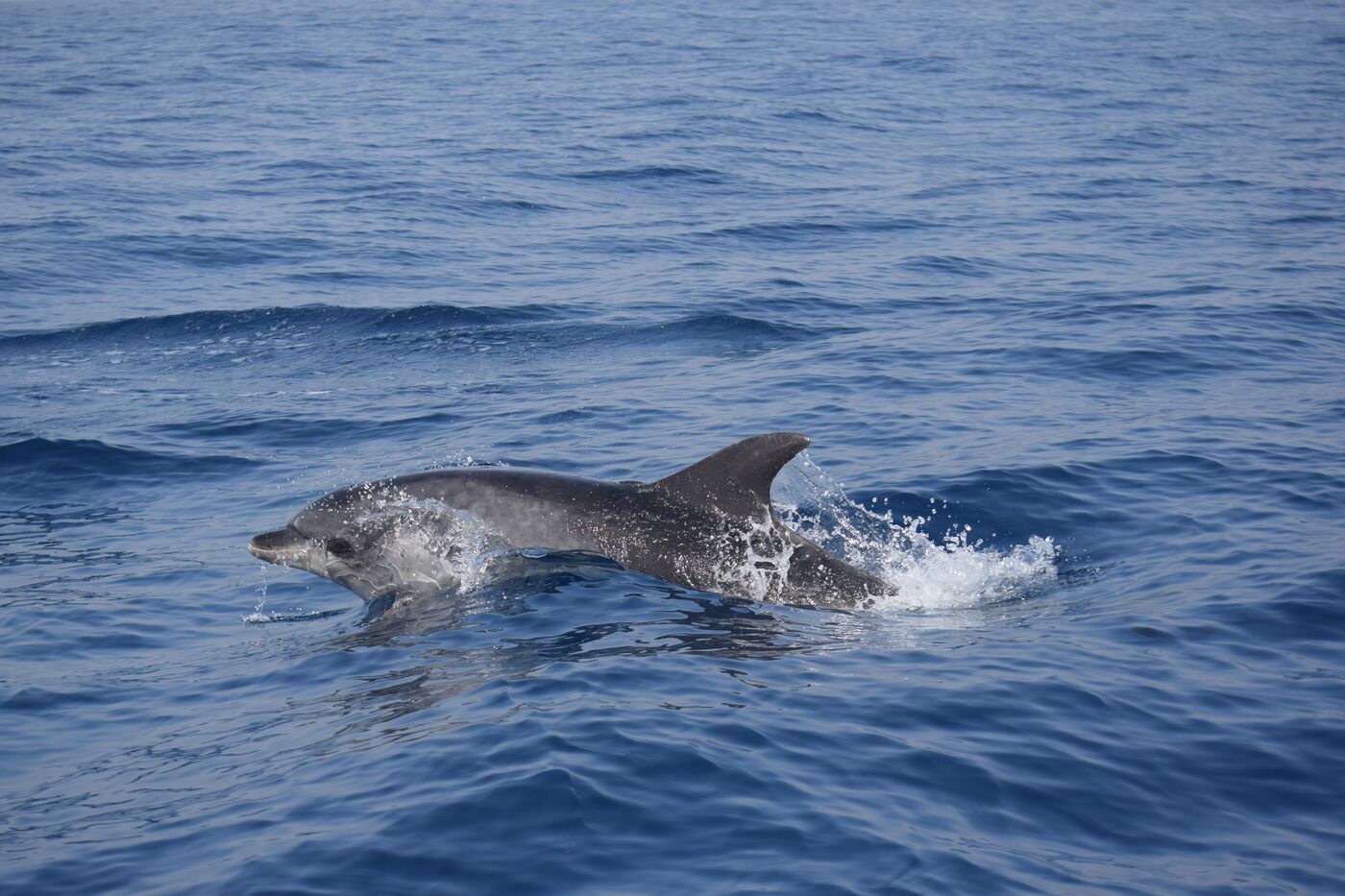
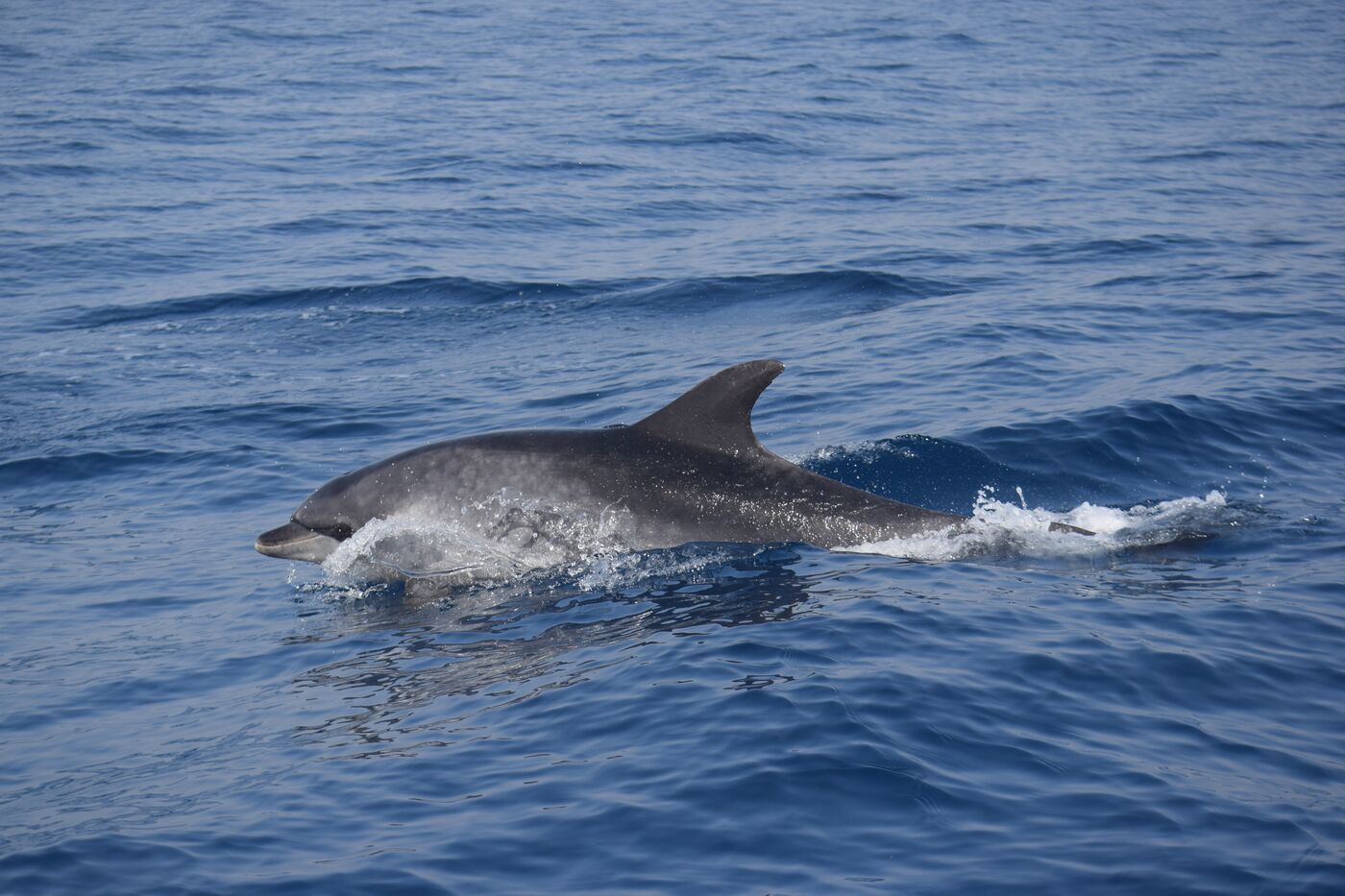
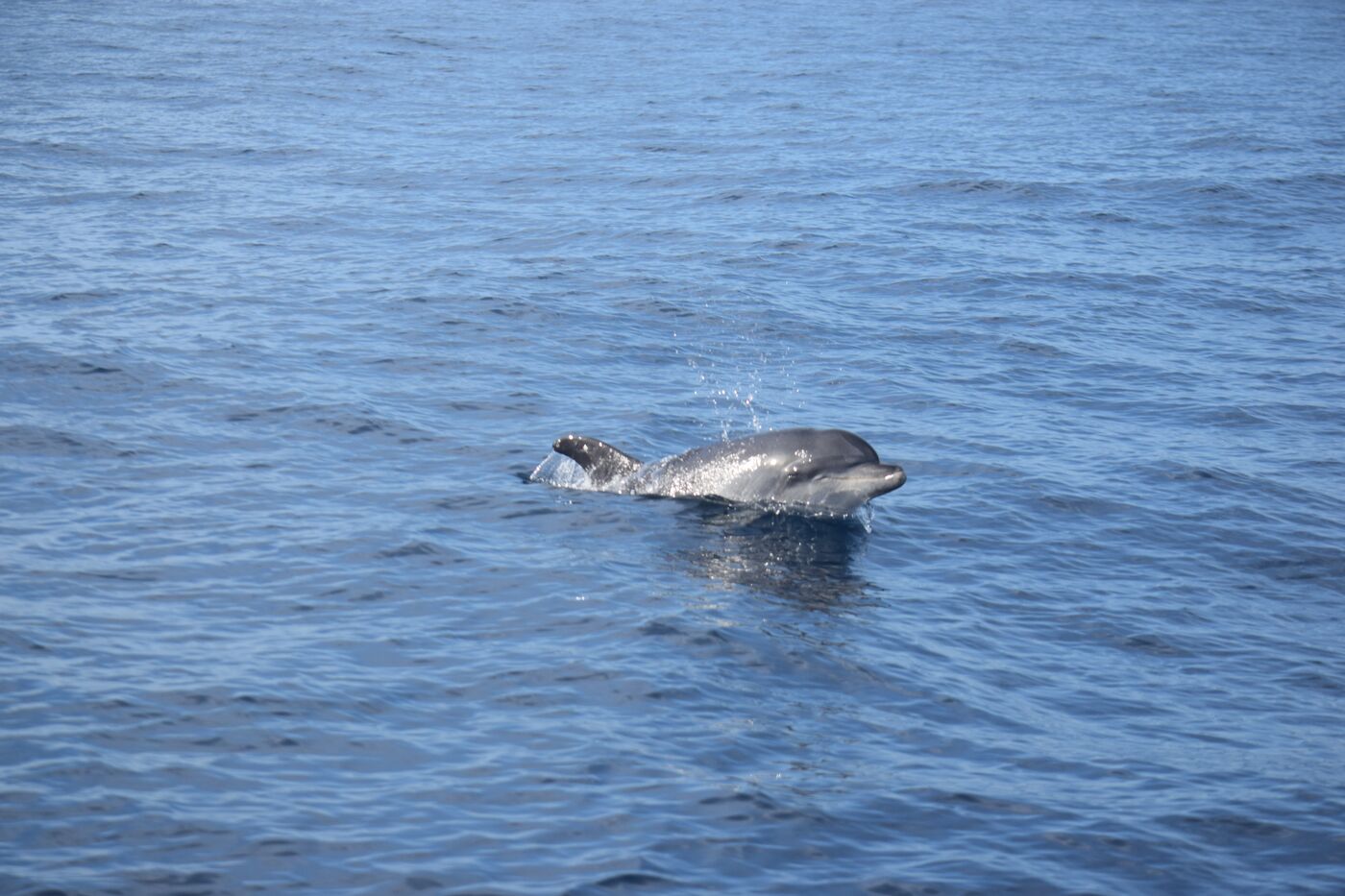
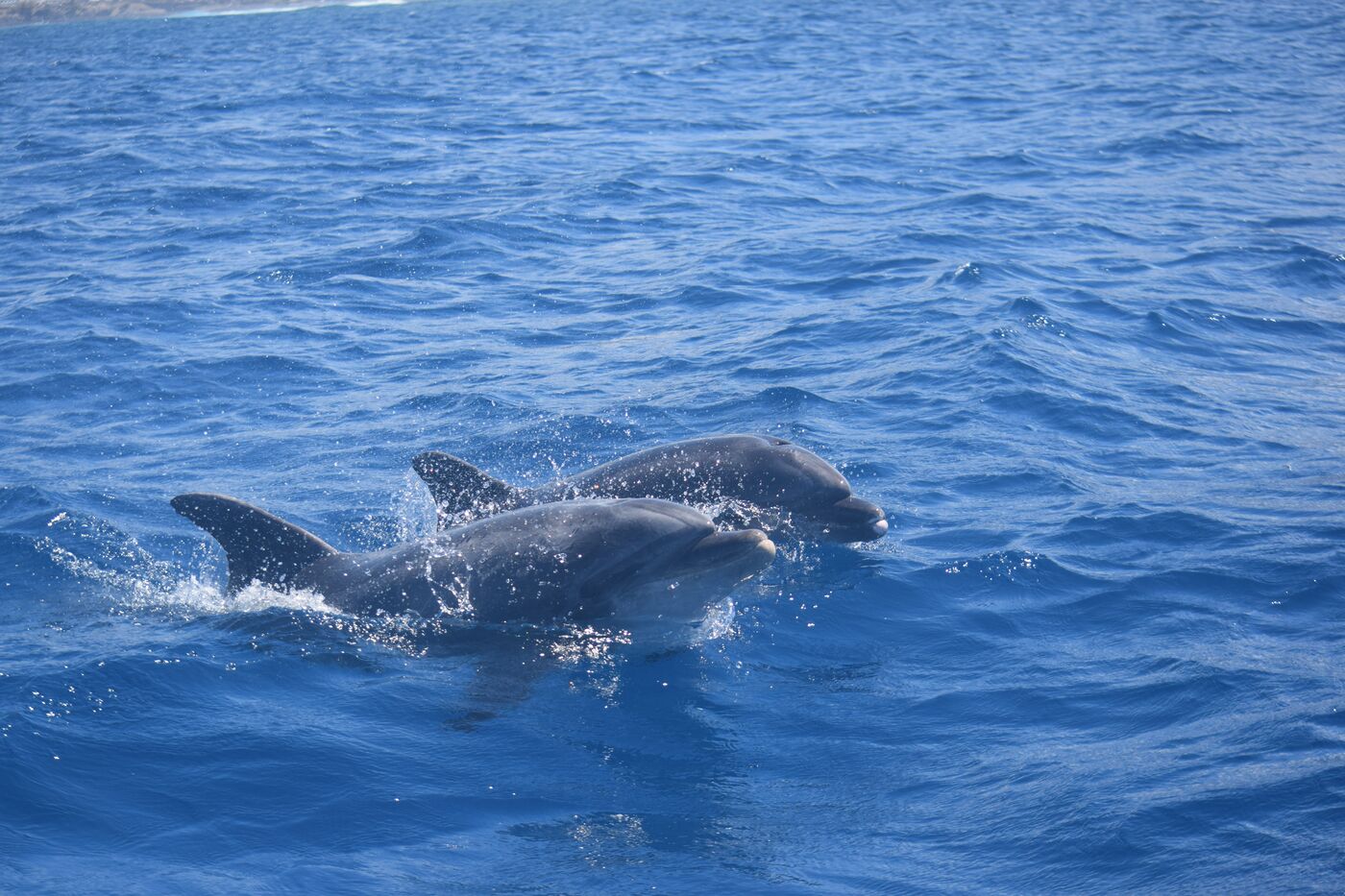
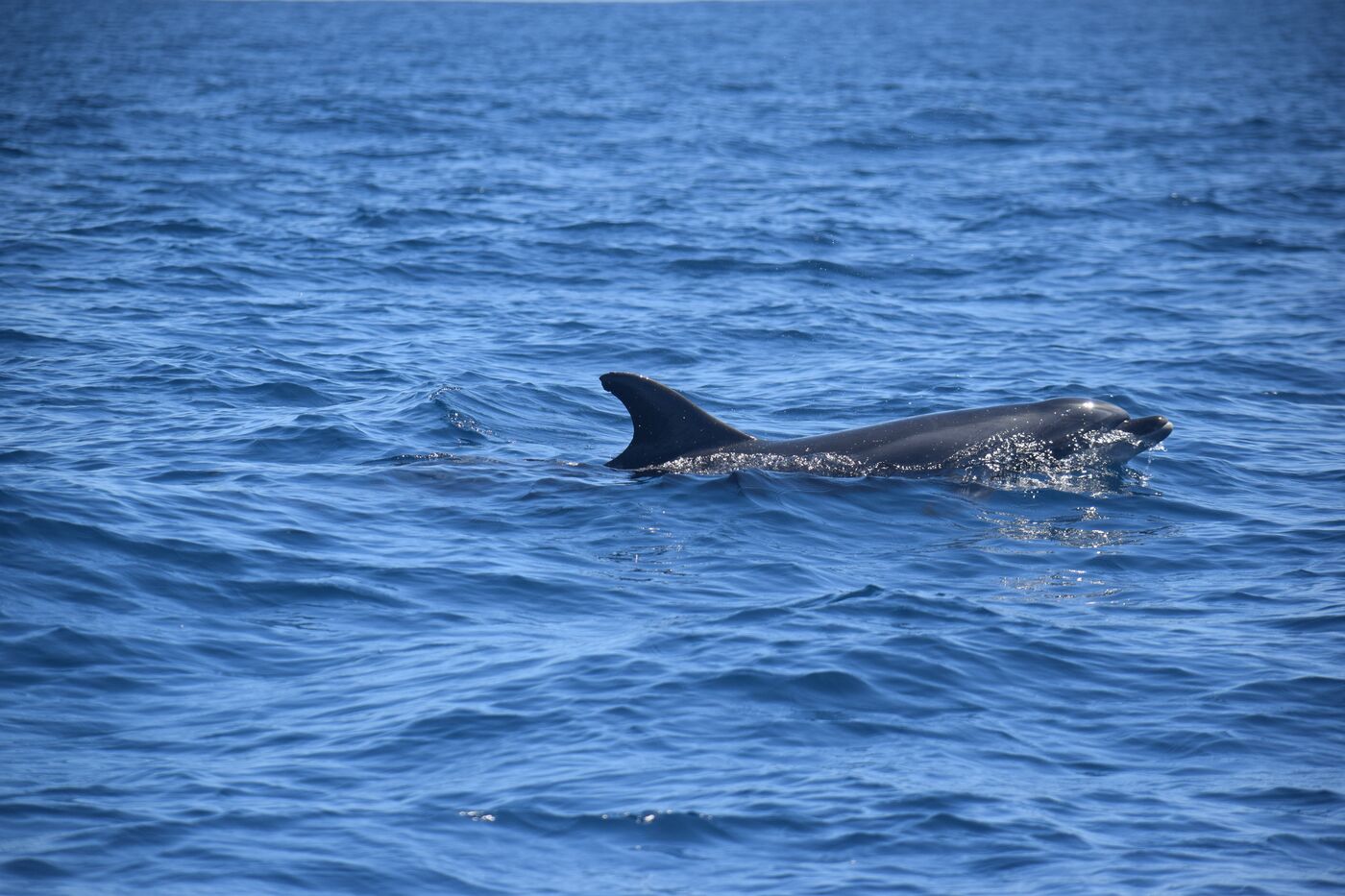
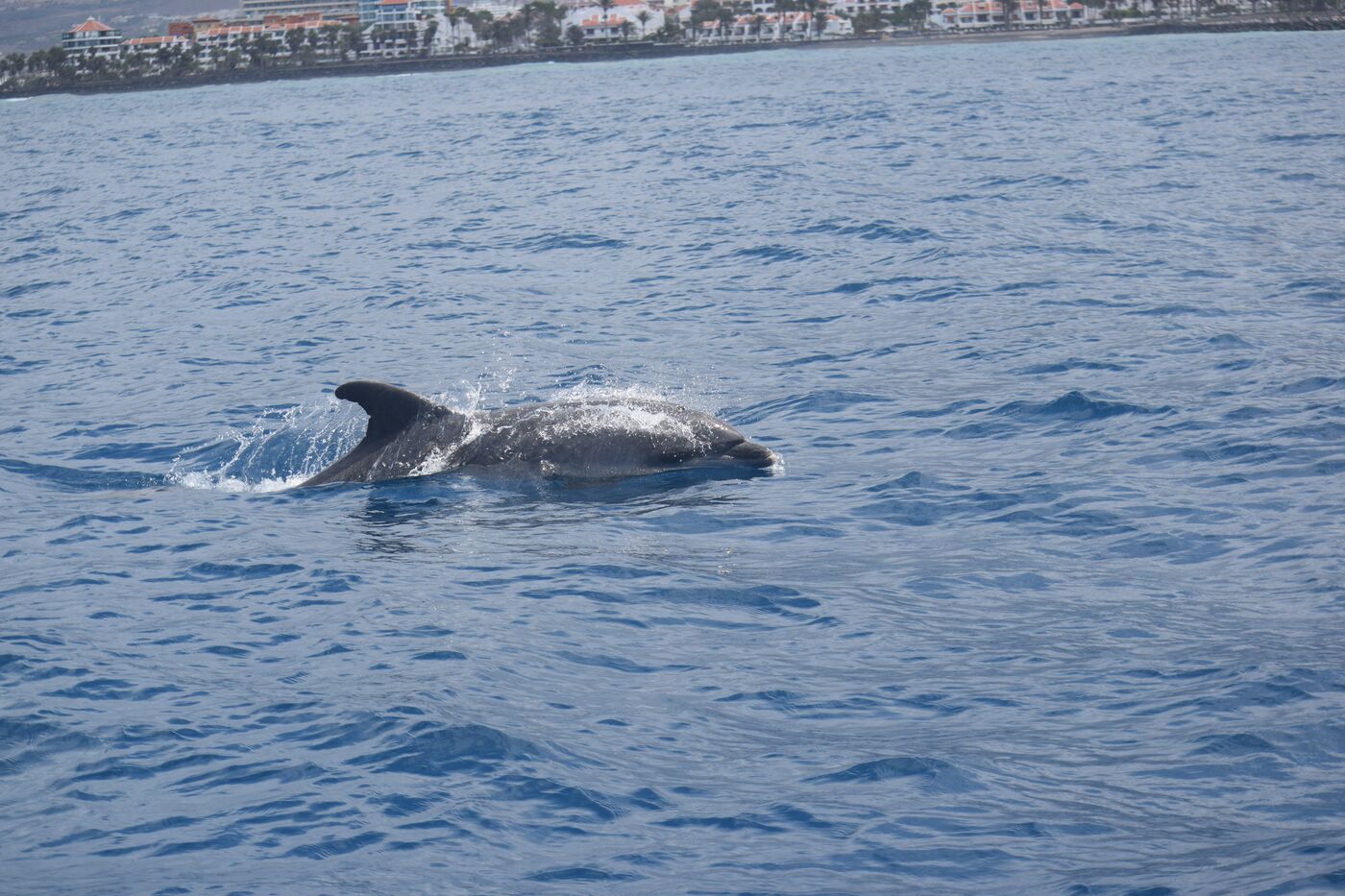
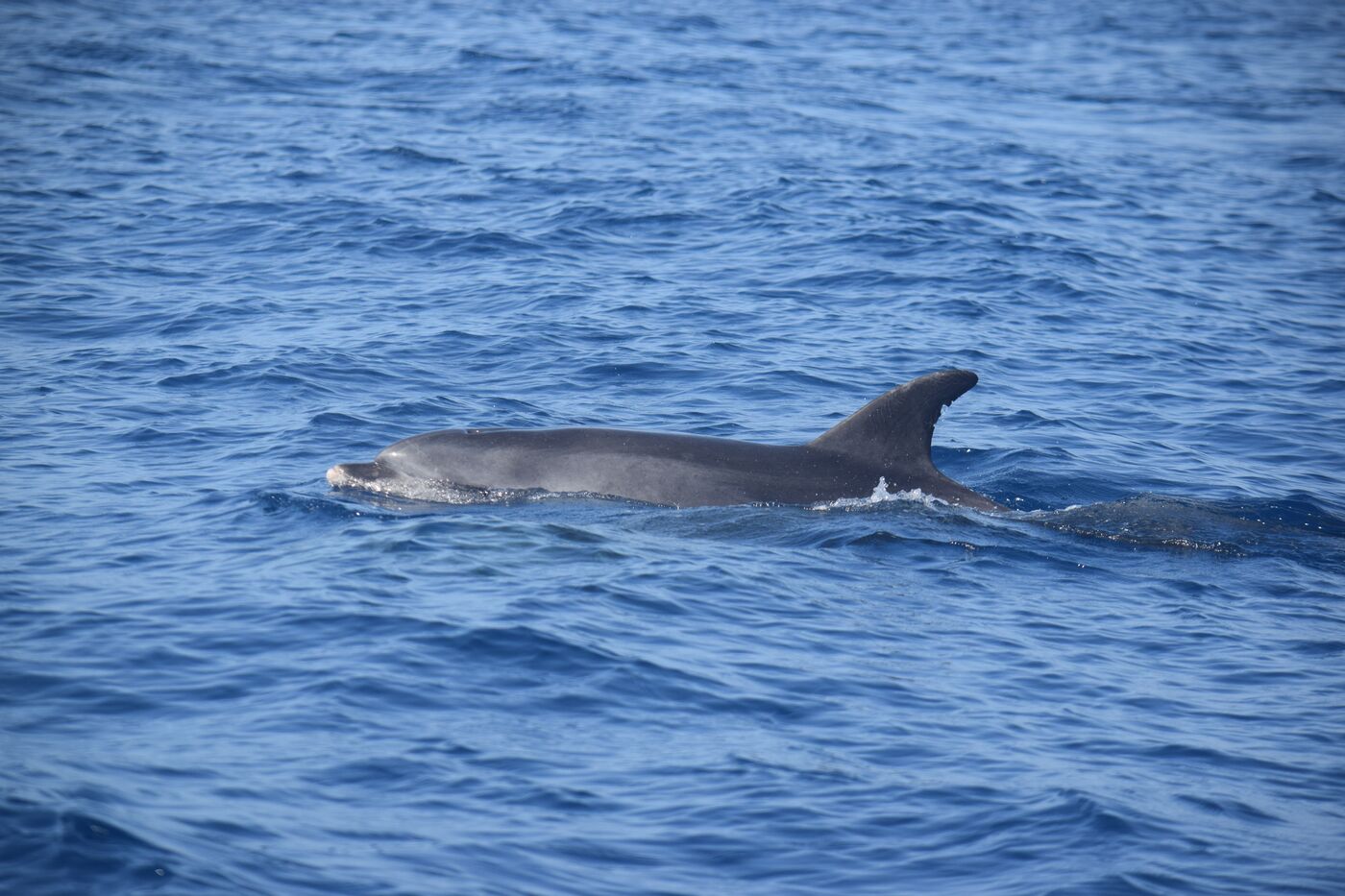
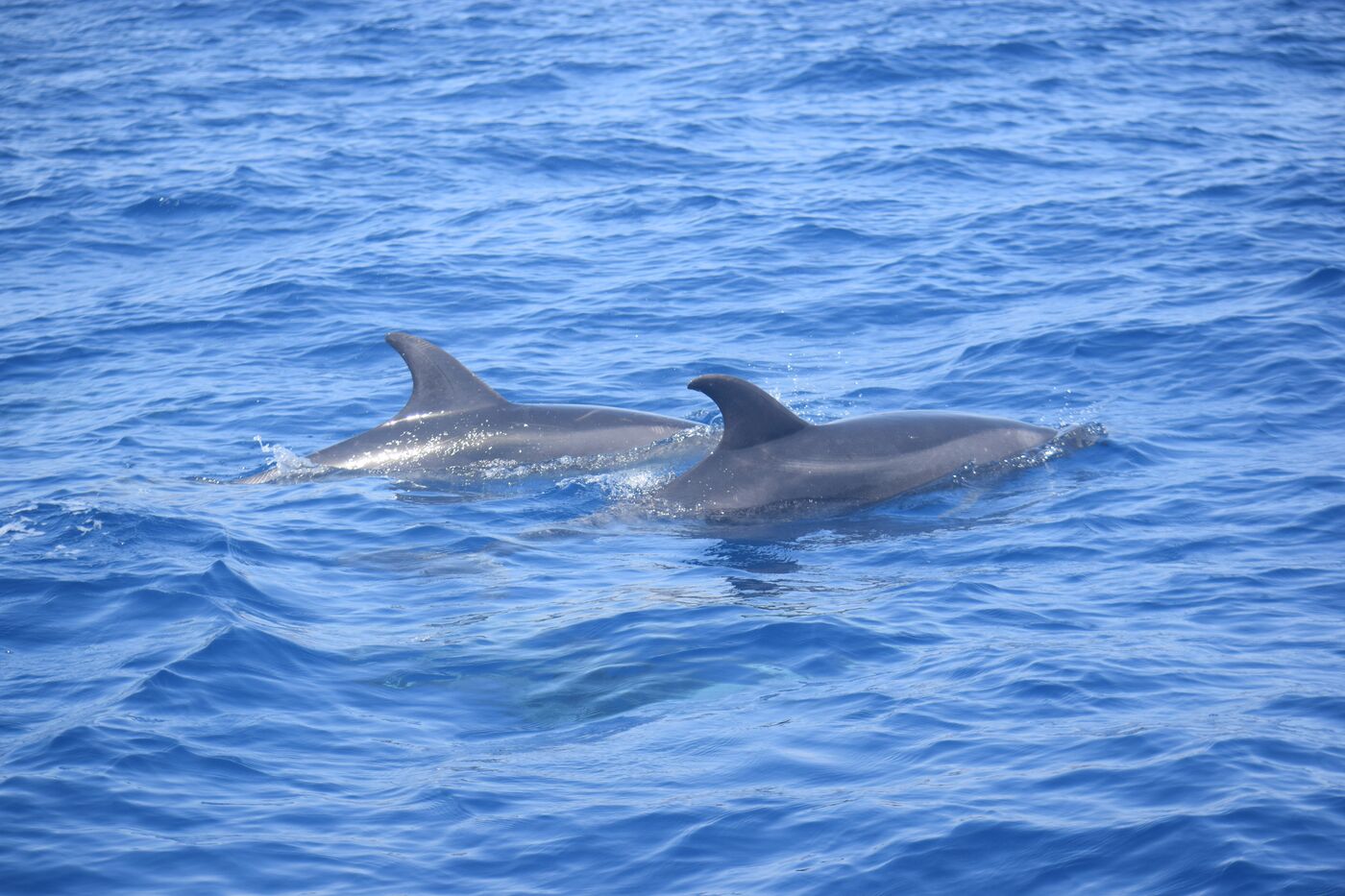
Big for a dolphin — up to four metres and heavily built — with a short, thick beak and a tall, curved dorsal fin set halfway down the back. The colour is a plain grey that fades to pale underneath, without the spots, stripes or hourglass markings that give the other species away.
Size is usually the giveaway. Next to an Atlantic spotted dolphin a bottlenose looks like a different order of animal.

Where they are
Along the whole south-west coast, from Los Gigantes down past Costa Adeje to Los Cristianos, generally in water between fifty and several hundred metres deep. They are not tied to the deep channel the way pilot whales are, so they turn up closer inshore and range more widely through the day.
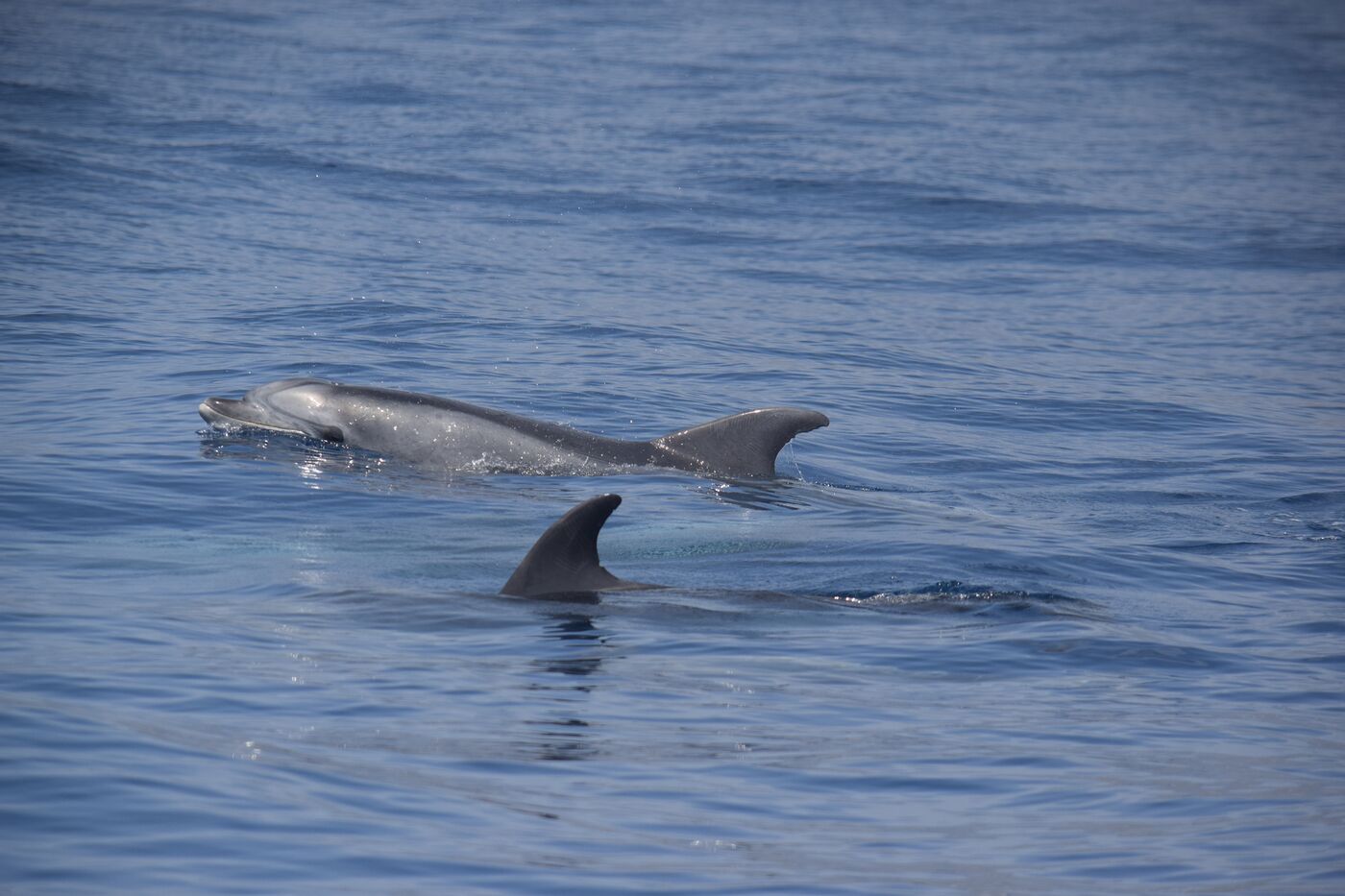
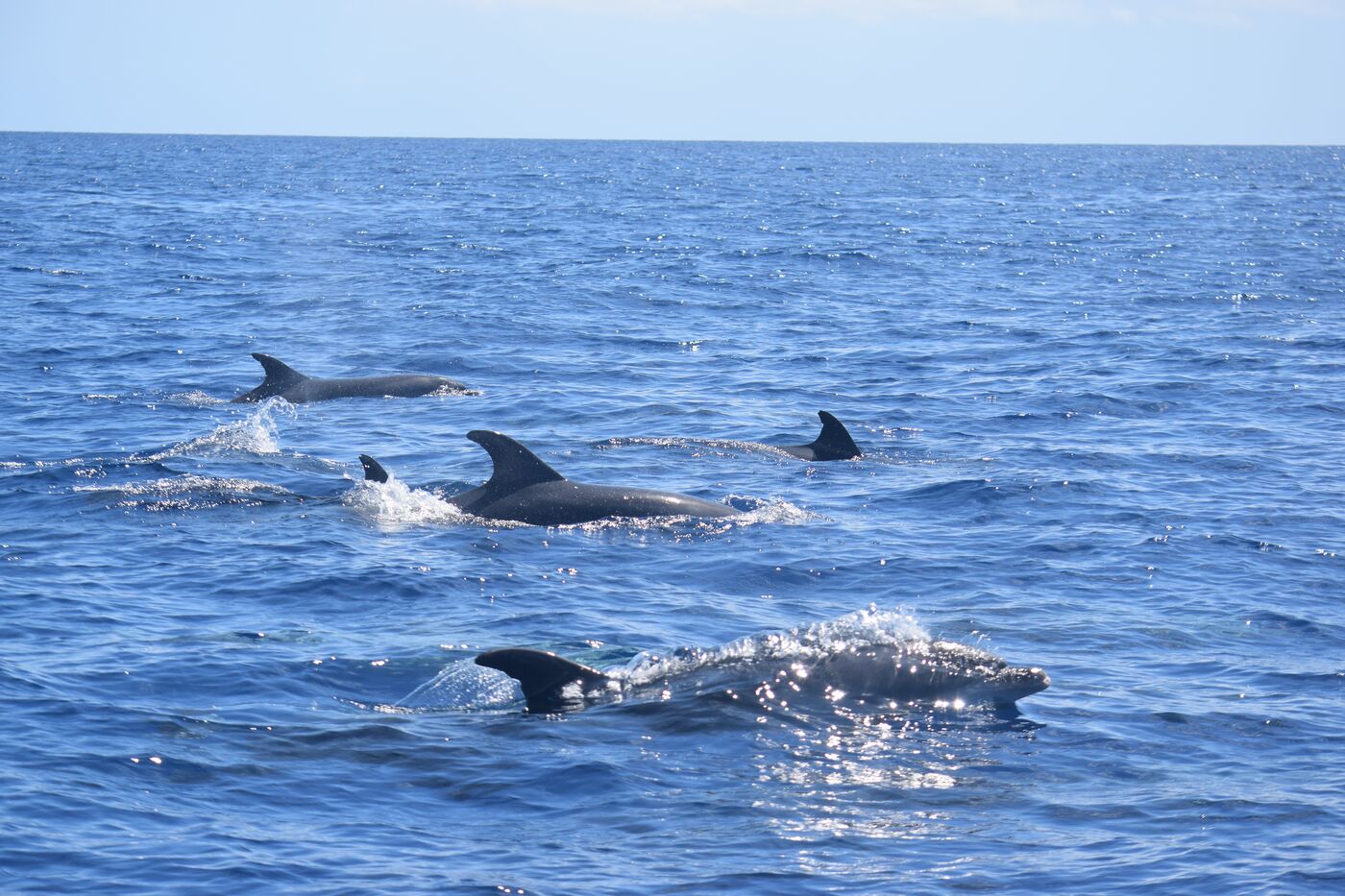
Groups are usually small — a handful to twenty — and the same individuals are recorded on this coast year after year.

What they do
Bottlenose dolphins are the species most likely to come to the boat rather than the other way round. Bow-riding happens when they feel like it: a good skipper holds a steady course and speed and lets them decide, rather than turning to chase.
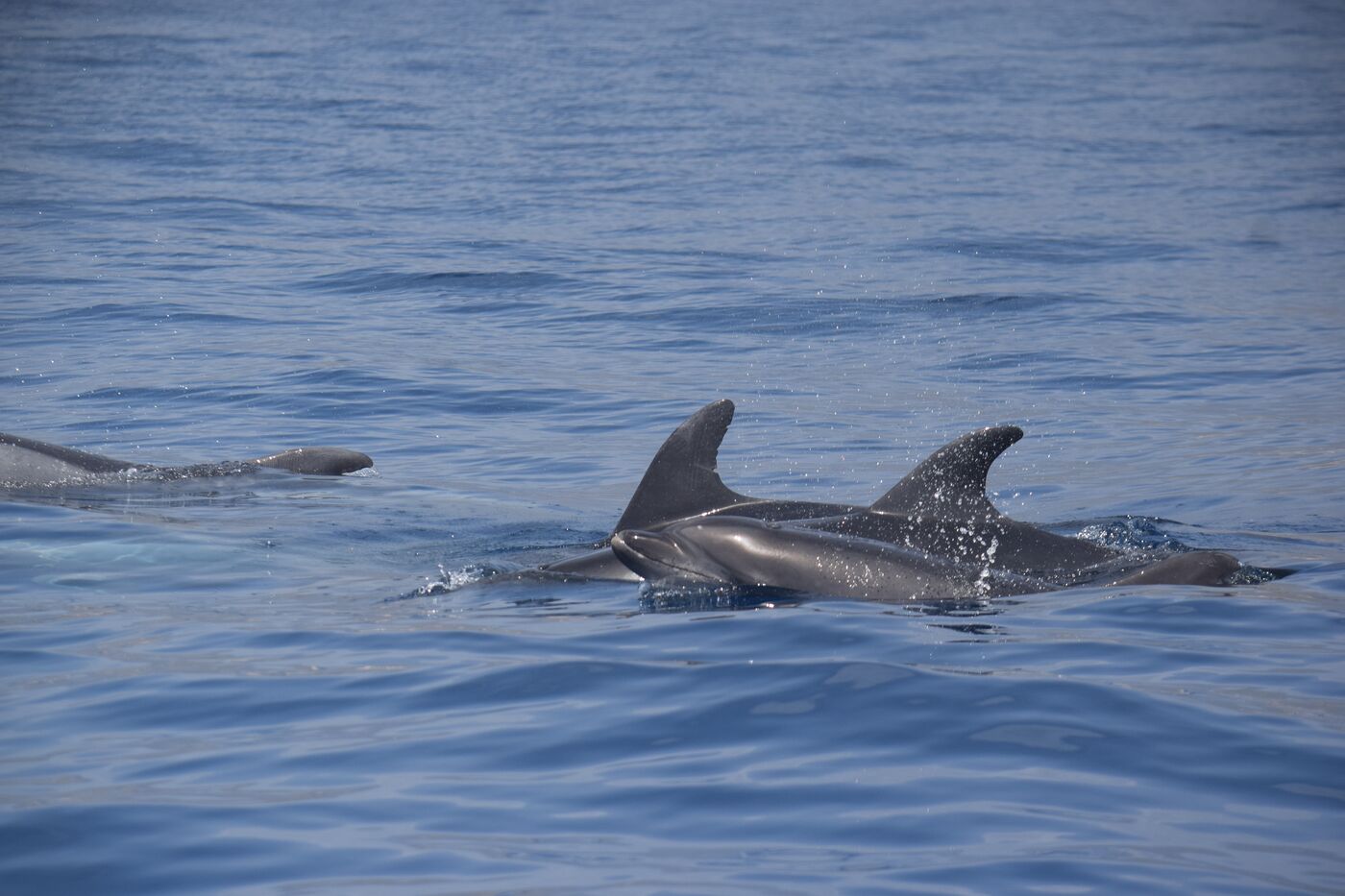
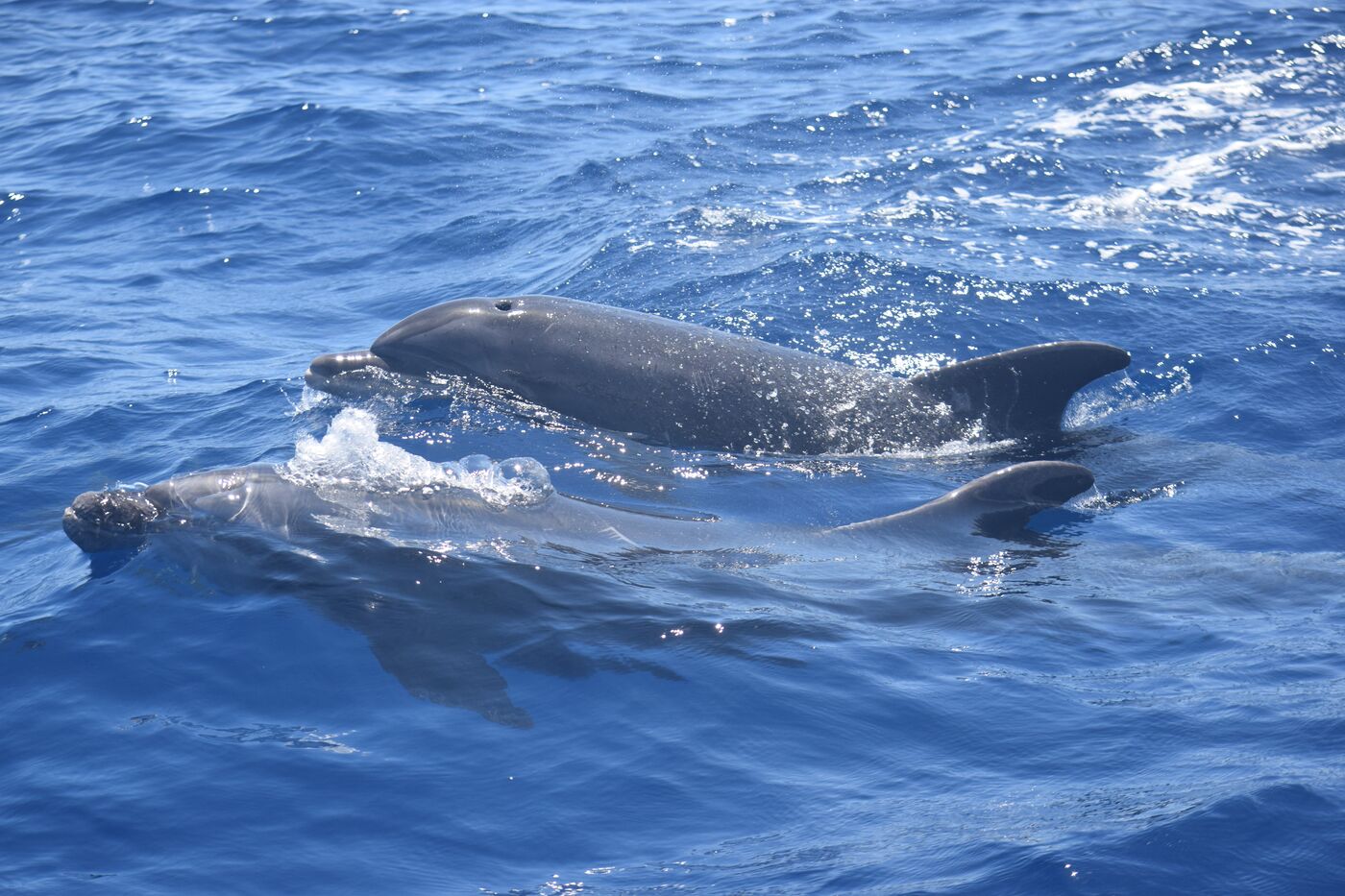
The rest of the time they are working — travelling in a loose line, diving in sequence, occasionally herding fish. Groups with calves move more slowly and stay tighter together.
When to see them
Any month. They are resident, which is why they and the pilot whales carry the sighting rate on this coast. Morning departures are better simply because a calm sea shows a dorsal fin at distance.
Common questions
Are bottlenose dolphins the same as the ones in aquariums?
Same species, very different animal. A wild bottlenose spends its day hunting and travelling over tens of kilometres in a group it was born into.
Will they come to the boat?
Sometimes. It is their decision, and a boat that chases them makes it less likely, not more.
How long do they live?
Forty to fifty years is normal, and females often longer. The groups on this coast contain animals that have been photographed for decades.
More bottlenose dolphins
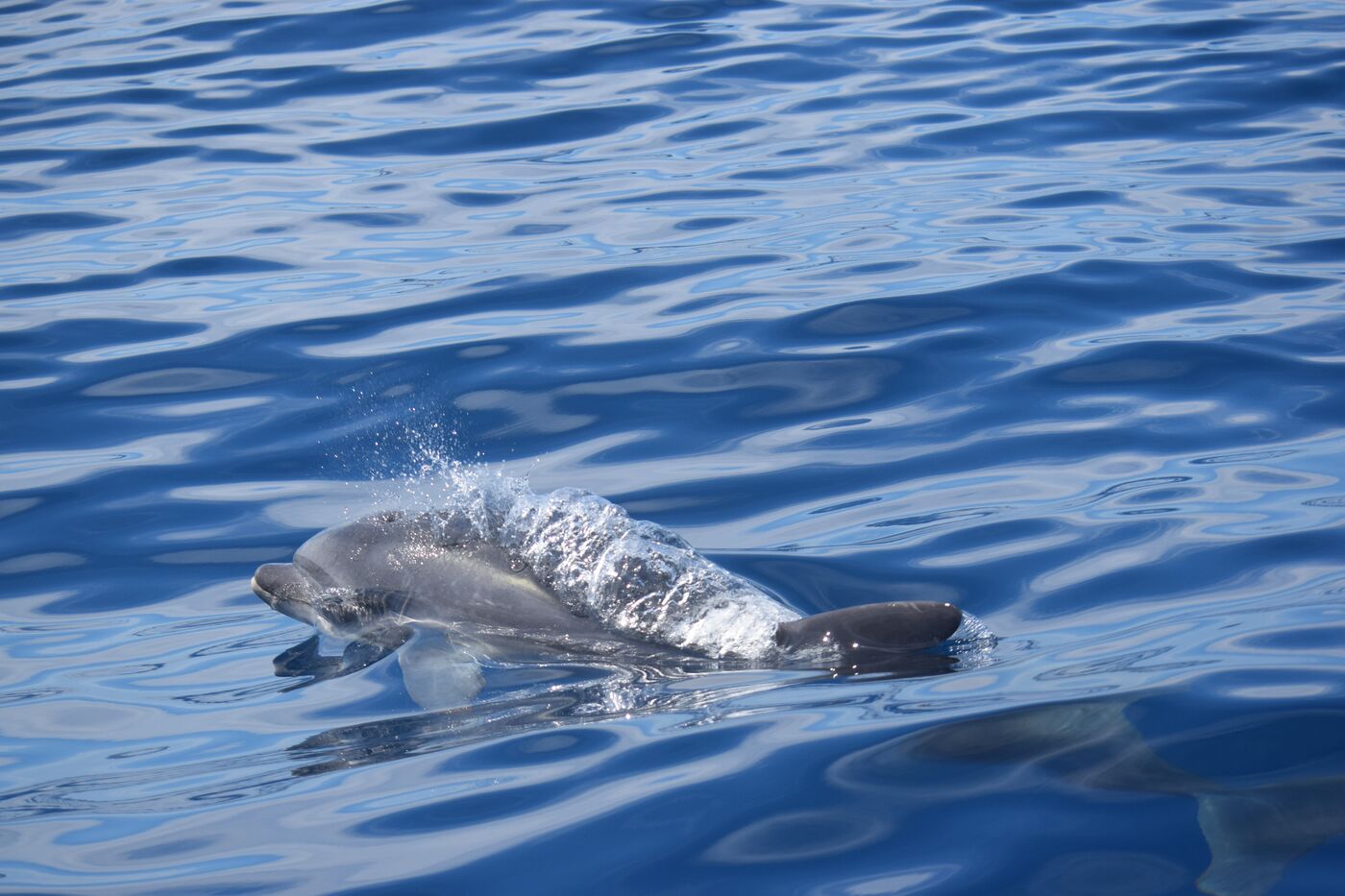
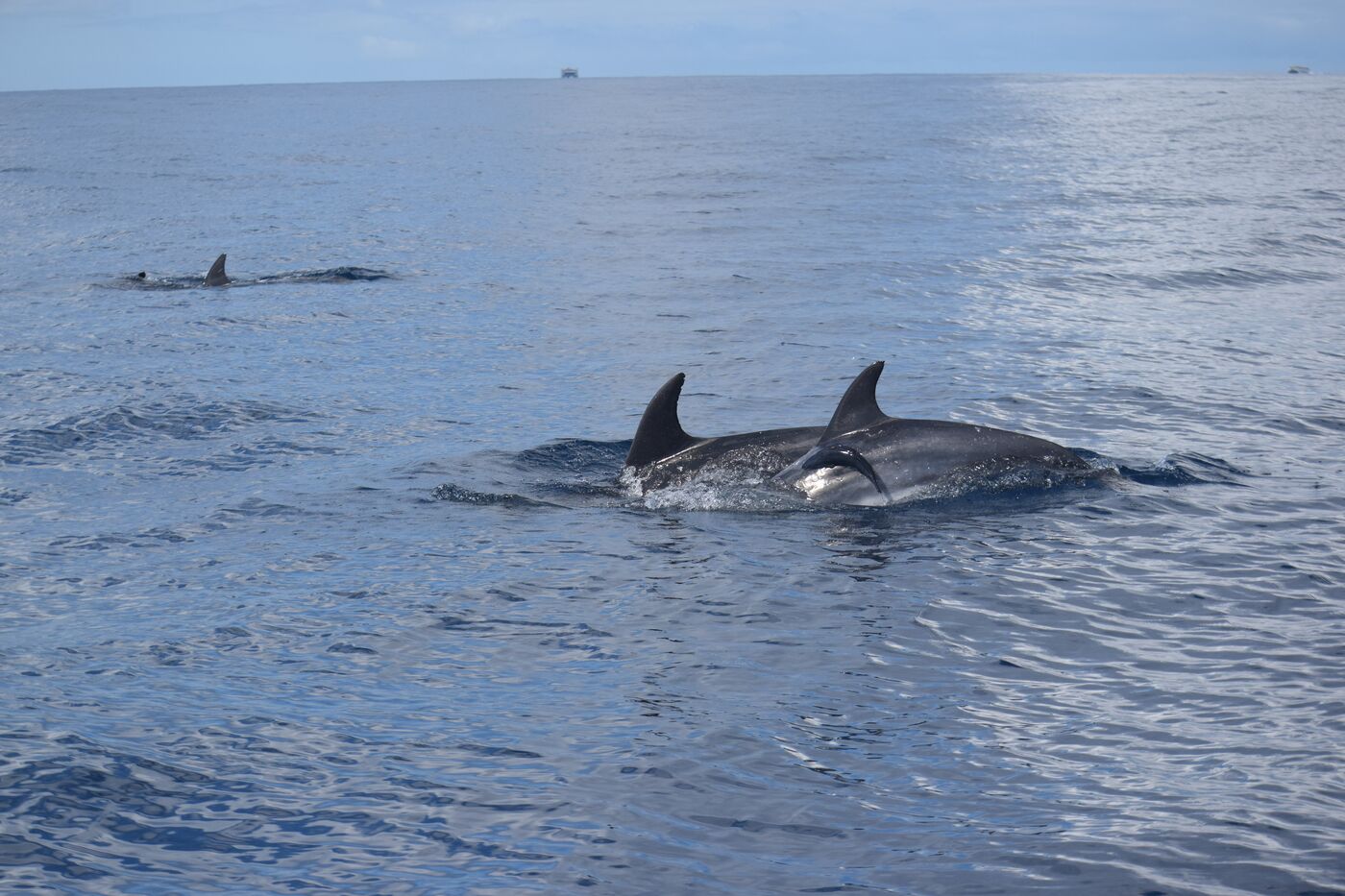
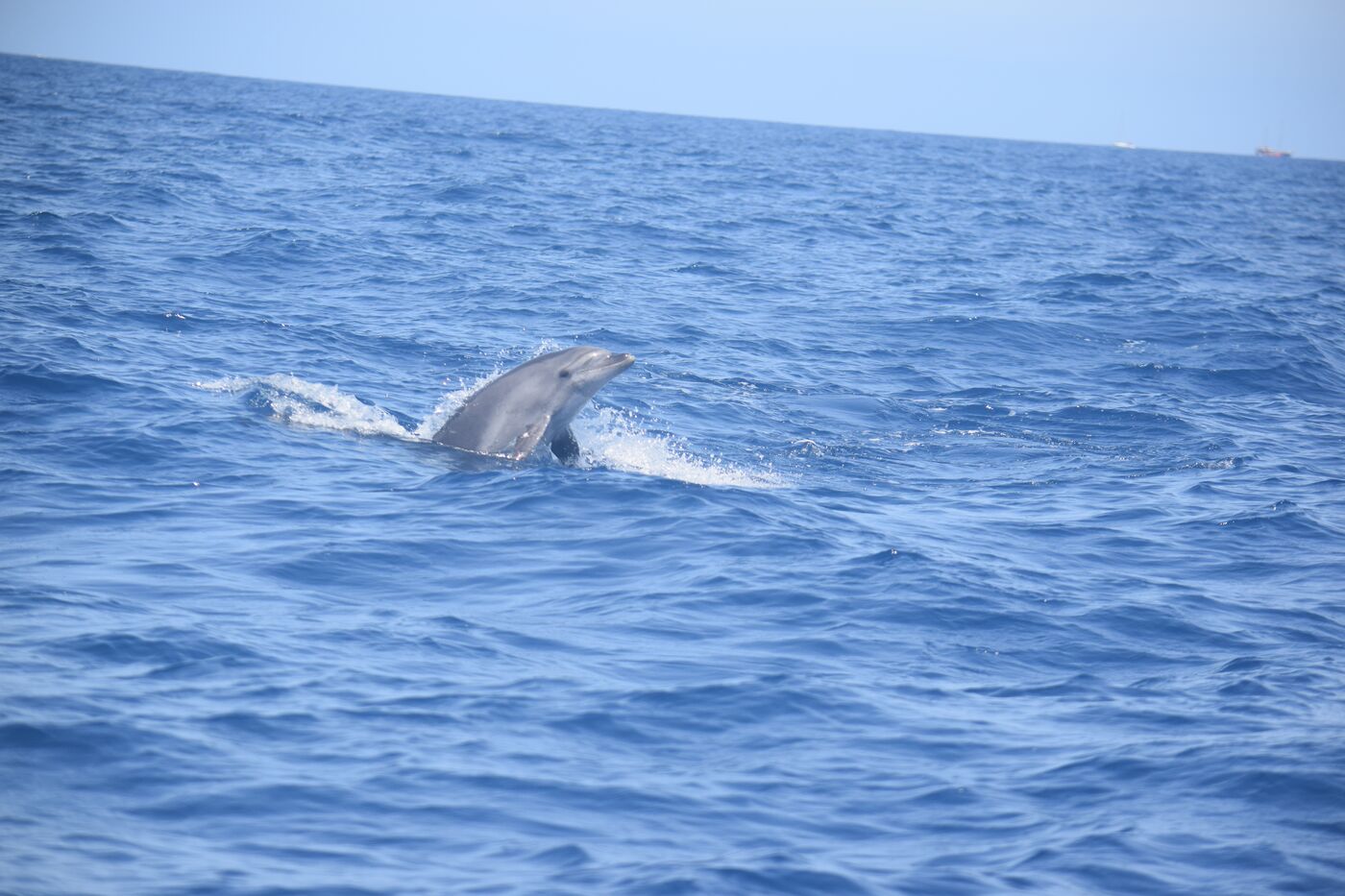
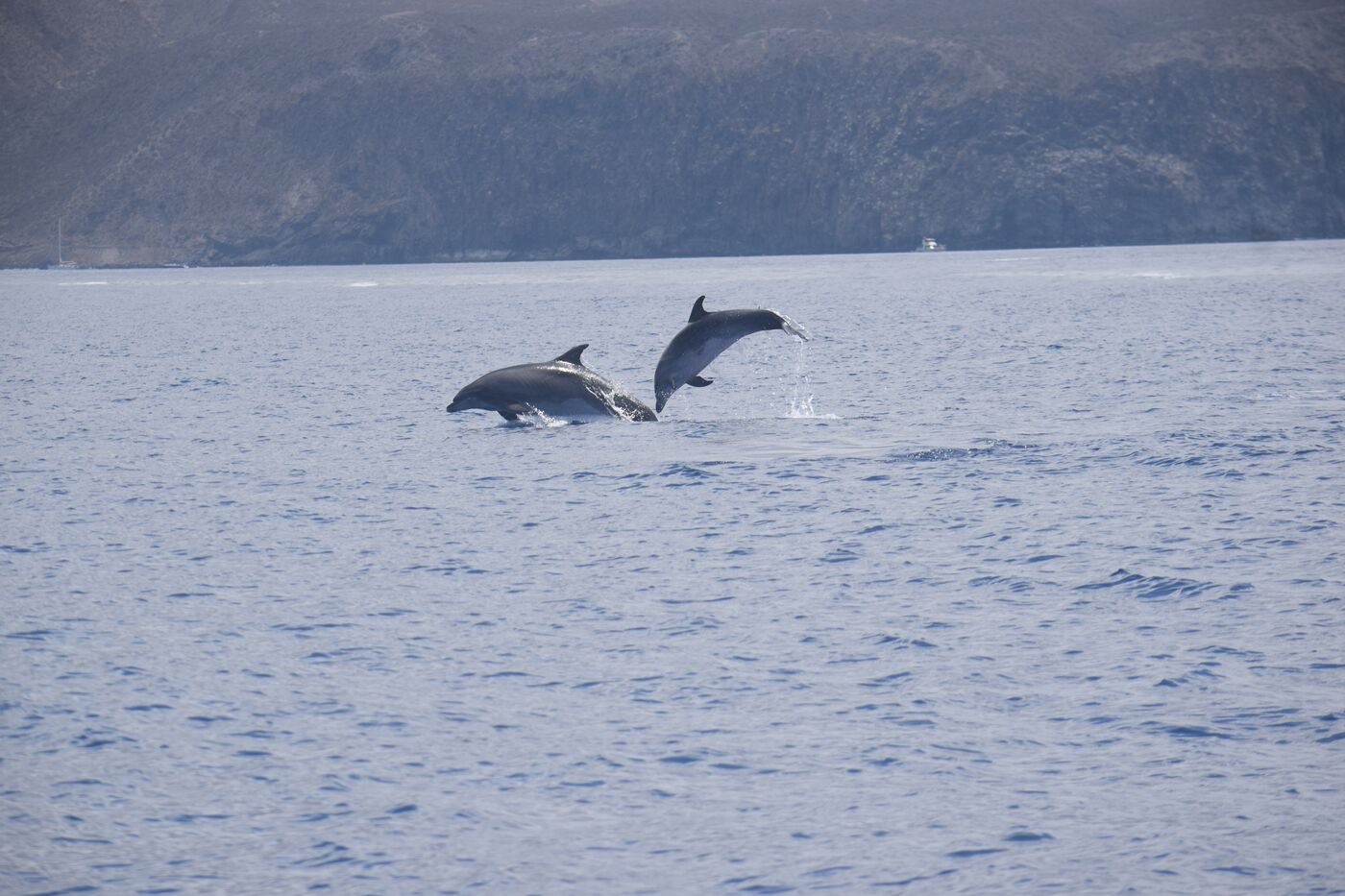
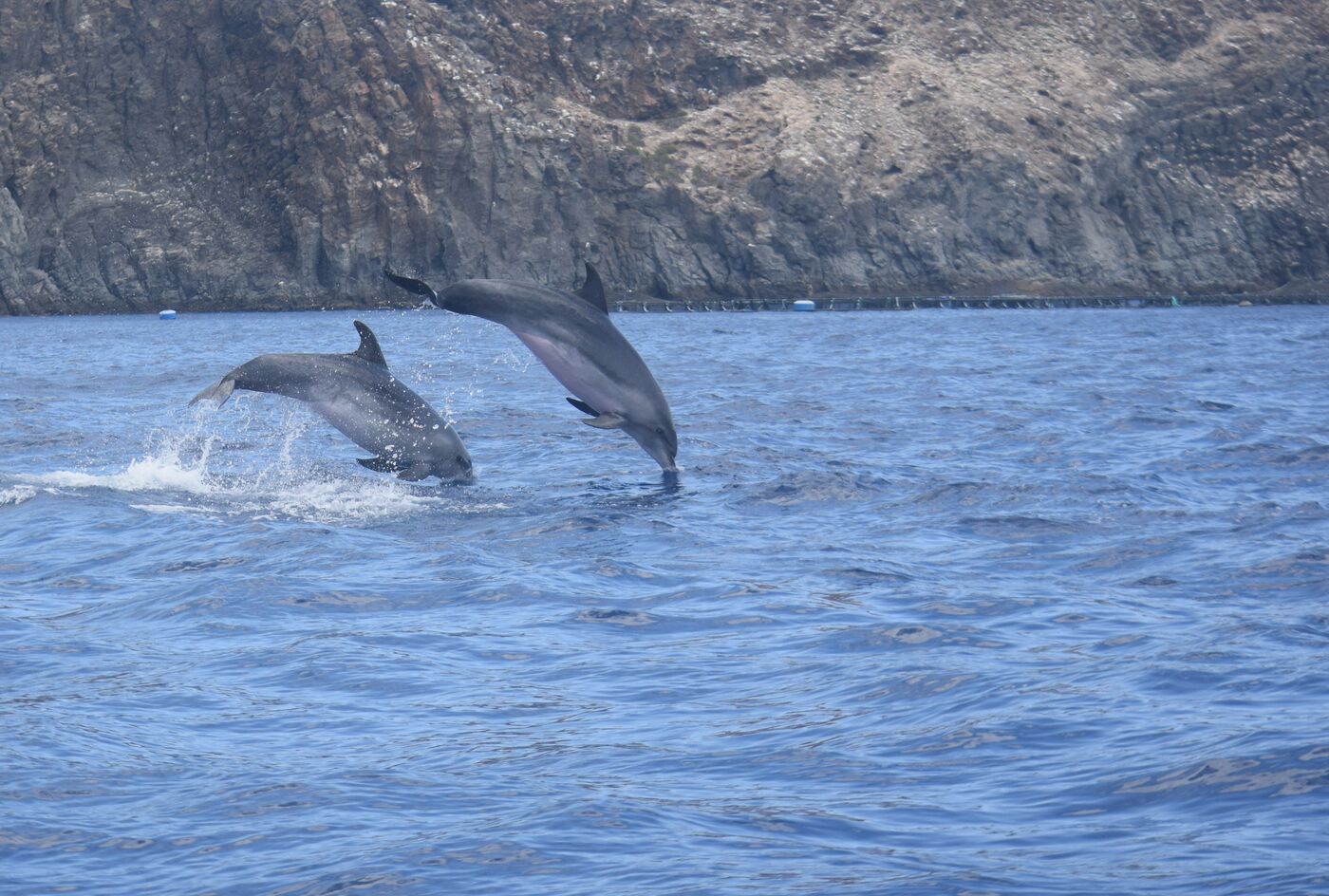
Resident animals photographed off Costa Adeje. Tap any of them to see it full size.
2 h · max 10€60 per adult
Book