
Loggerhead turtles in Tenerife
Not a cetacean, and one of the most reliable things you will see. Loggerheads rest at the surface off this coast all year, usually asleep.
Why they are here
Most loggerheads in Canary waters are juveniles that hatched thousands of kilometres away — on beaches in Cape Verde and the western Atlantic — and drifted here on ocean currents. They spend years in the open Atlantic around the islands, feeding and growing, before eventually returning to the beaches where they were born to breed.
So the animal asleep beside the boat is, in most cases, a long way from home and not yet an adult.

Spotting one
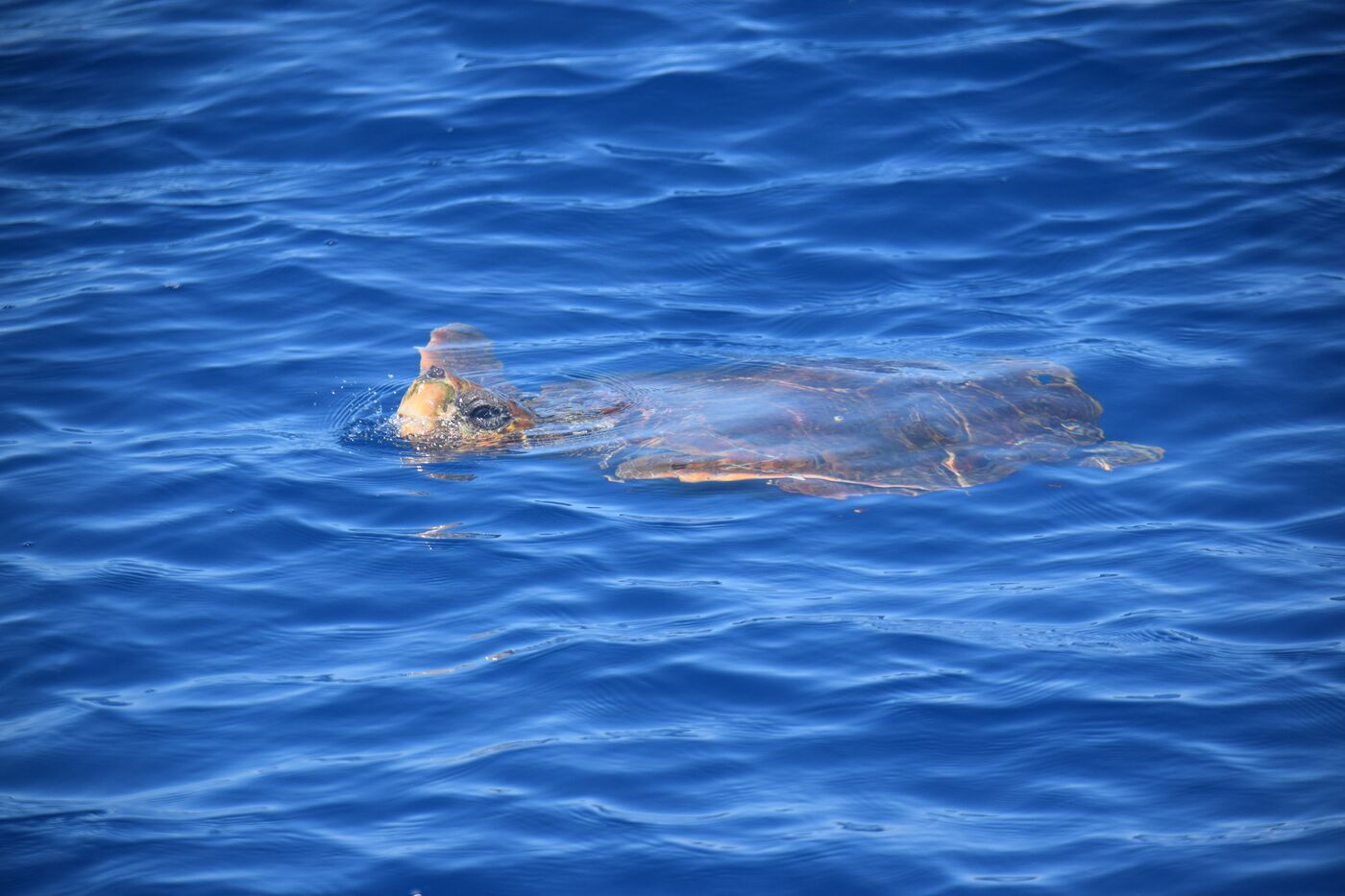
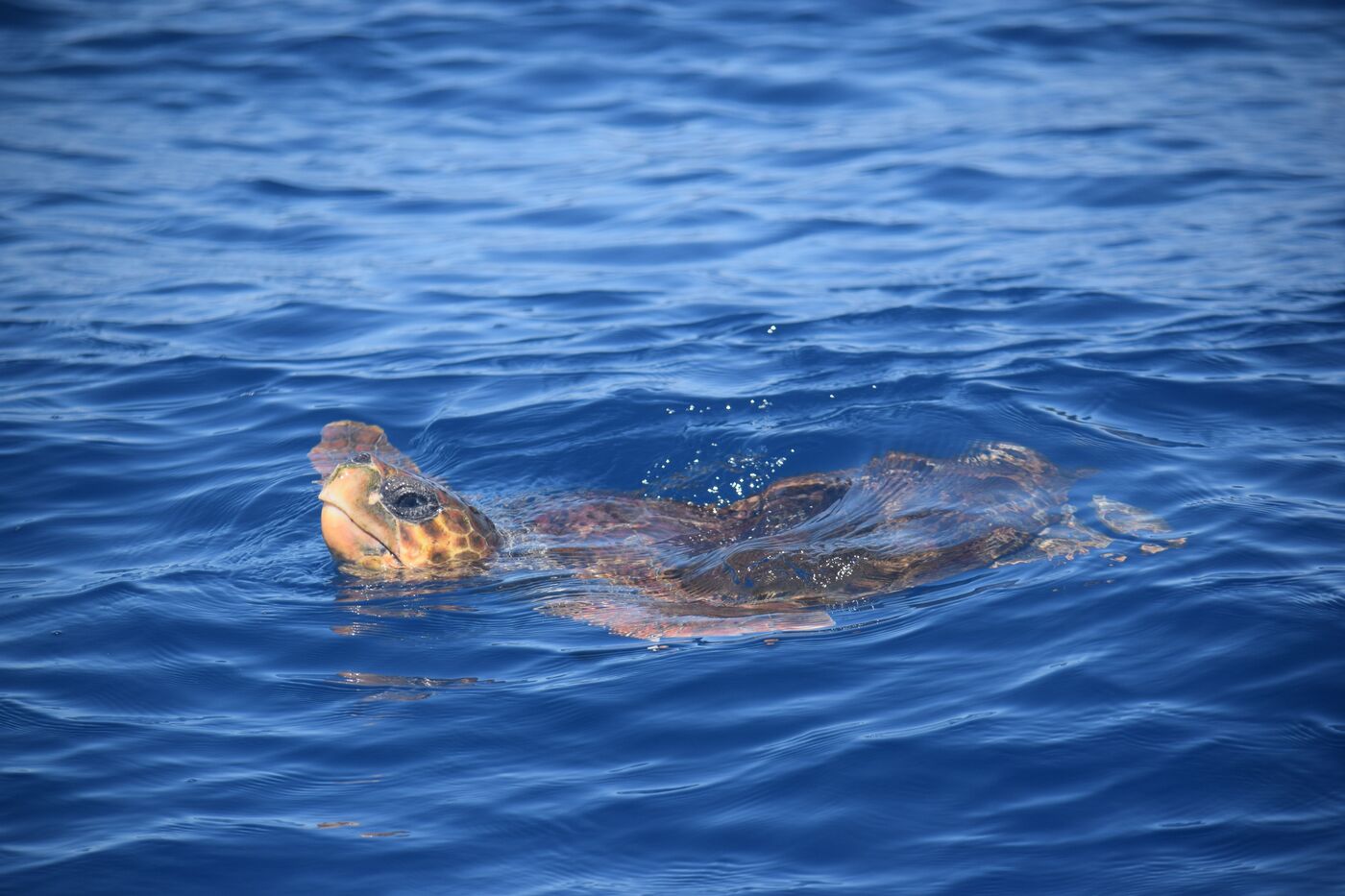
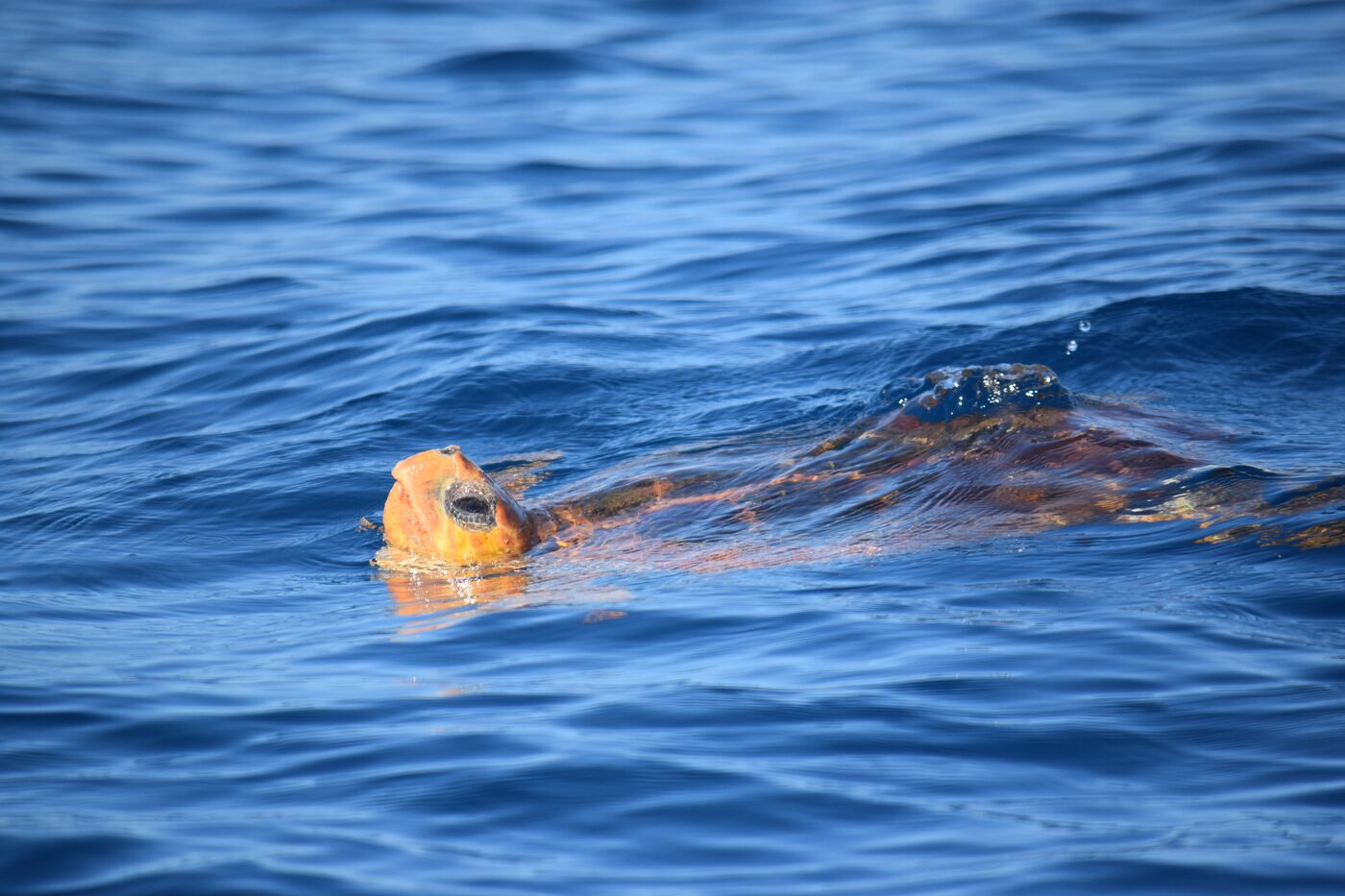
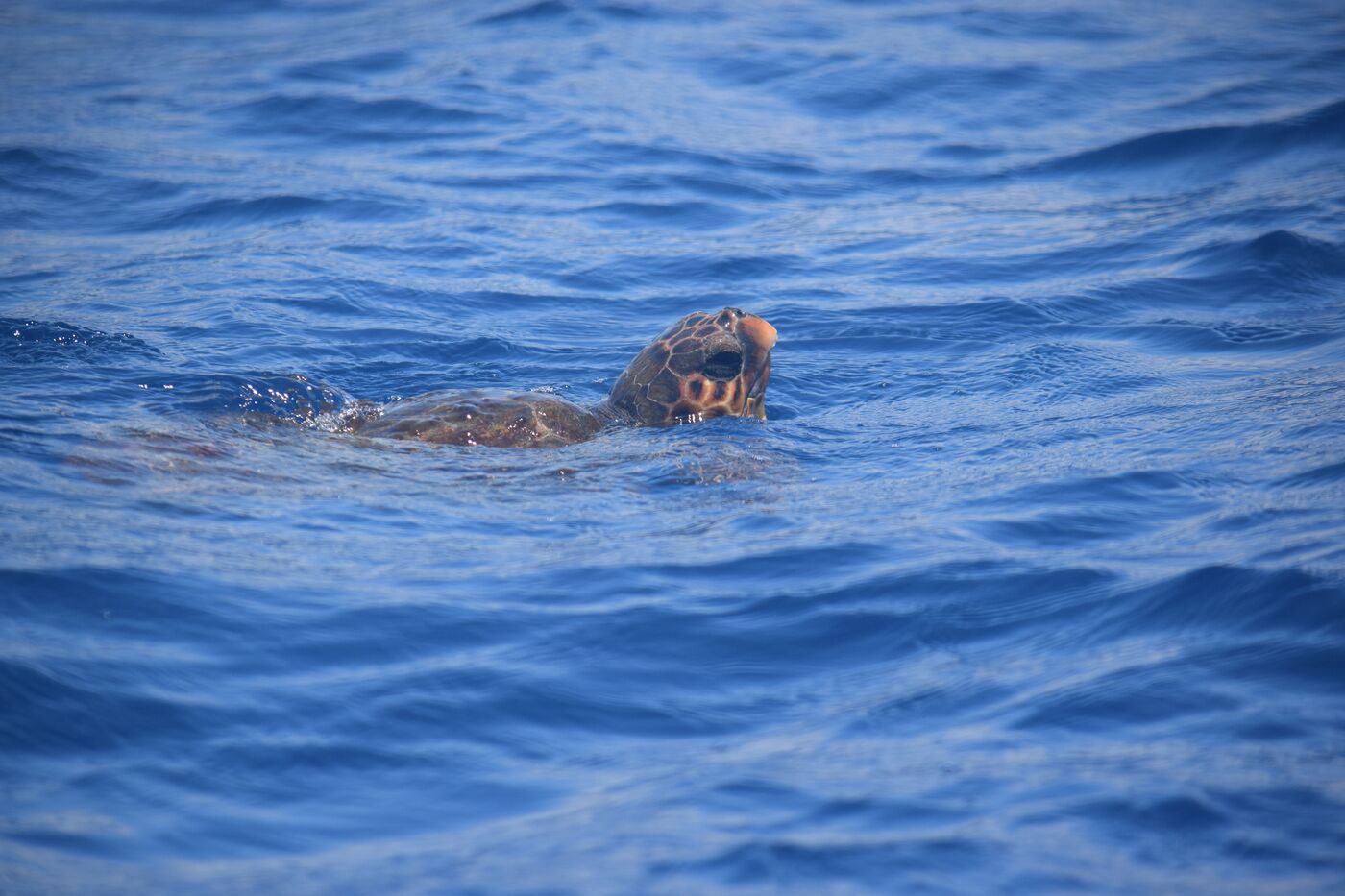
Look for something the size and colour of a floating log. Loggerheads sleep at the surface on calm days and are easy to miss and easy to hit, which is one more reason the boat runs slowly. The head lifts to breathe every few minutes.
They are most visible on flat mornings, which is one more argument for the 9:30.

What threatens them
Plastic, discarded fishing gear and boat strikes, roughly in that order. Turtles eat floating plastic because it looks like jellyfish, and entanglement in nets and line is a common cause of injury.
Boats on this coast recover injured animals and hand them to the wildlife recovery centre — an ordinary part of the job rather than a story for the brochure. More on that on the responsible watching page.
Common questions
Can I touch or lift a turtle?
No. Handling wild turtles is prohibited and stressful for the animal. Injured animals are recovered by the crew and handed to the authorities.
Are turtles seen on every trip?
Not every trip, but they are common, especially on calm summer mornings.
Are they endangered?
The loggerhead is listed as vulnerable internationally, with plastic and fishing gear among the main pressures.
More loggerhead turtles
Almost always found asleep at the surface on a calm day. Tap any of them to see it full size.
2 h · max 10€60 per adult
Book