
Rough-toothed dolphins in Tenerife
An odd-looking dolphin with no crease between beak and forehead, so the whole head runs in one clean cone. Uncommon here, and unmistakable once you know it.
The head is the clue
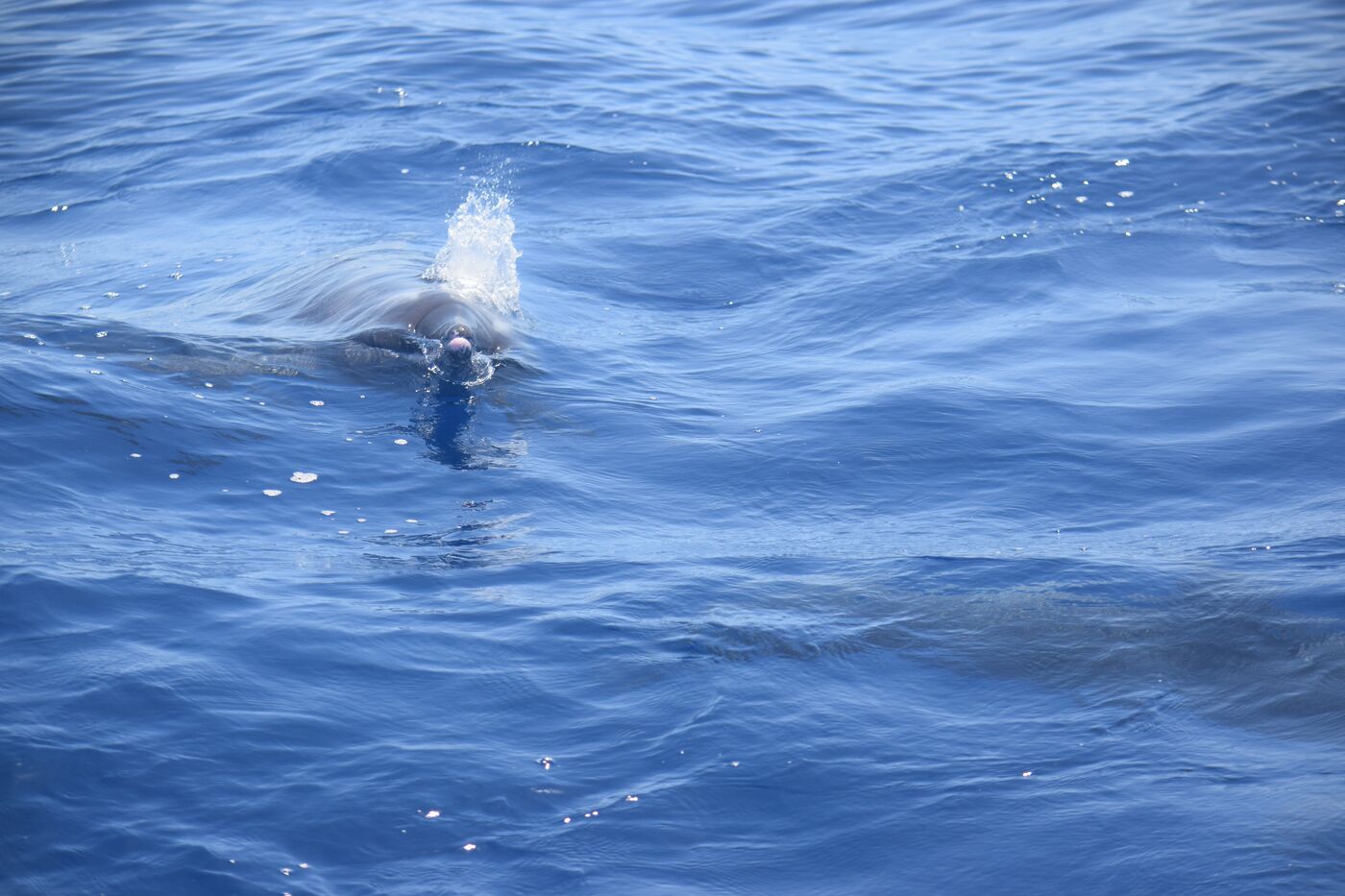
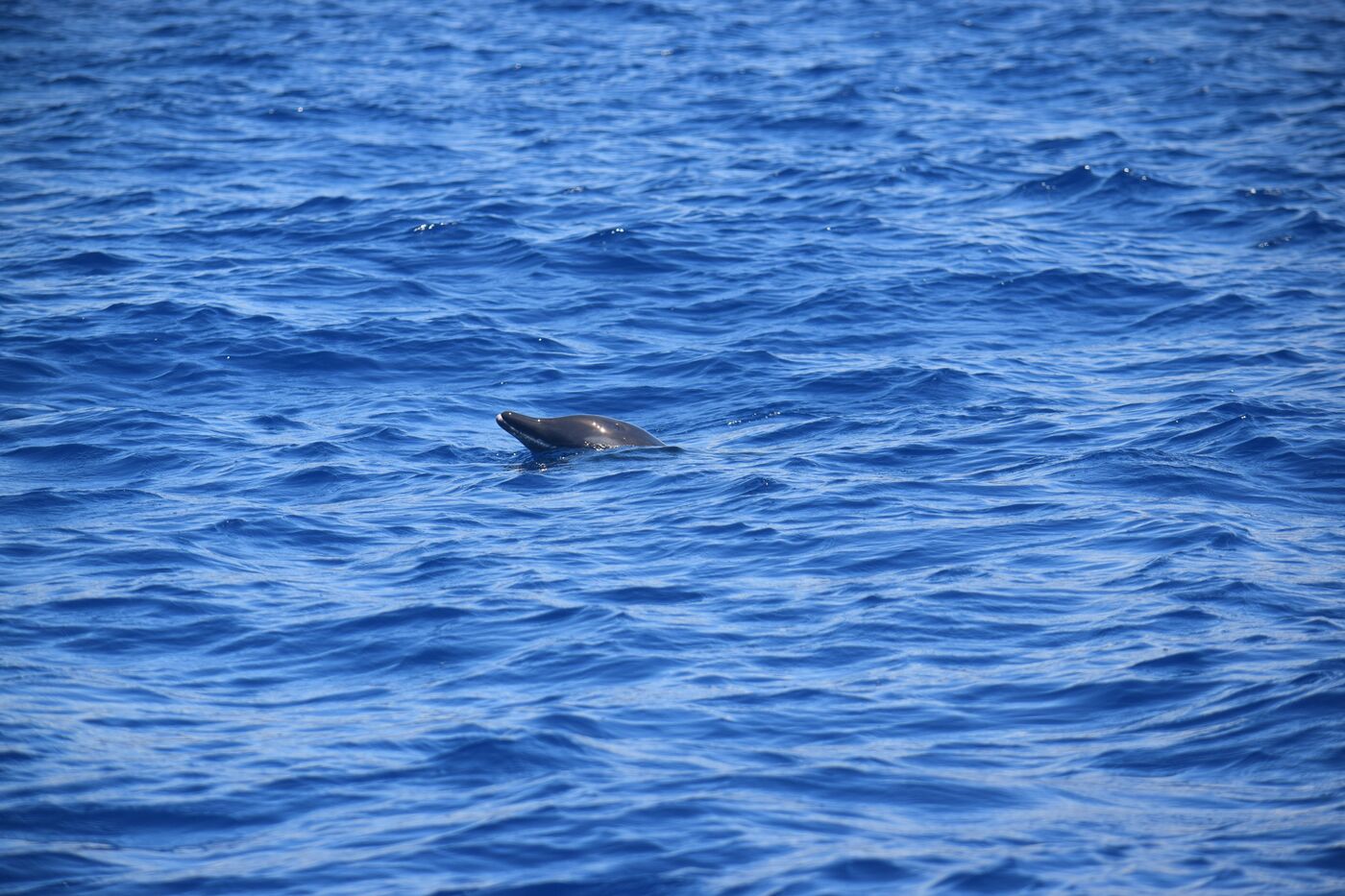
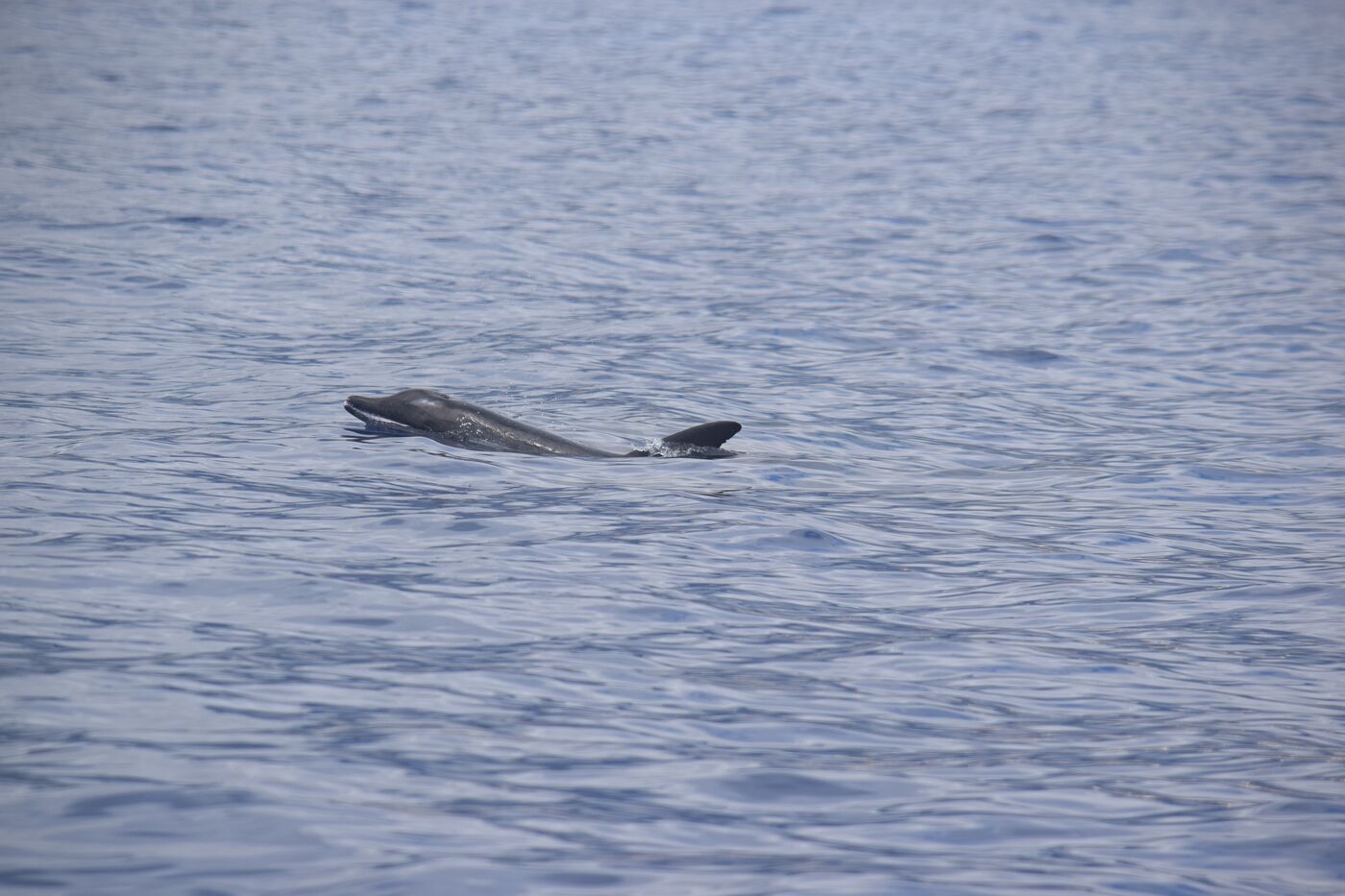
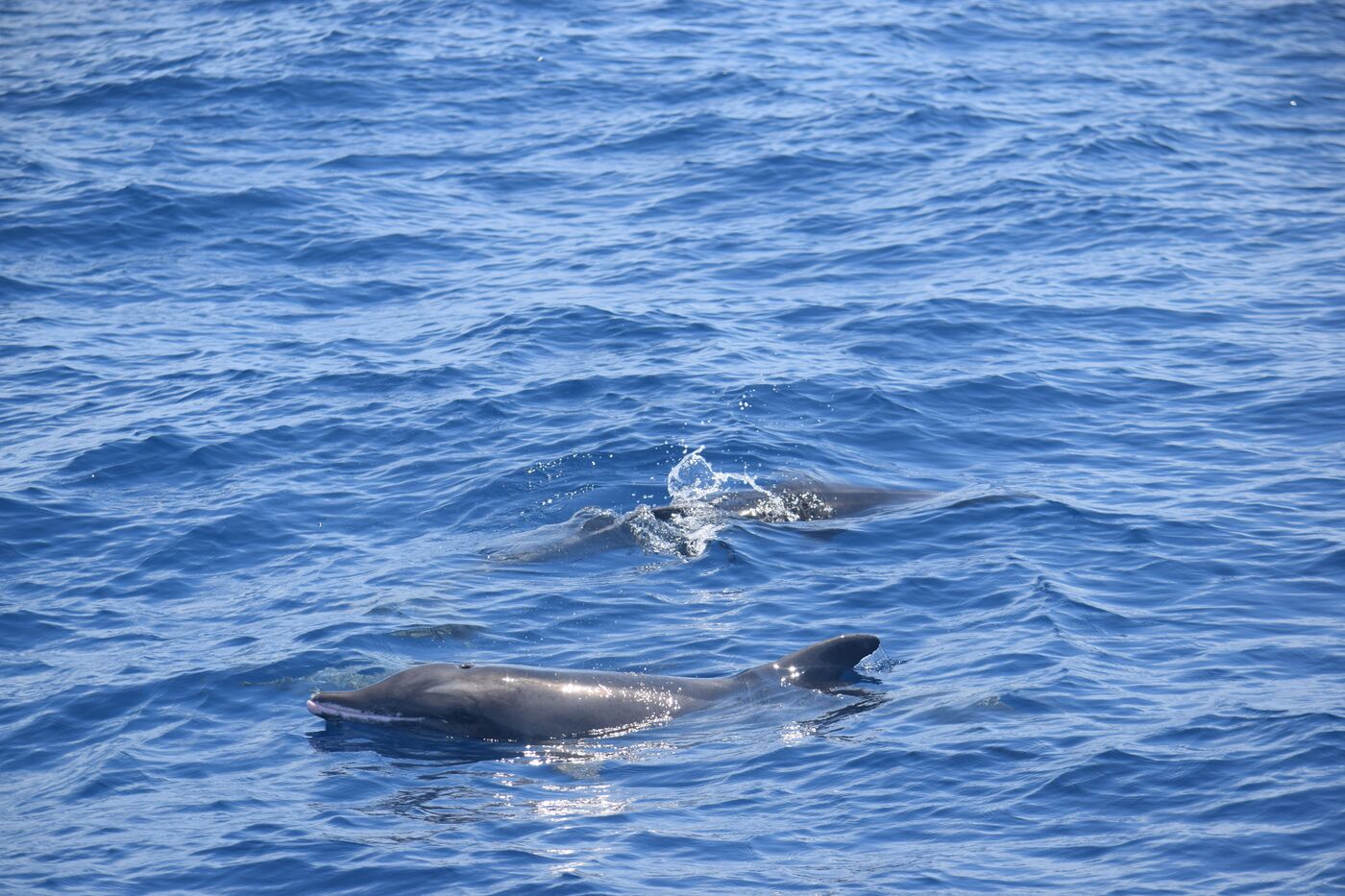
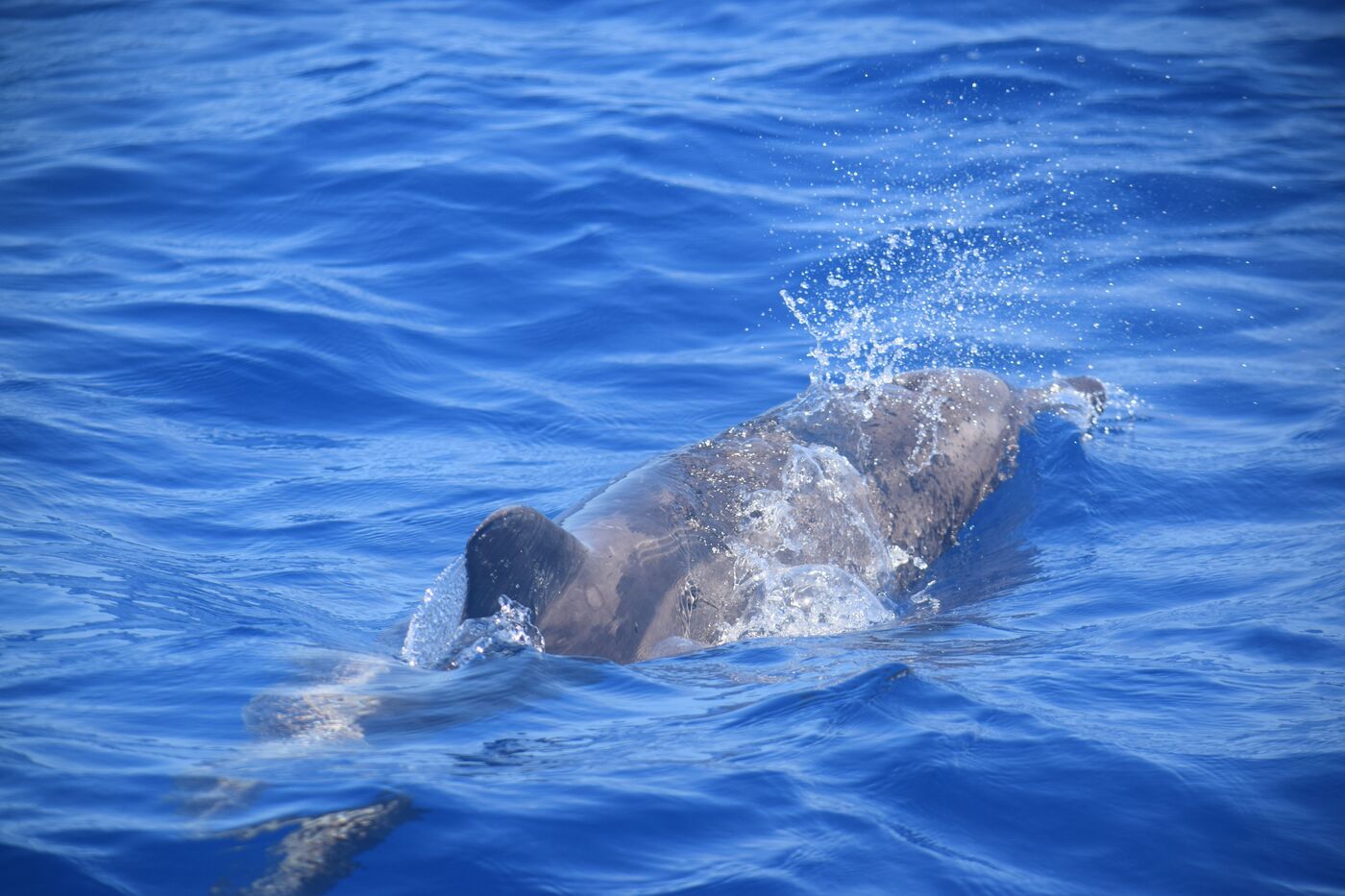
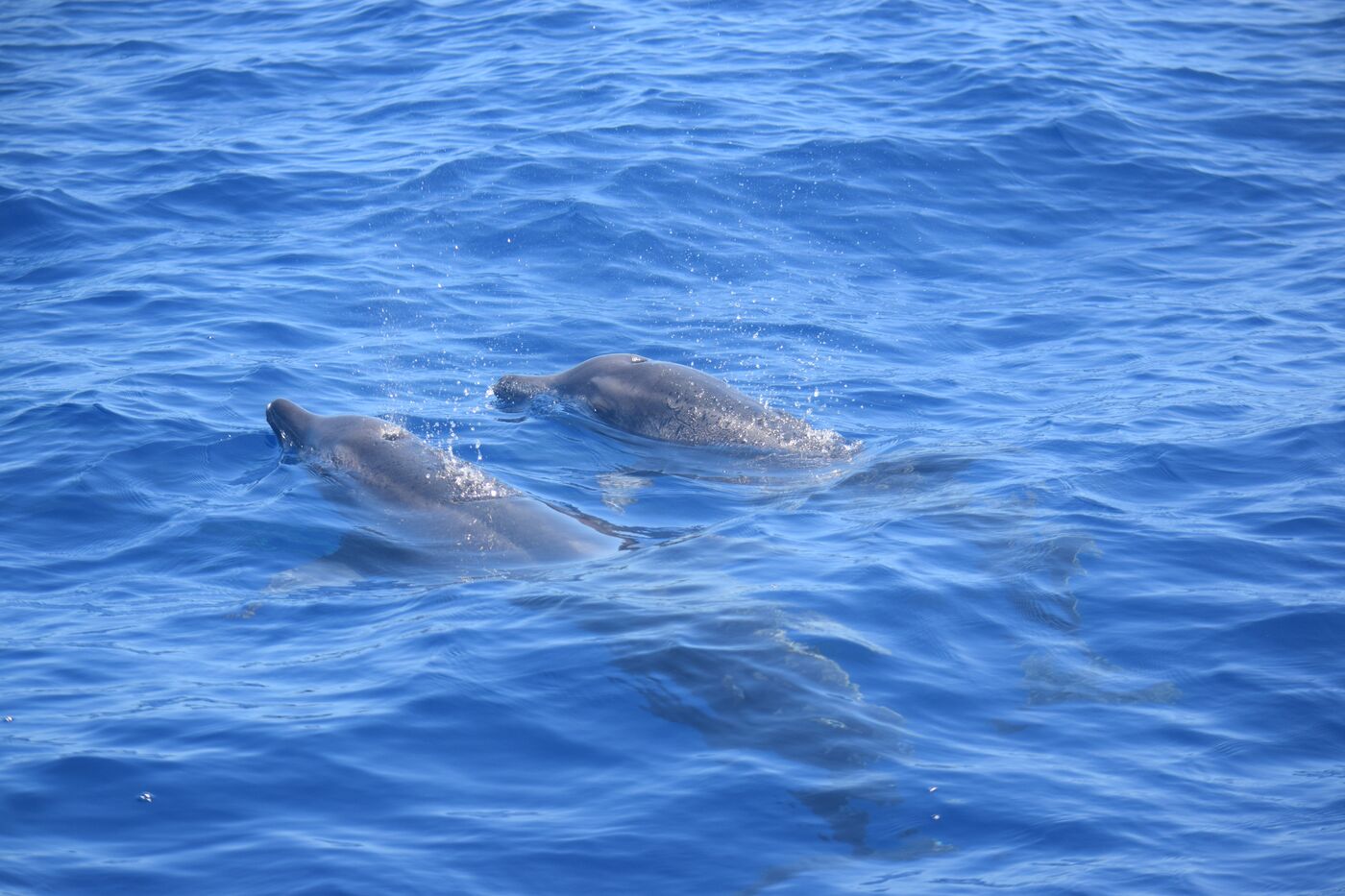
Every other dolphin here has a visible crease where the beak meets the melon. The rough-toothed dolphin does not: the profile runs in a single straight line from the tip of the beak to the top of the head, which gives it a slightly reptilian, prehistoric look.
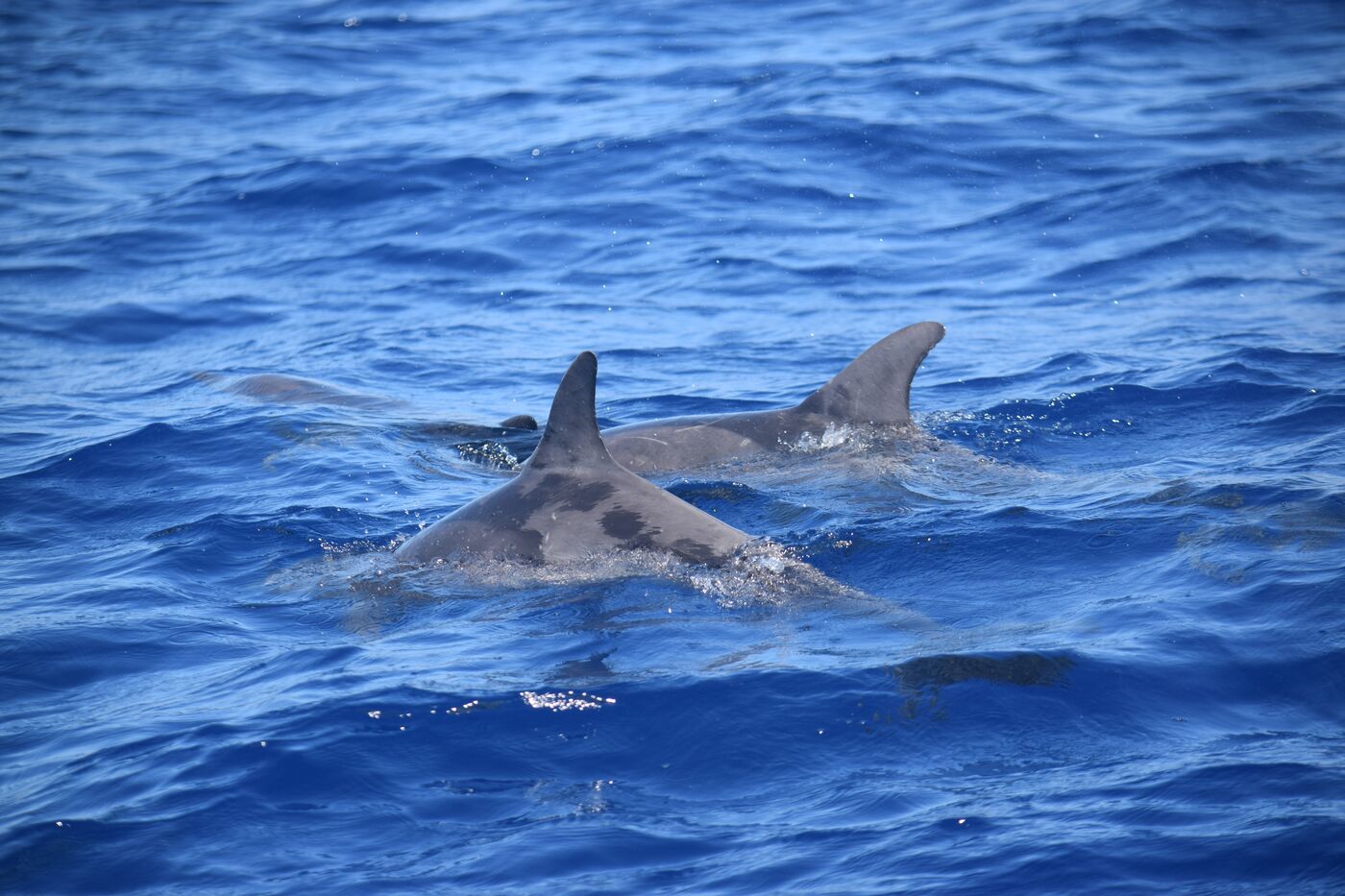
The body is dark with irregular pale blotches and scarring, and the lips are often white. The name comes from fine vertical ridges on the teeth, which you will not be seeing.

How they behave

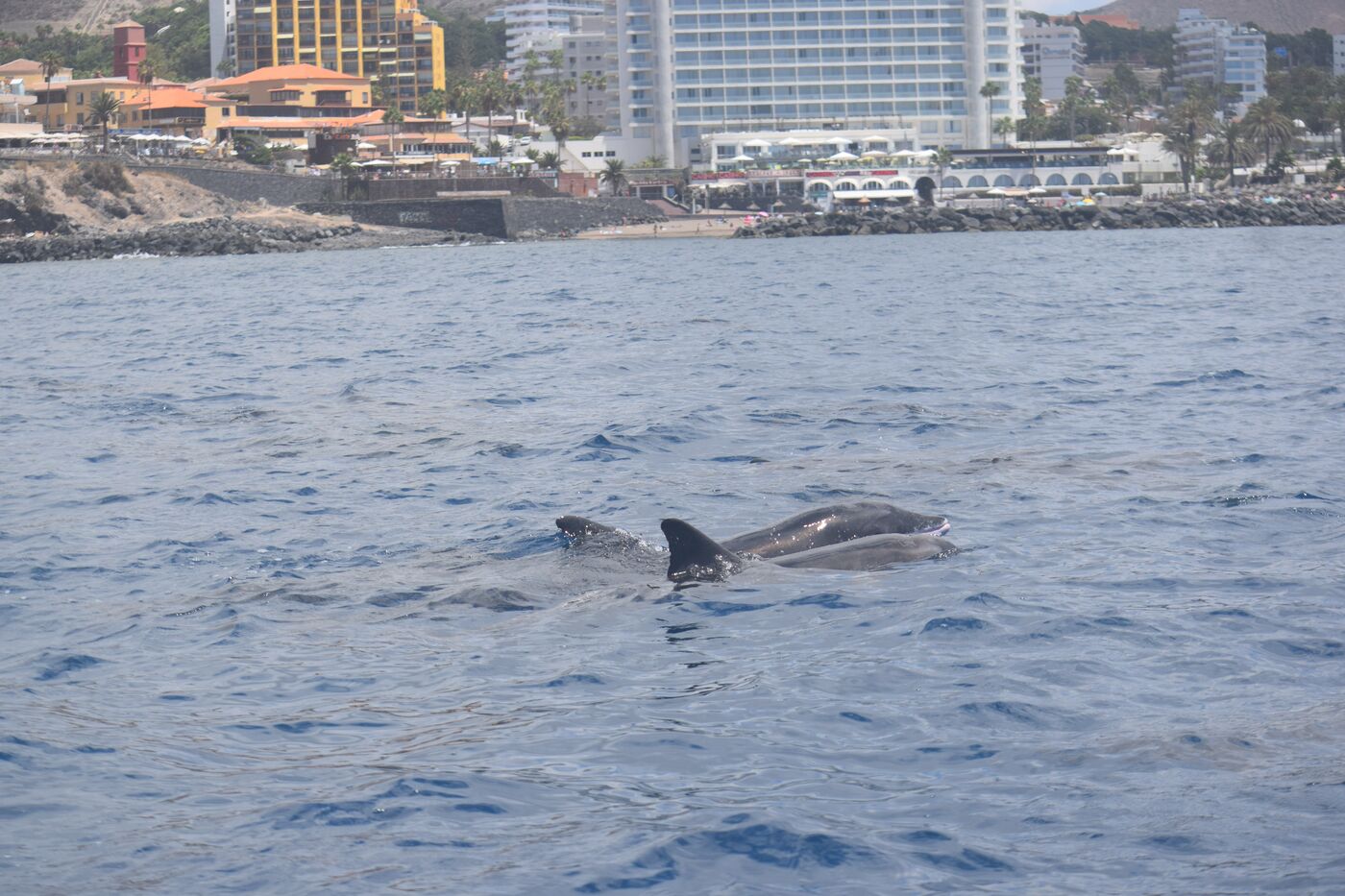
They tend to travel in tight, coordinated groups just below the surface, surfacing together in a way often described as "skimming" — the head and back breaking the water while the group moves as one. It looks different from the loose, rolling progress of a bottlenose group.
Seeing one
Occasional. There is no season to aim for and no way to plan it. If a group turns up, the biologist on board will be as pleased as you are.
Common questions
How common are they in the Canaries?
Present but scarce. They are recorded regularly enough to be part of the local community, and rarely enough to make a trip memorable.
More rough-toothed dolphins
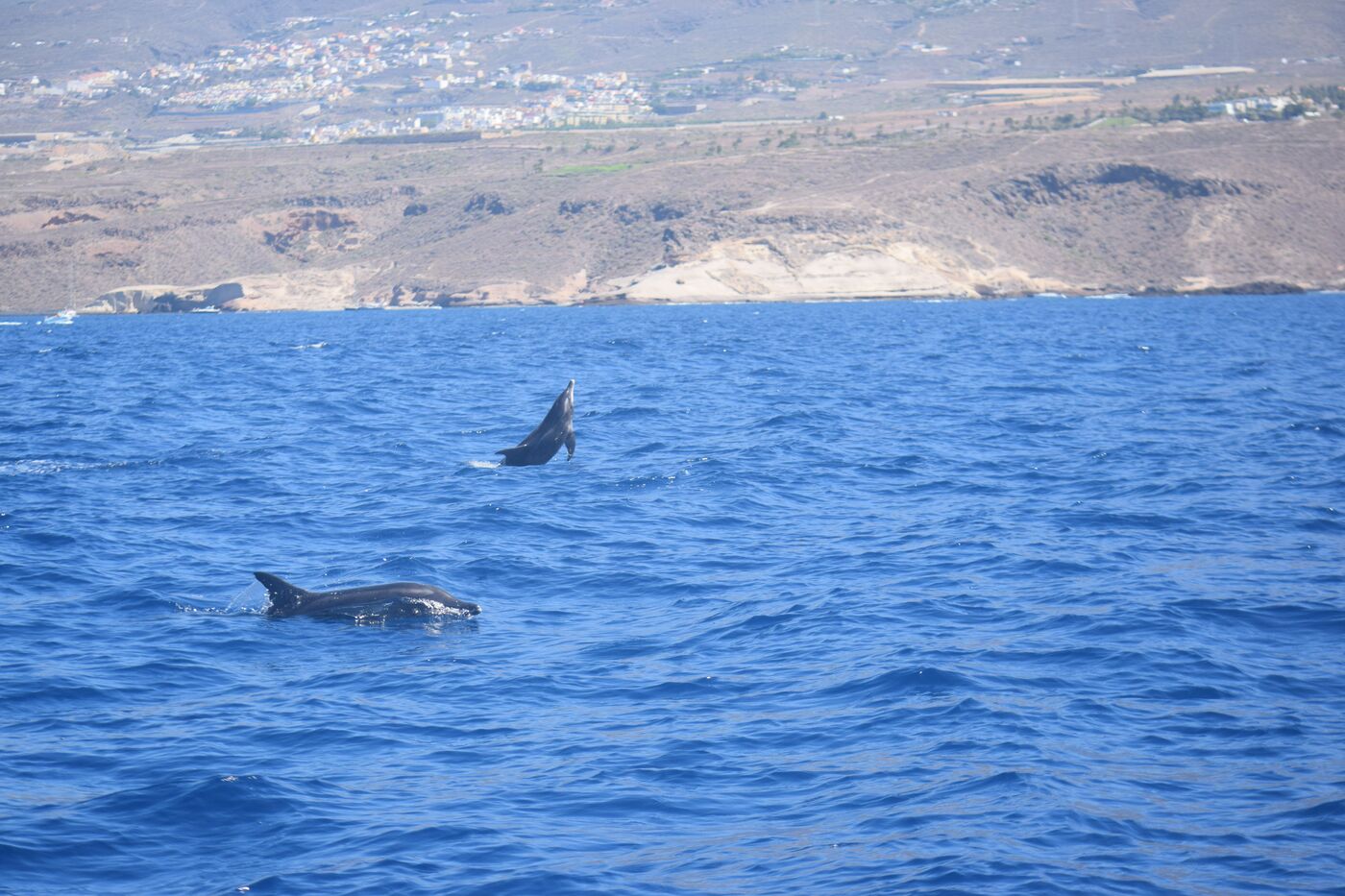
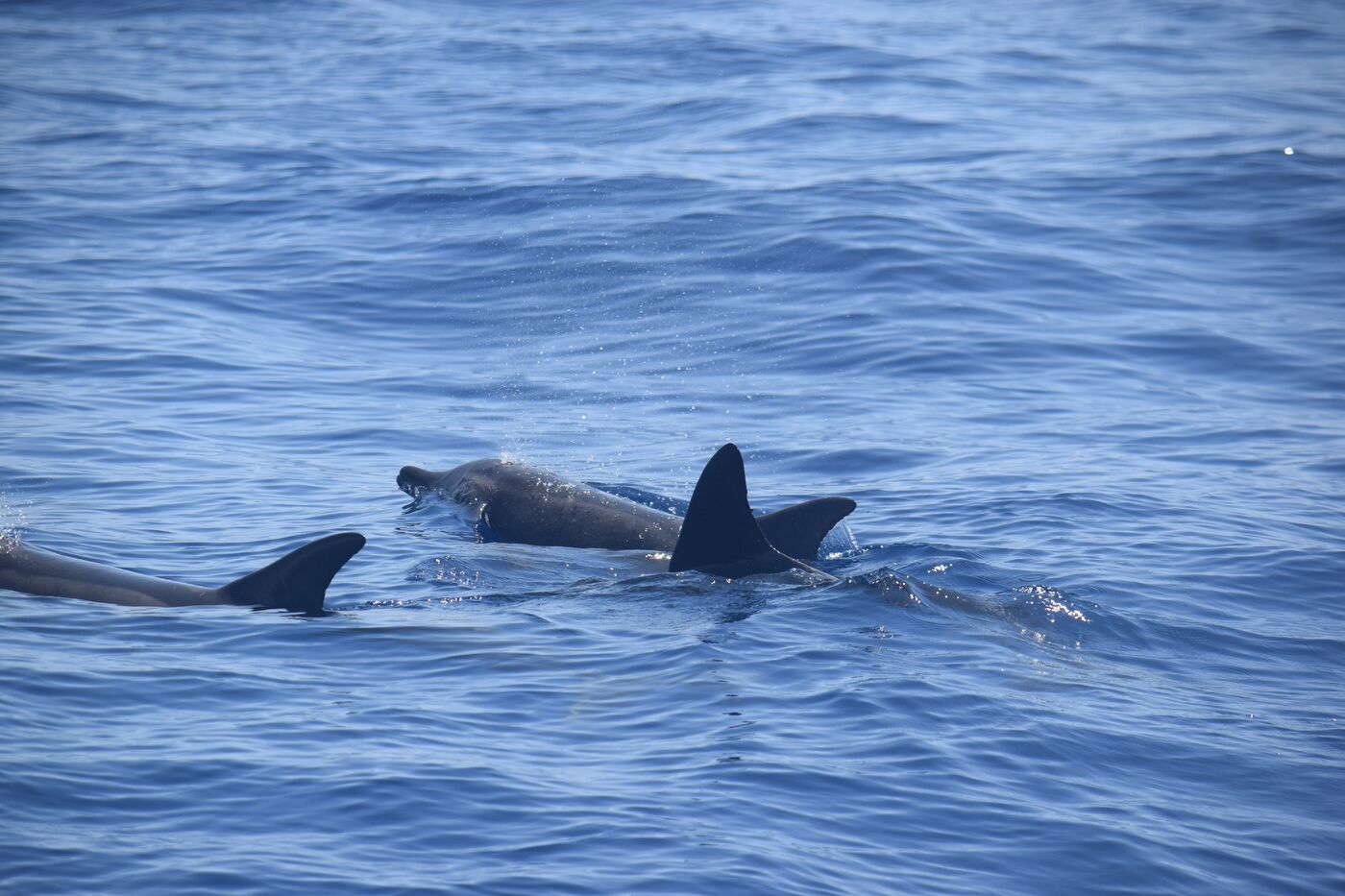
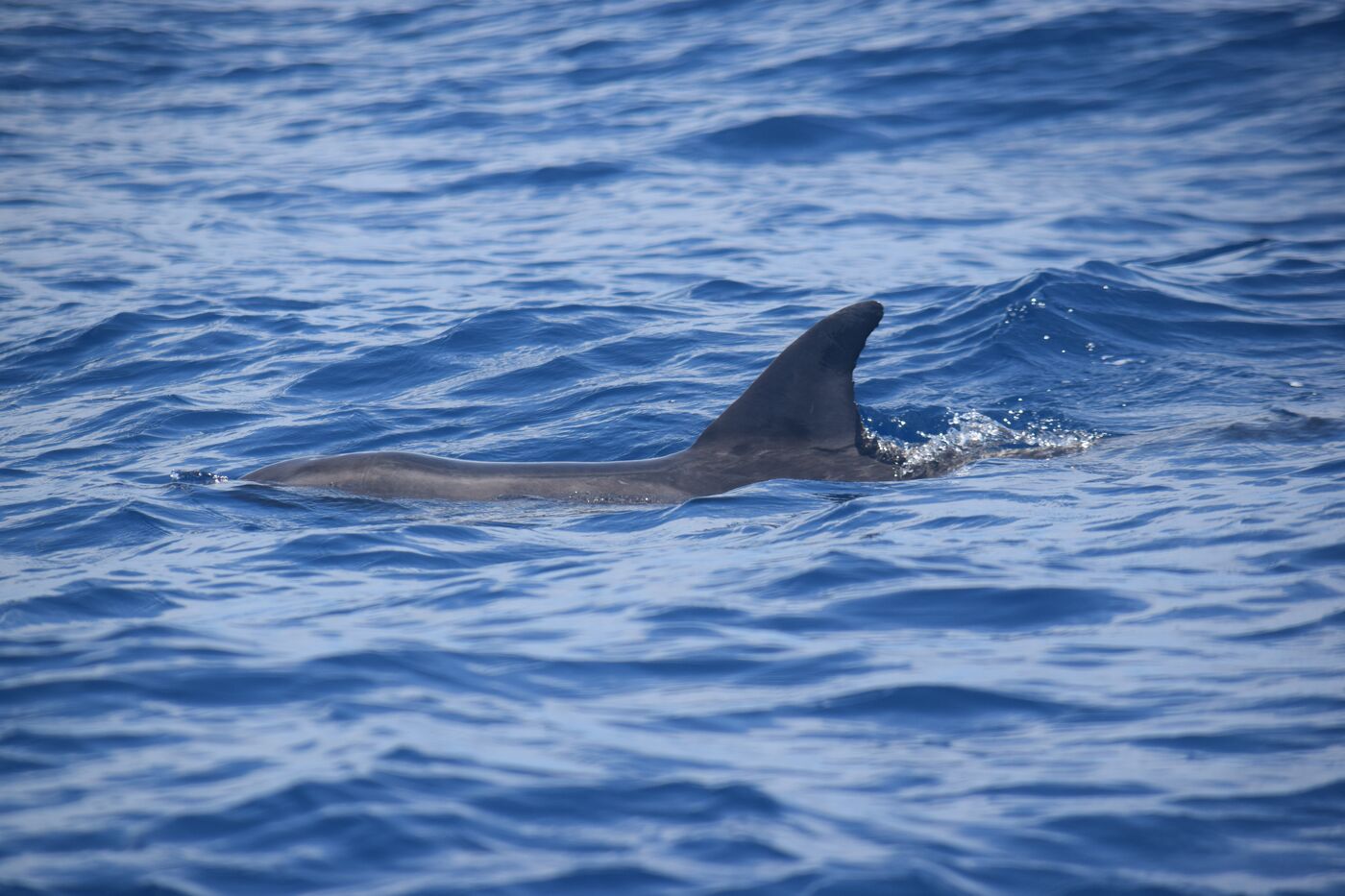
Photographed off south Tenerife. Tap any of them to see it full size.
2 h · max 10€60 per adult
Book